


What does it mean to be a scholar when the world you once studied is collapsing around you? What happens to teaching, writing, or reflection when war becomes not just a topic of inquiry, but the very condition of survival?
These are the questions animating “In the Thunderstorm of War,” a project that brings together interviews, personal narratives, and public reflections on the role of intellectuals in wartime Ukraine. Rather than offering a definitive answer, the project invites its audiences — in Ukraine and abroad — to sit with the difficulty, to listen, and to reflect.
Over the past year, In the Thunderstorm of War has traveled beyond Ukraine, entering classrooms, seminar rooms, and conference halls in Switzerland. Between April and October 2024, the project was presented in five academic settings, at the Universities of Basel, Fribourg, and Lucerne.
Each of these events created a space for open conversation:
- In Basel, the project was introduced to anthropology students through the presentation “Narratives of the Russia-Ukraine War in Academia” (April 29, 2024).
- At the URIS workshop “Refugees, Diaspora and Belonging in the Digital Age” (May 7, 2024), the project connected with broader conversations on exile and digital memory.
- In Fribourg, it sparked engaged dialogue among students of social sciences about intellectual responsibility in crisis (May 16, 2024).
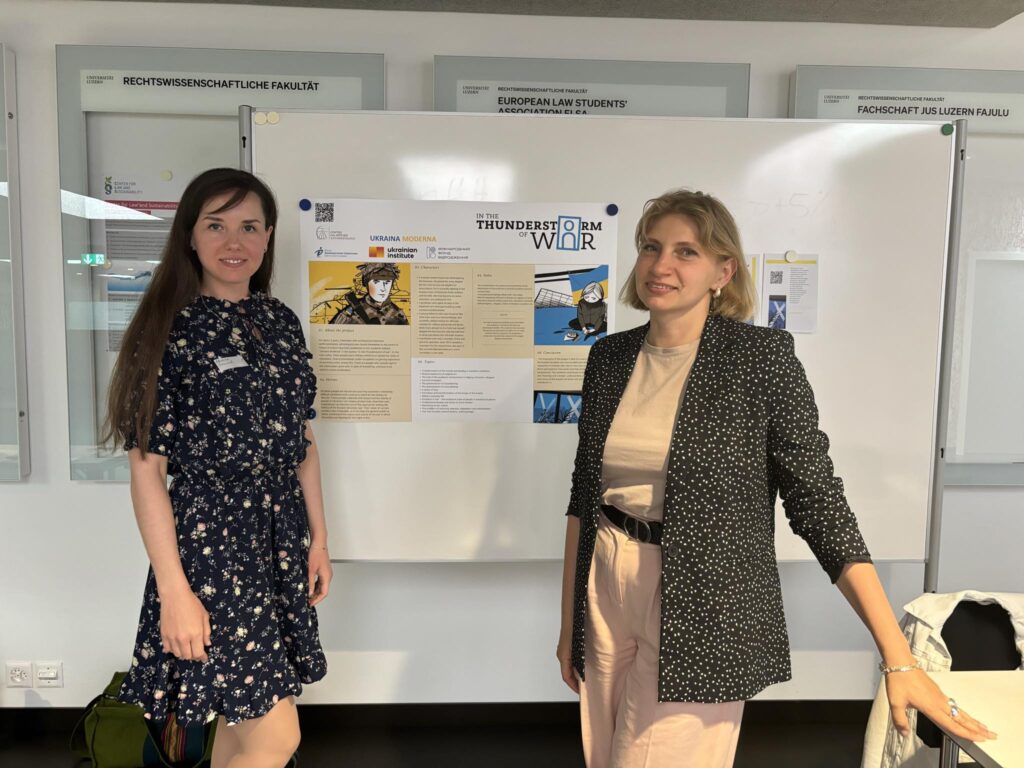
- In Lucerne, the project appeared as a poster session at the annual meeting of the Swiss Anthropological Association “Towards an Anthropology for Troubled Times?” (June 6–8, 2024), where over 100 scholars from across Switzerland explored what an anthropology of crisis might look like.
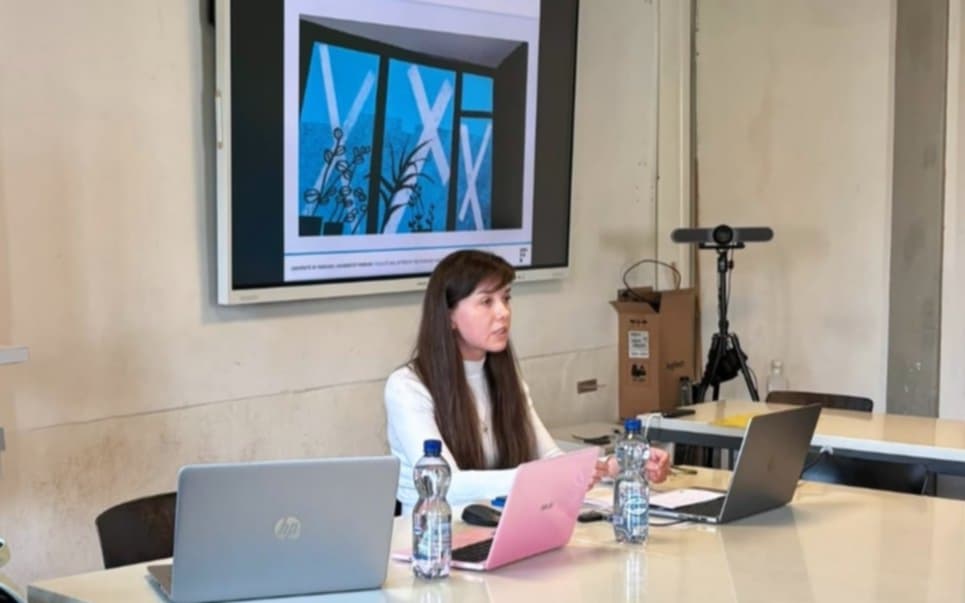
- On October 23, 2024, the project was featured in the colloquium “Anthropology of Catastrophe. Wartime Testimonies from Ukraine” at the University of Basel. Organized by the Institute of Social Anthropology, this event brought together three speakers — Dr. Olena Sobolieva (University of Basel), Dr. Oksana Ovsiiuk (Université de Fribourg), and Dr. Yulia Buyskykh (German Historical Institute in Warsaw) — who discussed the role of ethnographic witnessing, academic testimony, and intellectual labor in wartime Ukraine. The speakers reflected not only on the challenges of documenting war as scholars, but also as colleagues and friends of those whose voices are featured in the project. As translators, interviewers, and authors, they spoke of the emotional and ethical weight of narrating the war while living through it.
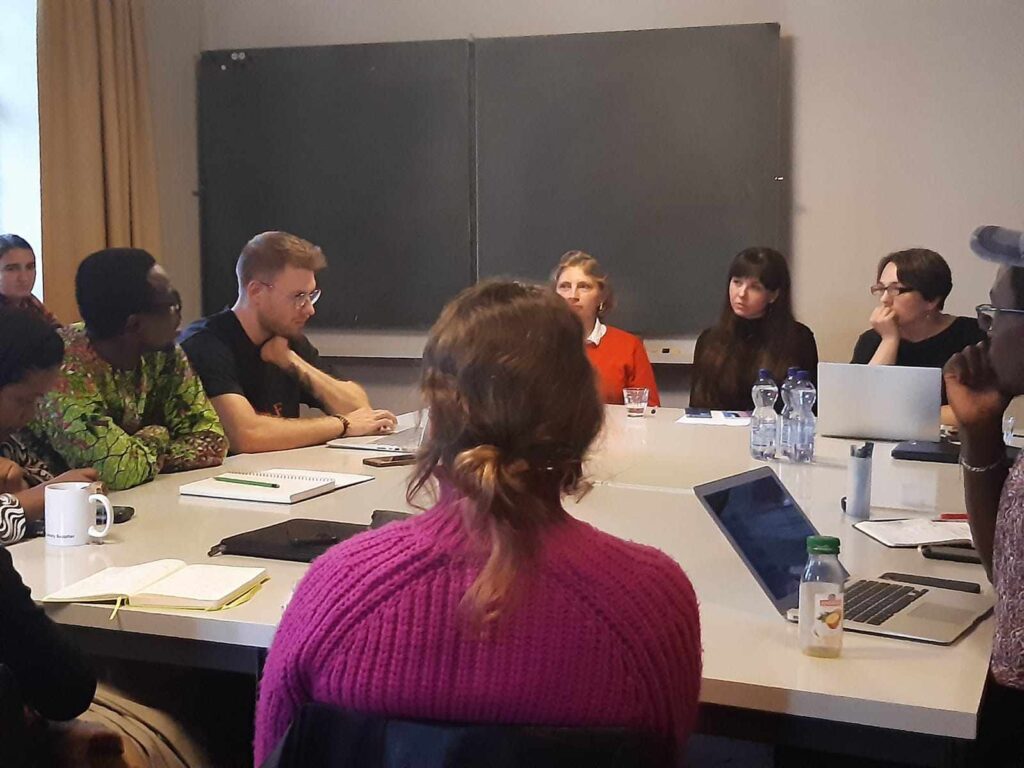
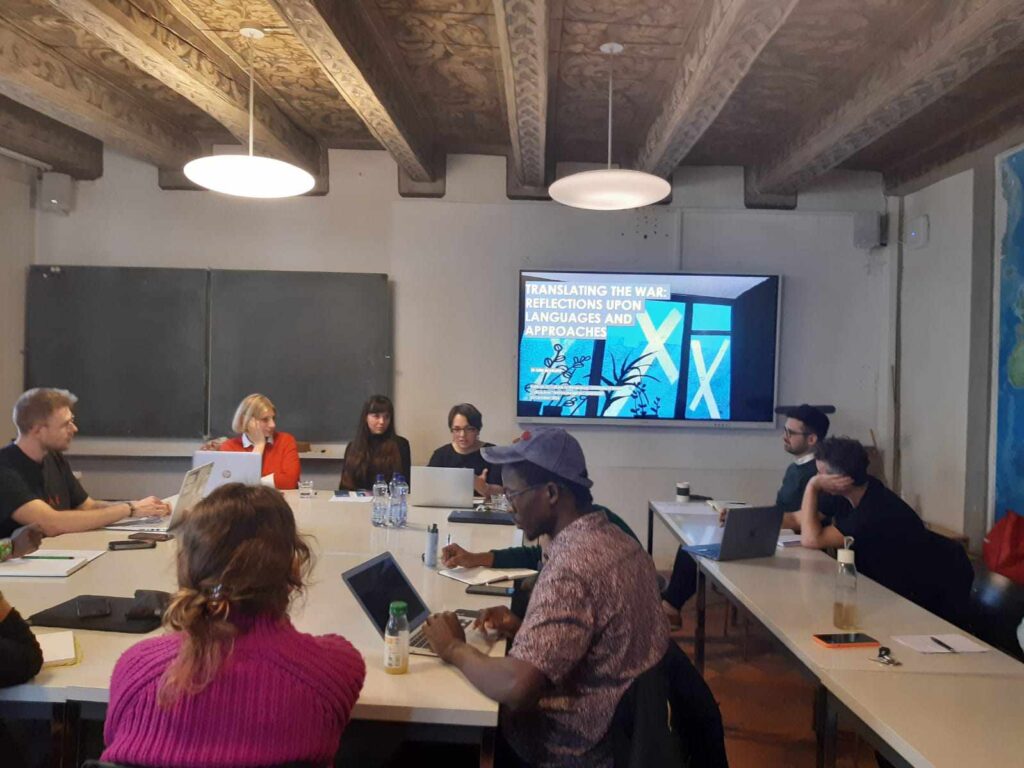
Olena Sobolieva , Oksana Ovsiiuk, and Yulia Buyskykh featured the project in the colloquium “Anthropology of Catastrophe. Wartime Testimonies from Ukraine”
These moments were not simply about showcasing Ukrainian scholarship. They became spaces of mutual learning, opportunities for international audiences to hear firsthand accounts of intellectual life under conditions of war, displacement, and moral rupture. For many participants, especially those unfamiliar with the Ukrainian context, the project raised urgent questions:
What is the role of the university in wartime? What kinds of knowledge carry weight in crisis? How do we preserve intellectual life when institutions and lives are under attack?
The testimonies shared in the project resist simple narratives. A powerful theme running through many reflections is the need to decolonize knowledge. Participants voiced frustration with the dominance of Russian perspectives in global Slavic Studies and emphasized the political importance of making Ukrainian voices heard. Some also reflected on internal colonial legacies within Ukraine itself, calling for solidarity with Crimean Tatars and other marginalized groups.
Through its public presentations, In the Thunderstorm of War has created a space where such reflections — often deeply personal, uncomfortable, and unresolved — can be heard and held. Not as abstract ideas, but as lived questions that continue to evolve.
The storm is still ongoing. The answers are still unfolding. But what this project offers is a way of thinking and witnessing that does not turn away. It invites scholars and audiences alike to imagine what kind of intellectual life is still possible, even under fire.