

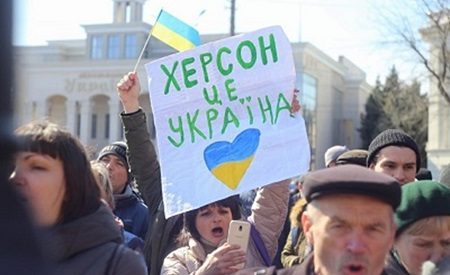
“Kherson is Ukraine!”
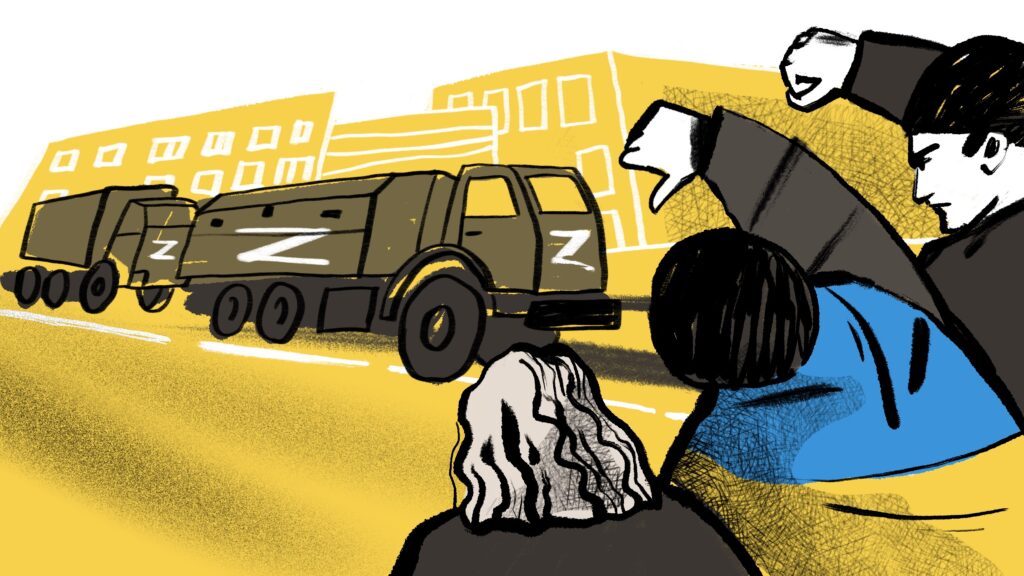
It sounds like a slogan, but for eight months this phrase was the verbalisation of a goal; it was not a fact. For eight months, Kherson was an occupied territory, occupied by troops from the terrorist Russian Federation.
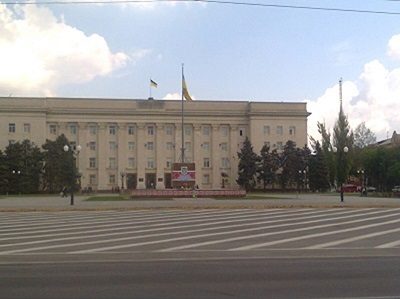
On the 11th of November 2022, the occupation ended and the Ukrainian flag flew again over Freedom Square.
I kept trying to imagine what it would be like on the first day of a freedom regained. Shocking? Cautiously optimistic? Flooded with tears? How many scars would we see on the city’s body? How many people would be missing? How many windows and walls would be smashed and destroyed? How many homes would be dismantled? How much hope and strength would we have left?
This day was full of tears for me, but I had such thoughts and reflections in the face of the reactions of my co-citizens. “Kherson is at home!” But it has never left anywhere… “Now I’m finally going to Kherson!” So, Kherson had to survive the occupation for someone to recognise my city and appreciate its Ukrainian-ness! Those who had never been to the city, who did not know its streets, scents, tastes, people, problems, and advantages, were happy to see it liberated. At the time, I wanted everyone who had had nothing to do with the city to keep their emotions and tears to themselves, because it seemed to me that they had no right to them. The happiness of liberation should have been available only to those who had suffered for it.
My later thoughts were more constructive. Ukraine and its citizens began to correlate the borders of “their Ukraine” with the state borders, to realise that Ukraine is incomplete without Kherson, Mariupol, Berdiansk, Luhans’k, and Sevastopol. To be happy for the liberation of cities – even those where you have never been – isn’t this the real power? To forgive [society’s] mistakes of past ignorance and “othering”, for the Russian language and Surzhyk [a mix of Ukrainian and Russian spoken in Ukraine due to historically-rooted russification], for voting in elections [for pro-Russian parties – J.B.], for passivity – isn’t forgiveness a key to cohesion? To crave to know, to understand and even just to come and see how things are in those cities which had not particularly been on the news before the occupation – isn’t that a manifestation of patriotism?
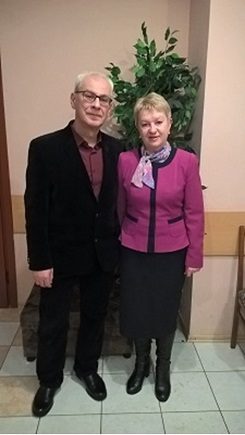
This text is an attempt to understand and show how the life of the city of Kherson changed in the first weeks after the occupation. It was written a week before the liberation of the city, and updated after the liberation. It is based on notes I took during the occupation. Almost every day I tried to record what I saw and felt. It was difficult for me to “turn off” the historian in me (I have been one since I was eighteen), so my notes are not without historical parallels, especially with the events of the Soviet-German War [Second World War, from 1941 to 1945 – J.B.].
To analyse events during the war per se is a thankless task, though not meaningless. Over time, the optics of looking at war change; some events become part of established discourses, and some remain outside the attention of researchers. It is a cliché that the history of wars is written by the winner. The winner in the current Russian-Ukrainian war is formally unknown, but Russia has already abandoned its plans for a military and political blitzkrieg. The failure of the Kremlin’s plans is already a victory for Ukraine. Kherson was the only regional capital occupied by Russia. The Kherson People’s Republic was never created, although the city was “incorporated” into the Russian Federation illegally [through the occupation – J.B.]. Kyiv did not fall. Ukrainians are still not giving up. Weapons are not running out, nor is Western aid. Obviously, Russia cannot win. Although the outcome of the war will have to wait.
Kherson’s strategic importance: past and present
Historically, Kherson’s military and political significance has been determined since the middle ages by the city’s location near the estuary of the Dnipro River, where the state of Rus, Oleshshia, the medieval predecessor of the city, existed within the territory of modern Kherson. Until the end of the eighteenth century, Kherson was the “gateway” to the Black Sea; Kherson was also an important fortress during the Russian-Turkish War of 1735-1739, when there was an earthen fortification called Oleksandr-Shanets. Today, the city plays a huge role in Putin’s “new Russian project”, as it had played too in Catherine the Great’s “Greek project”, when Kherson itself was founded in 1778 as an outpost of the Russian Empire in southern Ukraine and the Lower Dnipro region, and as a base for the capture of Crimea.
Kherson became the first centre of Russian naval shipbuilding (the Kherson Admiralty existed until 1827 [when it was dissolved]) and played a prominent role as a logistics centre and rear guard in the Russian-Turkish wars of the late eighteenth and nineteenth centuries. With the onset of industrial modernisation, the city lost its military and political importance, as Odesa and Mykolaiv took on leading roles in the northern part of the Black Sea. This role was consolidated in the First World War and subsequently, the German-Soviet War of 1941-1945 [1, 2].
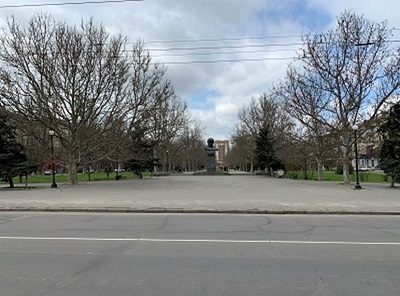
In the summer campaign of 1941, the Soviet Red Army neglected the defence of the city. The main battles fought were for the Beryslav-Kakhovka crossing, which provided access to Perekop and the Northern Azov Sea [3, 4]. In August 1941, Hitler’s 11th Army captured Mykolaiv and headed for Beryslav. A pontoon crossing was arranged there and over which the troops moved on to Melitopol and Perekop. Kherson was captured by the Nazis from the east [3].
The city’s status as a strategic location was somewhat altered after the construction of railway and road bridges between Kherson and Oleshky in the postwar period. However, the [nearby] crossing near Kakhovka, along the Kakhovka Dam, continued to serve as the key to Northern Tavria (Guillaume Levasseur de Beauplan wrote about it in the mid-seventeenth century). This crossing follows the historic Tavan ferry, along the Kakhovka-Beryslav line [Tavan was a historical crossing over the Dnieper River since the time of the Golden Horde; it was also an island at the Dnieper River, artificially sunk in the 1930s – J.B.].
In February 2022, the Russian invaders directed their main attack towards the Kakhovka Dam, which opened the way to Mykolaiv and allowed them to enter Kherson from the rear, from the west, as well as from the north. Initially, Russian troops marched on Kherson via the Antonivskyi bridge (there is also a railway bridge in this direction, but it is of secondary importance) across the Dnipro and the village of Antonivka [suburb of Kherson – J.B.]. They were interested in crossing the Dnipro (more precisely, the Lower Dnipro) via the Kakhovka hydroelectric dam bridge and the Antonivka bridge.
Many analysts opine that the current phase of the Russian-Ukrainian war is the largest on the continent since World War Two. As we can see, even the geography of the theatre of operations (and not only in the south but also in the Kyiv region) provides many points of comparison with World War Two.
For instance, Kherson was practically undefended, as in 1941. In early March, footage was shown of Russian troops entering the city without significant resistance. Only the night before, small groups of virtually unarmed patriots made a desperate and tragic attempt to stop the occupiers in some areas of the city. Later, it became known that one group of eighteen people, “armed” only with Molotov cocktails, perished. All of them were killed in a clash with regular Russian troops. Of course, our troops put up a fight; day and night, the sounds of battle (shots mostly from small arms) could be heard from Mykolaiv and echoed from the Dnipro, but the city was captured.
In the spring of 2022, Kherson found itself somewhere on the periphery of the war. Of course, there were casualties, damaged buildings, and destroyed electricity and water supplies, but not on the same scale as in Mariupol, Kharkiv, and Kyiv. The occupation of Kherson remains a tragedy, but the streets of Bucha, Mariupol, Kharkiv, and Izium have seen worse things… In the first days of March, immediately after the city was captured, many questions remained unanswered. How were the Russians able to enter Kherson almost without resistance (not wresting control, but [merely] entering it)? Where was our local leadership (there have been no statements or explanations from them since the first days of the war)? What is the status of the city? How should residents behave? The sounds of fighting did not add any clarity. There were explosions at night. In the morning, it became clear what was destroyed and where. On the 4th of March, enemy vehicles appeared on the streets of the city. People filmed videos of Russians looting shops and pharmacies, and posted them on the Internet. Local authorities advised people not to go out. Russian military vehicles appeared on Freedom Square in the city’s centre. People could not believe it at all after the nighttime events and shots heard during the day. The news reported on a fake rally that the Russian occupiers had planned for that day. I saw a similar video from Melitopol. There were rumours about the intentions to create the Kherson People’s Republic (KPR) with a subsequent referendum, as had occurred in Donbas. Again, I recalled the historical similarity. In the summer of 1917, the Kherson Provincial Congress of Soviet Deputies succumbed to urging by anti-Ukrainian forces and Bolsheviks to create a Kherson People’s Republic then, but the following day this decision was overturned.
In the end, Kherson turned out to be the only regional centre in Ukraine that Russia was able to occupy. The city was a kind of “guarantor” of Russia’s dominance in Crimea. Control over the city resolved the issue of control over the entire Black Sea coast, including Mykolaiv and Odesa. For Russian troops, Kherson (and, equally the possibility of using the Dnipro crossings) has played a strategic role as an important logistics centre and a staging point.
The city that had no fear
Traditionally, the city had been perceived through the prism of Soviet-Russian myths. Kherson was mostly Russian-speaking and therefore considered pro-Russian. Although local centres of Ukrainian culture existed and were quite visible (Gogolfest [folk art, poetry and music festival – J.B.] in 2021 alone is worth a lot!), pro-Ukrainian political forces inexplicably could not win any significant victories. There were some quite interesting urban initiatives, but which were still not very inclusive of citizens.
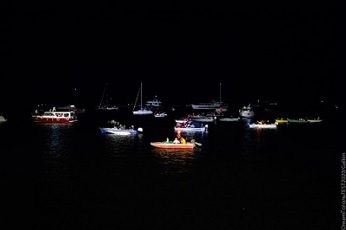
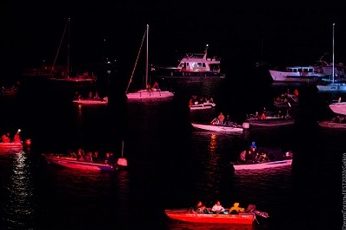
However, Kherson, as the events of the “Russian Spring” of 2014 revealed, is a Ukrainian city. Months of Russian occupation have demonstrated this clearly. The scale of the civil resistance organised by Kherson residents is impressive. For a long time [eight months of occupation – J.B.], they managed to demonstrate their pro-Ukrainian position; resistance to the foreign occupation did not stop even when it became dangerous. Ukrainian flags, ribbons, and trident symbols appeared everywhere until the city was liberated (the “Yellow Ribbon” movement is still active today).
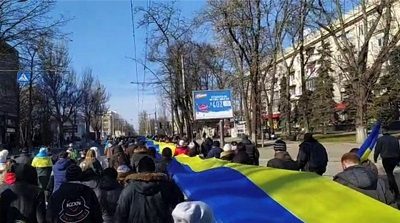
On the 6th of March, the Internet went down in the city, and shops and pharmacies were closed, but there were plenty of people on the streets. Groups of people with Ukrainian flags were concentrated in the city centre. My wife and I also went to the anti-Russian rally. A huge crowd of protesters against Russian aggression gathered in the central square. People were shouting: “Kherson is Ukraine!”, “Go home!”. The occupiers started shooting in the air, but no one left. It is estimated that four to five thousand people gathered. Instead of a rally in support of the Russian aggressors, they received a rally for Ukraine from the people of Kherson. These photos seem to have spread all over the world.
Rallies were held literally every day. These repeatedly emphasised the national liberation nature of the Russian-Ukrainian war from the Ukrainian side. However, on the 8th of March, the invaders began to seize men and send them to a pre-trial detention centre, which had been purposely emptied of local criminals. According to rumours, there were about four hundred people there.
On the 13th of March, Kherson mayor, Ihor Kolykhayev, laid flowers in the Park of Glory on the occasion of the “liberation” (the expulsion of the Nazi invaders during World War Two), and the occupiers organised their “rally” on the same occasion. It was attended by Russian soldiers dressed in civilian clothes (but they were noticeable by their dress and behaviour), a dozen “veterans”, and anti-Ukrainian demonstrators. Among the more-or-less prominent public figures were V. Saldo, the former mayor and current deputy of the city council, T. Kuzmich, former lecturer at the Regional Academy of Continuing Education, S. Cherevko, the former deputy mayor for humanitarian policy, and I. Semenchev, the head of Antonivka council (a suburb of Kherson).
Demonstrably, a large anti-Russian rally of Kherson residents headed from Freedom Square, across the cordon of the Russian “liberators”, to Glory Park. The Soviet-esque, anti-Ukrainian crowd was quickly disbanded. In particular, a criminal case was opened against T. Kuzmich in 2020 on charges of collaboration, but the process was slow and, as far as I know, did not end until February 2022.
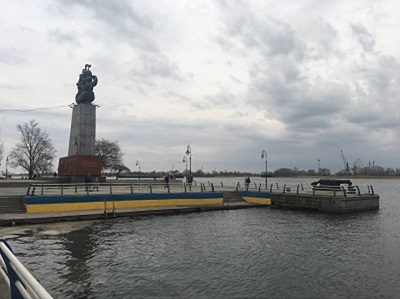
On the third week of the occupation, on the 21st-22nd of March, the occupiers began to disperse peaceful rallies of Kherson residents. They threw tear gas grenades and opened fire; several people were injured, and some were arrested. However, people stepped back to the neighbouring street and continued to rally. Over the next few days, the National Guard of the Russian Federation tried unsuccessfully to disperse the protesters with special means, mainly stun grenades, tear gas, and shooting into the air. However, protesters behaved in an organised manner and did not directly provoke the occupiers. The rally dispersed for a while, and people provided assistance to those who were wounded and returned. Similar rallies were held in Kakhovka, Hola Prystan, and ten or eleven other villages in the Kherson region.
At the end of March, it seemed that the people of Kherson had more or less calmed down emotionally; they were convinced of the victory of Ukraine. At least, it had become clear that they did not accept the “Russian world” and were unanimous in their hatred towards the occupiers. It seemed that the Russians would soon leave. Our military’s counter-offensive came from several directions, the sounds of cannonades at night even calmed us down, while the silence instilled anxiety and fear.
However, in early April, hopes began to fade. It became even more dangerous to hold rallies in the central square, although they did continue. A large rally was held on the 10th of April. People filled almost the entirety of Freedom Square in the centre of the city. The number of people unnerved the occupiers, who fired in the air and brought lots of soldiers [to the square]. The protesters were not afraid and marched in an organised procession to the monument to Taras Shevchenko, where national Ukrainian events are traditionally held.
In mid-April, the situation worsened. There was a feeling that the mood of Kherson residents was changing. Some people did not trust the authorities – regional officials had been disappearing since the first day of the occupation, maybe even earlier.
Some people lost hope for a quick liberation of Kherson and decided to leave the city. Officially, there was no green corridor between Kherson and unoccupied Ukraine; the railway connection had stopped in the first days of the occupation, and there were numerous Russian checkpoints around the city on all roads. Despite great risk, many Kherson residents, mostly using their own cars, drove towards Mykolaiv and further to the west of Ukraine and after, on to Europe. There are no exact figures, but preliminary estimates suggest that about two-thirds of the city’s residents left (as of September 2022).
In addition, the Russians brought new troops to the city. Kherson remained important as the centre of two crossings of the Lower Dnipro (Kakhovka and Antonivka). A logistics centre was created in the area of Nova Kakhovka, to take into account the vulnerability of Chornobaivka, a military base on the outskirts of Kherson. Russians had an advantage in artillery, including rocketry, and aviation.
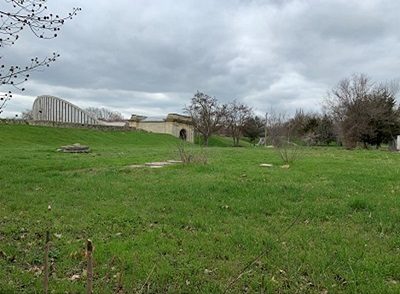
It was difficult, if not impossible, for the Ukrainian army to mount a counter-offensive. Odesa-based Ukrainian forces could not allocate a significant part of its forces, due to a potential Russian landing and the danger from Transnistria [the Russian military are based there too – J.B.]. Although these dangers were more anticipated than real, they did not allow for the release of troops for the offensive. One should bear in mind that during the liberation of Kherson, Ukrainian troops had to fight offensive battles that would have required heavy weapons (tanks, infantry fighting vehicles, artillery). At that time, we did not have such weapons. Of course, the situation for Ukraine was changing for the better, but there was no turning point for Kherson yet. In the city itself, there were movements of military equipment in different directions. It seemed chaotic, but that was just my impression; they were regrouping.
In such circumstances, more people were willing to cooperate with the occupiers. Russia tried to organise an occupation administration from among the local traitors, which failed at first. The local news reported the kidnapping of people every day. They started with the protesters, Anti-Terrorist Operation (ATO) veterans, activists from the Ukrainian movement, and well-known public figures who were potentially useful as collaborators, the occupiers had a number of relevant lists of unknown origin. They were possibly information [lists] from their countless agents. The Mayor of Kherson said that the Russians had stolen the Ukrainian police databases, which is also quite possible. But someone still had to share knowledge and help outsiders in the city.
Collaboration is a difficult subject. There were far fewer collaborators than the Russians had expected, but far more than I could have imagined. Among them were lumpen [proletariat] (they robbed shops with Russians in the early days), careerists, and ideological opponents of Ukraine. At first, there were very few of them, but later there were more. Some colleagues (with respectable academic positions), former students, retired policemen, and teachers became collaborators. My daughter’s former law lecturer at the lyceum became the “rector” of Kherson University and encouraged everyone to collaborate.
On the 28th of March, the news broke about Putin’s demands to create a Kherson People’s Republic. The occupiers found those who were ready to take part in the implementation of this idea – seven people in all of Kherson. They were all the same veterans of the 2014 collaboration, for example the well-known Viktor Yatsenko, who became a minister in occupied Crimea in the government of Serhii Aksionov and acquired Russian citizenship.
On one of the first days of the occupation, passers-by told me that, at the corner of Ushakov Avenue and I. Kulyk Street (an important detail – Soviet names), Russians were “giving” bread and “humanitarian aid”. A large crowd had gathered there. I stood in two queues; for bread (it hadn’t been on sale for two days) and for “humanitarian aid”, which turned out to be the remaining stock of grocery stores that had been forced to close. I stood there for more than two hours. I met a colleague, a professor of psychology, who was standing at the back of the queue, so I bought three loaves of bread for twenty hryvnias each and gave one to her. She later turned out to be a collaborator. Why did she do it? Why? How should such crimes be punished? There are no answers, but you need to look for them, think about them, have several options, and be prepared for the complexities and many layers of this phenomenon.
Mayor, communal workers, and flags
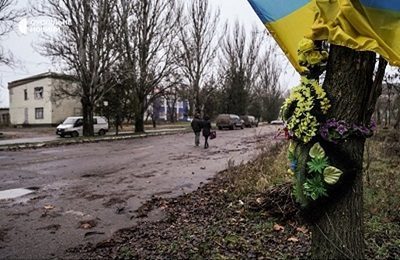
Photo: Taras Ibrahimov / Suspilne (The Public Broadcasting Company of Ukraine)
For quite a long time, Kherson lived in a dual reality: the Russian military was in the city, but the blue and yellow flag flew over the city council. Mayor Ihor Kolykhayev was present in the media space, reporting on the work of city services, and disseminating information on his social media pages that was important for survival. He constantly emphasised that he was staying in the city and continuing to work for the citizens. It was surreal.
Communal workers were working more or less properly. The mayor’s office wisely limited its functions to municipal services and trade, mainly in locally-produced goods. In my opinion, this was a lot. The streets were cleaned better than in peacetime, and garbage was regularly collected. Water, gas, and electricity continued to function. About a week after the occupation began, trolleybuses started running again, and small private shops opened. Other things did not work; traffic lights were switched off until the 3rd of April 2022.
The disruption of Internet service providers and mobile operators were expected and logical; the occupied city had to be deprived of communication with the territory controlled by Ukraine. The occupiers seized the TV tower on the 5th of March and tried to switch the mobile operators’ equipment to Russian networks.
By seizing the TV tower and switching off Ukrainian channels, the occupiers planned to impose the idea of “Russian people being liberated from Ukrainian Banderites” [Soviet/KGB pejorative name for Ukrainians, derived from Stepan Bandera, leader of the Ukrainian Insurgent Army – J.B.] on the residents of Kherson. Watching Russian channels, Kherson residents could not understand how murderers, looters, and violators of their normal, everyday life could be “liberators”. One woman in the queue wondered: “Why don’t they live in peace, why did Russian mothers give birth to sons to go and kill and be killed, why don’t they dream of grandchildren?” These are normal human questions, but they are not considered in Russia.
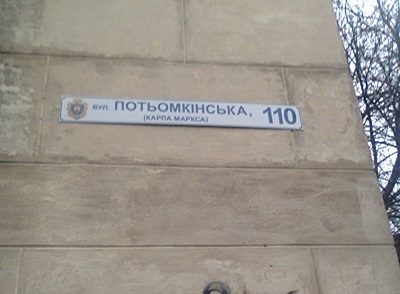
On the 26th of March, the city authorities organised a citywide clean-up day. It was primarily attended by public utilities, teachers, doctors and elderly residents. This action seemed to bring us back to peacetime. Everyone was in high spirits. We worked hard. It seemed that we were removing garbage from our land not only literally but also metaphorically.
At the end of April, the city council launched two riverboats for trips to summer cottages [dachas]. Many Kherson residents have them. For the elderly, this provides a certain consolation, because they can plant something and distract themselves from the tragic realities of life. Even during the occupation, people were preparing for Easter. There was some kind of revival in the city – people were buying eggs, sweets and Easter cakes. Communal services were cleaning the city, as it was Maundy Thursday. The aromas of Easter preparations were pleasant and familiar when entering houses.
Until the end of April, the Ukrainian flag flew over the city council. On the evening of the 25th of April, it became known that the occupiers had taken it down, taken the keys from the guards, and forcibly removed employees from the building. The dean of the faculty where I work recommended that I not leave the house for the next two days unless I had to. In addition, the sounds of fighting had stopped. That night I couldn’t sleep for a long time. The next day, the city hall was seized, and the mayor, Ihor Kolykhayev, started talking about performing his duties remotely. Since the 28th of June, he has been in Russian captivity and his fate remains unknown.
Queues and fear
With the beginning of the full-scale invasion, the “historical switch” seemed to shift to the already-forgotten Soviet era. Back then, queues were an organic part of the “Soviet way of life” familiar to my generation (I was born in 1957). In queues for everything and everywhere, people were exchanging news, telling jokes, meeting each other, flirting, and always trying to figure out who was next in the line.
The fear of the unknown, the fear of being left without supplies, food, water and medicine, as well as the desire to stock up on almost everything for a long time, pushed me to go to groceries, pharmacies, and drinking water outlets. Obviously, it was not only me but also thousands of other Kherson residents. Fear pushed people to stock up on everything that could be stocked up on. They bought what they could “get”. There was a certain psychosis: people were carrying huge bags, and some were just carrying packages of pasta, biscuits, flour, toilet paper, etc. There was a constant fear that certain goods would disappear. So, a day without shopping felt like a wasted day.
This behaviour is linked to the deep-rooted historical memory of the Holodomor and the need to react to events, to do something against the backdrop of difficult news. The urge to stockpile supplies was “palpable” and grew stronger every day. I remember that in the first days of the occupation, on an impulse my wife and I went into a bakery. We ordered a kilogramme of biscuits. The shop assistant said: “Take the whole package, we don’t know what will happen tomorrow”. We did, and the next day the shop was closed.
During the occupation, my wife and I had to stand in dozens of queues, sometimes for several hours. People in the queues were generally friendly, but anything could happen. In addition, the queue is a kind of “Brownian motion”: some people leave and do not return, and others return and then look for their turn. A queue is a communication medium, a special space for sharing news, rumours, and knowledge. Sometimes it helps to survive, and sometimes not.
In the queues, there was some talk that people could not leave Kherson, that Russians (“russhists” – a term derived from “fascists”) were planning to deport Kherson residents to Russia, and that people were disappearing. It was terrifying, and it felt helpless.
It was interesting to observe the moods. There were some pro-Russian people, but not many. They were quiet because they felt the general pro-Ukrainian mood of the people. Twice in the queues, I met either “useful idiots” or indeed agents of Russian influence who blamed the war on Banderite politicians who had allegedly imposed the Ukrainian language, but the people did not accept this.
People complained in the queues, for example, about the lack of eggs. On the outskirts of Kherson, in Chornobaivka, Ukraine’s largest poultry farm was shut down, due to a lack of feed. Some of the chickens and eggs from the hatchery were destroyed because of the threat of an environmental disaster. The rest of the chickens were to be slaughtered and supplied to the people of Kherson.
A big problem for the city is its dependence on food supplies from farms in the suburbs. These ties, established over years, were broken due to the invasion and occupation, the inability to do business and travel normally, looting, and repressions conducted by the occupiers. The occupiers set up road blocks across the Kherson region and did not allow cars from other regions to pass. People were not allowed to go to the surrounding villages to buy food. Those who tried were shot, or had their cars shot, or their fuel taken away. Pharmacies were opened, but there were no essential medicines there, just food supplements and vitamins. Of course, Kherson was not on the verge of starvation like Mariupol.
Barter, exchange, cooperation, and mutual aid (all the right things) were returning. One day, to secure my place in the queue, I bought a cigarette from the man behind me. Another time, I exchanged my spare bag for two cigarettes from a man who looked like a young father who had gone shopping without a bag.
Hand of the market
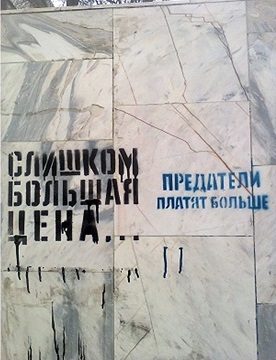
Later, spontaneous (or speculative, or occupation) trade returned on an unprecedented scale. The black currency market and the cash exchange of hryvnias flourished. Banks were gradually closed, ATMs disappeared, and people were forced to turn to “money changers” or “cashiers”, as it had previously been in the “DPR”/ “LPR” [so-called Donets’k People’s Rupublic and Luhans’k People’s Republic – J.B.]. The market had significantly “mitigated” the occupation deficits by responding promptly to requests for cigarettes, medicines, pet food, alcohol, etc. Both newcomers (they are immediately noticeable) and experienced businessmen became more active. Small shops with resourceful owners – who somehow managed to find the most popular products. e.g. dairy products, vegetables, cereals, and canned food – were particularly successful.
On the 13th of March, a coffee shop opened next to our apartment, which my wife and I used to go to in peacetime, and where we knew the owner and barista. The prices remained at a pre-war level. It was nice to have a coffee and plunge into the illusion of pre-occupation life for a moment.
Prices had risen for almost all goods, for both objective and subjective reasons. Many opportunists appeared: they literally demanded help from volunteers, wandering around the city for hours in search of humanitarian aid, for which they stood in huge queues. One day, my wife and I were walking with some bread we had bought at a local bakery. We met a woman who said: “Why did you buy it, they’re giving it away for free over there”. But by investing money, we are helping small businesses, and they are helping us. Of course, the big retail chains were not working. This was a clear indication that small and medium-sized businesses should exist. It gives stability to the economy, allows a large number of people to survive and realise their entrepreneurial talent.
There was a feeling that some people were severely under-resourced. Pensions and social benefits are usually small and are received through Ukrposhta (Ukrainian Postal Service) branches or banks. These institutions had suspended operations and the threat of impoverishment had become a harsh reality for many.
By the third week of the occupation, life seemed to have improved. Problems with milk, meat, and eggs almost disappeared. People from the surrounding villages began to bring their products to the market, and the dairy plant started working again. Small and medium businesses had resources left over, and farmers needed money for the new season. At the end of March, the central market had everything – fresh pork, beef, smoked meats, etc. – but the prices were sky-high. For example, piece of meat cost 700 hryven per kg, and before the full-scale invasion, it was 300. Sugar (100 hryven per kg) and buckwheat (90 hryven for a 900g package) were surprisingly expensive.
However, there were still problems with cigarettes and medicines, which became almost impossible to get. There were smuggled cigarettes of dubious quality, but these supplies were gradually depleted.
Strangers in the city
I saw a stranger on the first day of the occupation. I was going to a supermarket near the railway station to buy some food. An unusual-looking man caught my eye. He was not dressed like a Kherson man. Although now it’s hard for me to understand why I decided that. He did not behave like a local, but at least like a person from another city or even country – he was looking around with a piercing, distrustful gaze. For me, it was a sign of alarm and danger.
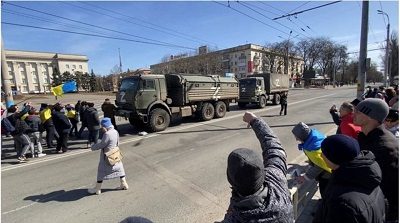
I saw the Russian military on the 12th of March, when I was standing in line for milk. I didn’t get any milk (there were about five hundred people in line, on a rather frosty March day!), but there was no shortage of emotions. A patrol drove along Ushakov Avenue, the city’s main thoroughfare, in two “Ural” trucks. A machine gun (automatic or semi-automatic) was sticking out of the bodywork of one of them, and several gunners were standing there. One of them shouted something and pointed it somewhere. It left a sad and disturbing impression.
By the second week, the city seemed to be getting used to it. At least, the first shock has passed. How can you get used to Russian military vehicles travelling down Ushakov Avenue? There was one armoured personnel carrier, several military trucks with armed soldiers (judging by their camouflage and equipment, they were Russian National Guard), and the military. The “Russian world” was demonstrating that it was already here, watching closely. It was travelling along the central avenue of the city on military vehicles accompanied by sirens. The vehicles were accompanied by military personnel with their faces covered: a dark scarf up to their eyes, black glasses, and no face visible at all.
Local television should also be considered alien in Ukrainian Kherson. Or rather, it has become an alien. The occupiers immediately seized the local TV centre, managed to create some content and started broadcasting it from morning to evening. I do not watch television, but in queues, in the yard, elderly people, mostly women, openly mocked Russian fakes and staples of the “Russian world”. The “Tavria+” studio collaboration with Russians was a bitter surprise. In peacetime, I repeatedly took part in the studio’s programs, gave interviews, and commented on the history of Ukraine and Kherson region. This formerly hospitable media platform abruptly became hostile.
For me, the occupation and the Russian departure from the city in the first days of May 2022 are like stories from Remarque’s books suddenly coming to life. I became the hero of the stories I loved to read, but not benefiting from the privileged position of an observer. Now, in my dreams, I often hear the sounds of sirens from armoured Russian vehicles and see queues for milk on frosty March mornings. When I wake up, I can’t help but wonder at what cost was the city where I have lived for thirty-five years liberated. Would the wounds inflicted by the “Russian world” on the city ever healed? What to do with collaborators? These questions have not yet been answered.
Prepared specifically for the website “Ukraina Moderna”. Published for the first time. Any reproduction of the text (in whole or in part) is possible only with the consent of the author and the editorial board of the Ukraine Modern website.
The publication uses illustrations provided by the Author.
This publication is also available in Ukrainian.
References and notes
[1] Liddell Garth B.G. World War II. Moscow: Voenizdat, 1976. pp. 96-99
[2] Patryliak I.K., Borovyk M.A. Ukraine during the Second World War: an attempt at a new conceptual view. Nizhyn: Publisher of PE Lysenko, 2010. pp.129-131
[3] Meyer K. German Grenadiers. Reminiscences of an SS General. 1939-1945. Moscow: Tsentropolygraph, 2007. pp. 123-126
[4] Manstein E. Lost Victories. Moscow: AST; St. Petersburg: Terra Fantastica, 1999. pp. 229-232