

– Doctor Prymachenko, please tell us about your research interests. Have they changed since the beginning of the Russo-Ukrainian war?
I was born and raised in Chernihiv. In 2001, I started my postgraduate studies at the Institute of History of Ukraine of the National Academy of Sciences of Ukraine. Since then, I have lived and worked in Kyiv. I have mostly been researching Ukrainian nationalism, the history of the Organisation of Ukrainian Nationalists (OUN) and UPA Ukrainian Insurgent Army (UPA), and World War II. From 2014, my focus shifted to the politics of memory. After the annexation of Crimea and the outbreak of the war in Donbas, Russia increasingly started using history to justify imperial expansion. It was at this time that I joined the team at “LikBez. Historical Front” [1]. My interests lie at the intersection of media studies and history, namely, how Russia promotes its historical narratives in contemporary media. The politics of memory regarding World War II remains a priority for Russia. The “Great Patriotic War” is a framework that is actively used by Russian propaganda to continue the war in Ukraine (for example, statements about the need to “denazify” Ukraine).
Currently, both Ukraine and Russia are experiencing “tectonic shifts” in the politics of history and memory of World War II. On the one hand, the distorted history of the Second World War is the basis of Russian historical propaganda, and on the other hand, Ukraine is now breaking with Soviet historical policy and new narratives are being built. The work of the team at the National Museum of the History of Ukraine in the Second World War is especially worth mentioning. That is why I continue to work on this topic.
– Please tell us about the “LikBez. Historical Front” project. Who started it, and for what purpose?
The project was initiated by Kyrylo Halushko in the spring of 2014. He brought together a group of experts to refute the myths of Russian propaganda. The name of the project is a reference to Kyrylo’s book Ukrainian Nationalism: Likbez for Russians, or Who Invented Ukraine and Why [2], which he published in 2010. The timing for the project was perfect. In 2014, it became clear that a systematic response to Russian propaganda was needed. In addition, there was a great demand for professional historical knowledge in Ukrainian society. Kyrylo publicly launched this initiative, and anyone could join in. I was among those who answered his call.
In 2014, the Russo-Ukrainian war broke out, and I could not stand by as a citizen of Ukraine. My professional knowledge was needed in my society. Russian propaganda was also an attack on the profession of the historian. Historians had to fight back. These are the two main reasons why I joined LikBez. Now the LikBez team is scattered all over the place; some of the men who work in the project enlisted in the Army, others are involved in volunteer initiatives that support the Armed Forces. But the project continues to exist. We feel a need for it, and I am sure that LikBez will remain in demand for a long time.
“I realised that the war was about to start”
– Since the autumn of 2021, the Ukrainian and international media have been actively discussing [first] the date of the start of the full-scale invasion as well as possible scenarios around how the Russo-Ukrainian war may develop in the future. Given the area of your professional activity, what was your personal forecast?
Due to my professional involvement in propaganda narratives, I felt a certain inevitability regarding a full-scale war. I think that most people were somewhat lulled into believing that the war was in the east, far away from them. Many people were reassured by Volodymyr Zelenskyy’s “barbecue” speech [3]; they were convinced there would be no war. This is probably a peculiarity of the human psyche. I also did not want to believe until the last moment that there would be a war, although all the facts stubbornly pointed to the opposite. I also hoped that the next escalation would end without a military invasion, that the scale of hostilities would be small.
As far as I remember, talk of an invasion began in October–November 2021. At that time, the probable date of the invasion was being discussed. It was clear that it would not happen before the new year, as Russia was not ready, but there was tension in the air.
I had a sense of the imminence of war most acutely in January, during a meeting with colleagues, when we were discussing our next project. Of course, we were exchanging views on whether there would be a war and whether Ukraine was ready for it. Our colleague, who was already in a territorial defence unit at the time and had come to the meeting directly from training, noted that they were practicing a scenario of withdrawing our troops from the borders into the interior to avoid a head-on confrontation. According to this scenario, the main focus was to be on destroying the railroad, because the logistics of the Russian army would largely depend on it. That was the first time I felt the approach of war; the expert community was taking the threat seriously. In society, the sense of threat was probably different, [ranging] from panic to scepticism. Then they began to name specific dates for the invasion: February 15th, February 20th.
I remember that on February 15th, together with the Maidan Museum, we held a roundtable discussion dedicated to the heroes of the Heavenly Hundred [referring to the 108 civilian protestors killed during the Revolution of Dignity in 2014]. We repeatedly mentioned the escalation of the situation, but everyone was calm; we were just doing our job.
When Putin signed the agreements to accept the so-called LPR/DPR [Luhans’k and Donets’k regions] into Russia, it became clear that something was starting to happen. I remember my Polish colleagues sending me a video. I immediately played it and started listening to Putin’s speech. It was disgusting, a stream of lies and hatred just poured from the screen. I realised that the war was about to start. I really didn’t want to believe it.
I had reserved time to work in the Sectoral State Archive (SBU) for February 22nd. Until then, I continued with my work schedule. On the morning of February 22nd, I received a call saying that the archive was not working and advising me to follow the updates on the SBU archive website. I realised that a military mobilisation was underway, as all the archive staff are employees of the Security Service of Ukraine.
– So, you were sure the war was inevitable, and the only open questions for you were the start date and the scenario of military operations. Did you prepare in any way?
It is difficult to prepare for an existential crisis. Before the full-scale invasion, I often went to Chernihiv to visit my mother. On one of my visits, somewhere in early February, I ordered a cat carrier. My mom laughed at me: “What is this carrier for? The cat has been living with us for eight years, we can get by with a bag!” I said: “Mom, you don’t understand, when the war breaks out, and we have to leave, the cat will need something to be transported in, and a bag would not work.” I also told my mother to collect my documents, but they were already in one place. That was the sum total of my preparation for the war. In general, the plan was simple: when the war would start, my mother would “pack” the cat and come to Kyiv to stay with me, and then we would decide what to do as the situation would develop. But it didn’t work out as planned.
– Did you prepare an emergency food kit?
My mom bought meat and made canned stew. She had never done this before because there had been no need. Canned stew is convenient to eat, you can make soup out of it quite quickly. I didn’t have any emergency food kit in Kyiv at all. About two days [before the invasion], I bought dry porridge and ready-made food.
“Has it really started?”
– Probably every Ukrainian will always remember how exactly they woke up on February 24th. What were your first thoughts and actions?
I woke up to explosions. I live on the outskirts of Kyiv, on the south side. I didn’t know where the explosions were coming from. It was a quarter past five in the morning. I have very thick blinds on my windows that do not let in light; I always lower them at night. I heard an explosion and a car alarm went off somewhere. My first thought was: “Has it really started?” I picked up my phone, looked at the time, opened Telegram and for some reason couldn’t find anything there. I cautiously approached the window because, to be honest, I didn’t know what to expect, maybe I should be running out into the hallway still dressed in night clothes. I raised the blinds and saw people running out of our building, getting into cars and driving away. I immediately called my mom and woke her up: “Mom, the war has started! I’ll try to come to you, I’m going to catch the bus at 8:40. Stay at home.” I had a ticket to Chernihiv for that day; I had bought it a few days in advance. I had a free schedule that allowed me to work from Chernihiv. I also messaged my friend: “Olya, the war has started. I’m going to go to Lisova [subway station — O.K.], and from there to Chernihiv.”
– Did you realise at this point that a full-scale invasion had really begun?
I hoped that this war would not be so terrible. At first, it was unclear what to expect, whether the Russians would limit themselves to air strikes or would come in [military] columns. I even took a book with me. I thought maybe I could read or work somewhere while all this was happening. My brain was stubbornly clinging to the daily routine, to a peaceful life. I took with me a book by Grzegorz Rossoliński-Liebe, The Life of Stepan Bandera [4]. I regretted it later. Throughout my academic career, I have been studying the history of the OUN, UPA, and World War II, and refuting historical myths created in Russia. We now know about the extermination lists of Ukrainian soldiers, volunteers, and civic activists that were kept by the Russian invaders. I don’t know if I was on those lists, but it is a known fact that the FSB knows about all the participants of the “LikBez. Historical Front” project. In the end, we are all quite public and have never hidden ourselves. I have a large library of historical literature in Chernihiv. For this alone, I could have been shot as a “Banderite” if the city had been occupied, and I brought Bandera’s biography with me. It is as funny as it is scary.
– Were you able to get to the Lisova subway station without any problems? Was there public transportation in Kyiv?
Yes, I managed to get there, but the service was cut off very quickly. People were leaving Kyiv en masse. I walked to the Teremky subway station along the road and saw all these cars waiting to leave. There were already traffic jams at 8am. The atmosphere in the subway was calm. People were quiet and focused, all with suitcases and backpacks. Everyone was leaving Kyiv en masse. At the Lisova metro station, there were a lot of people trying to get to Chernihiv. Usually, it is very easy to get to Chernihiv; there were always a lot of minibuses from the Lisova metro station. On February 24th, all the minibuses disappeared. The Autolux bus, for which I had bought a ticket, also wasn’t there. In my mind, I had already said goodbye to the idea of going to Chernihiv, but a miracle happened; a few hours late, my bus arrived. On the way, I saw that all the cars were moving in the opposite direction, and I thought: “Oh, my God, I’m going to the front line! What am I doing?” However, I decided to follow the plan: “Maybe it’s not so bad, I’ll figure it out once I’m there, I can’t leave my mom alone there anyway.” I had very bad premonitions. We got there pretty quickly. It was probably the last bus to arrive in Chernihiv that day. And perhaps the last one for the next few months.
“Everything stopped in Chernihiv”
– Doctor Prymachenko, how did Chernihiv welcome you?
My mom came to meet me. We decided to go to the ATB store [supermarket chain]. It was almost empty, no people, no food. All transportation in the city had disappeared. In general, everything had stopped. There were very few people on the streets. We went home on foot; fortunately, we live nearby. Then there was the first air raid. We hid in the bathroom, but it was still quiet in the central part of the city. On the first day, a national telethon started. We started watching it. We could barely hear the sirens from inside the house, which was a little scary. It was the last time we could sleep in our pyjamas, relatively speaking. The rest of my stay in Chernihiv (until March 5th) we slept with our clothes on, and the last five days before we left we lived in the basement.
– Tell us about your daily routine, how has it changed, and have you acquired any new habits and skills?
On February 25th, it became difficult because sirens were constantly wailing. We used to go down to the basement during air raids. Many of the neighbours laughed at us: “Why are you running back and forth?” Later, opinions were divided: some people immediately moved to the basement, others stubbornly stayed in their apartments. In the beginning, people disregarded the danger. We spent a lot of time in the basement. What to do in the basement to avoid going crazy? Someone suggested making Molotov cocktails for the territorial defence units. People saw us making these Molotov cocktails in our basement and brought warm clothes for the military. A small group began to form. A Greek Catholic priest took our Molotov cocktails and all the “humanitarian aid” we had collected and delivered them to the military. People wanted to help the army, to be useful in some way. After a few days, Chernihiv residents made so many Molotov cocktails that the authorities said: “Enough, we already have enough.”
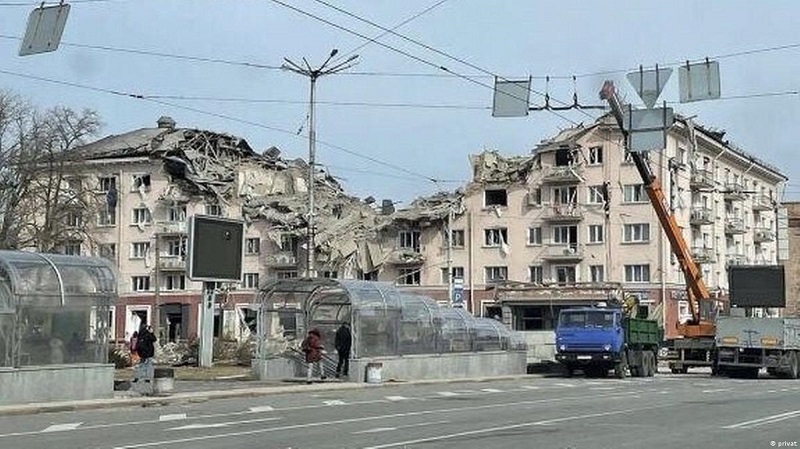
A curfew was immediately imposed, all the lights were turned off, and life in the city almost came to a standstill. The city was enveloped in gloom, literally and figuratively. On the first day, February 24th, traffic lights were still working, advertisements were on, and people sometimes turned on the lights. On the second day, the city was completely plunged into darkness. When there was an air raid at night, my neighbours and I ran to the basement, and we used our phones as flashlights. Usually it is never dark in the city even at night, there is always something glowing, but this time it was pitch black.
– What were the everyday things you missed the most?
First of all, normal sleep, I was chronically sleep-deprived. I couldn’t sleep at all. I’m a night owl, but I would wake up at five or six in the morning, regardless of whether I was sleeping in the basement or in the apartment. It was also impossible to eat normally: after a night in the basement (we would have some snacks there), in the morning, if there was no air raid, it was theoretically possible to make at least coffee in the apartment (gas, water and heat were still working), but in reality there was simply not enough time for making food or washing up. It happened like this: we quickly cooked some soup with the canned stew, poured it into bowls, started eating, the alarm went off, and that was the end of it—we would then grab a backpack and run to the basement. In the first days of March, Russian bombs began to hit the city centre more and more often.
– Many people recall unprecedented examples of neighbourly help at that time. Did you ever witness anything like that?
Yes, of course. We equipped the basement: the entrance door, the sanitary area. The help was most noticeable when it came to food. There was almost no food in the stores anymore, so we had to look for what was left, to walk around the city to buy bread. The goods in the big supermarkets were “swept up” in two or three days, but the neighbours shared everything. One day, a neighbour saw tomatoes in a store. She bought enough tomatoes for everyone and gave them away for free. Our neighbour, Uncle Vasya, found where they were selling bread and bought enough for everyone.
The bread was sold at different points, right from the car, probably to avoid crowds. We began to cooperate: we divided up who would go to which store to check all the different points, one person running in one direction, the other, another way. It ended up like this: one of the neighbours bought ten loaves of bread and shared it with the others, someone had canned food and shared it. Then a kiosk was opened not far from us, where you could buy eggs and meat. There was food, but we had to look for it. Our situation was not critical. We had porridge, canned stew and even potatoes. There was no need to cook with the neighbours at that time, everyone ate their own food. My mother brought a cauldron and canned stew to the basement, and we agreed that, should there be a critical situation, then we would cook together. Together we made a second exit from the basement in case we were trapped there. After all, a basement is not a bomb shelter. Thank God we didn’t need that second exit; our building withstood the attacks, even though it was damaged during the air raid on the city on March 3rd. We were very lucky. After that, we checked the empty rooms in the basement, where we could move to if needed. People started to settle down because they realised that it could take a long time. And, of course, they started looking for opportunities to leave.
In general, our basement was “luxurious”. One day, during an air raid, the guys from the territorial defence came to us. They said: “Your basement is so cool, in other places people are so cramped that you can’t even stretch out to your full height, while you have a suite here.” I called this “suite” the “Rathole Hotel”. In general, I was extremely angry that the Russians had forced us all into basements.
Unfortunately, I don’t have any photos of the basement or our building at that time. I took hardly any photos while I was in Chernihiv and on the road. There was simply no time for that. Since I was preparing for the worst. In early March, I closed my Facebook profile to outsiders, and cleared the memory on my phone and computer. Deep down, I realised that, upon closer inspection, the Russians would see who I was. But I still decided to take at least some action.
– What was the worst day during your stay in Chernihiv?
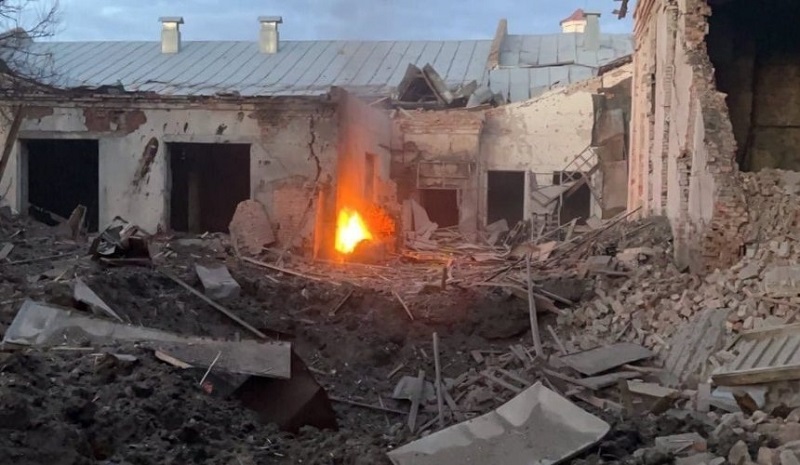
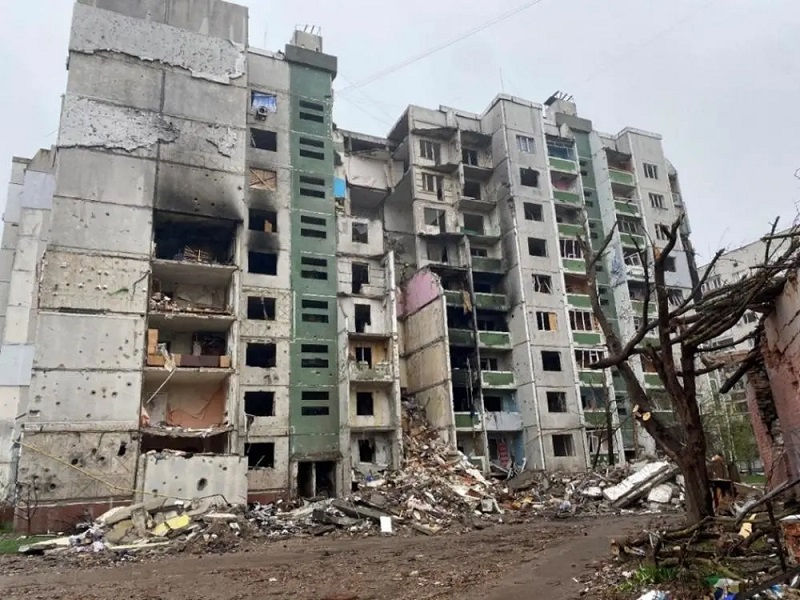
March 3rd. Eight air bombs were dropped on the street where my parents’ home is located. It was the day with the biggest number of casualties in Chernihiv. Later it came out that forty-seven people had died [5]. People were just standing in line at the pharmacy and at the store to buy bread. At the time, many Chernihiv residents were ignoring the air raids. We did not ignore them; we were sitting in the basement of our building. It was a very powerful blow; we had never heard anything like it before. It was so loud that we felt the ground rumbling under us. We all jumped up. Some people started running into our basement. Everyone who was outside at the time was scared and ran to the nearest basement. During the day, as a rule, the doors to all the basements were open. When we came out of the basement, we saw that some of the windows of our building had been blown out. There was a lot of glass. The blast smashed the windows in the entrance hall. Some of the neighbours ran to see what happened. They came back in shock, and one guy was shaking with shock. He said that half of the building had been blown away, that there were many mutilated bodies, and that an ambulance and the State Emergency Service had arrived. This is a residential area in the city centre. There are only residential buildings, pharmacies, shops, a kindergarten and a school a little further away, and a cardiology centre opposite the half-destroyed building. There had never been any military there. Even during the battles for the city, our military were not there. The next night, all our neighbours who used to stay at home spent the night in the basement.
“They will shoot me, and that’s it, because of the book, because it’s a Banderite book”
– Doctor Prymachenko, what scared you the most? Which scenario was the worst for you personally?
The worst for me was the occupation. My position was quite radical. I told my mother and our neighbours that I would rather have the city razed to the ground than have the Russians come in. I realised that our chances of surviving the bombing were higher than our chances of surviving the occupation. Firstly, they [the Russians — O. K.] were already very angry because they could not take the city for so long, and secondly, I did not expect anything good from the occupation. I could already see the Syrian war scenario unfolding. From the very beginning, it was naïve to think that the Russians would follow the rules of warfare, but it was probably a psychological defence mechanism. When something terrible happens, you just refuse to believe it right away.
Every morning I spent in that city surrounded by Russians started the same way; I would crawl out of the basement and hold up my phone to receive the latest news. I wanted to know the answer to only one question, whether the city was still under the control of the Ukrainian army. Every day it was a great relief to know that the city hadn’t fallen. I don’t know how other people perceived the situation, but I understood that if there was a risk that our troops would be encircled, the city would fall. This is the usual logic of war: it is better to lose the city than the army. For me, this scenario was the worst. I realised that my library was enough to declare me a “Nazi”. No one would even look into it: they would shoot me, and that’s it, because of the book, because it’s a Banderite book. They will probably shoot not only me but also my family. At the time, I joked bitterly that, under occupation, they would shoot me, my mother, and then my cat—just for fun.
We did not have an objective picture of what was happening. We got information only through word of mouth. Locals told us what was happening around us. Our neighbours’ son, who lives in Novyi Bilous, came to visit us and told us that the bridge over the Bilous River had been blown up to prevent the Russians from entering the town. We knew that the Russians were in the village of Mykhailo-Kotsiubynske, and there were no green corridors. The blockade was getting tighter. I started looking for ways to leave the city. It was not easy. There was almost no fuel in the city. Even if you had a car, how could you fill it up?
– So, in early March, there was no green corridor out of Chernihiv. Was there any particular event that spurred your decision to evacuate?
I had thought about finding a way out of the city as early as February 24th, when I arrived in Chernihiv. I immediately told my mother that we had to leave. My mother was not yet mentally ready: “It’s dangerous, and we don’t have a place to go, let’s wait.” On the other hand, I didn’t have a clear plan either. Besides, I didn’t have a car. It really seemed logical to wait a few days. The situation began to deteriorate exponentially. From the very beginning, I was very afraid of the occupation. I told my mom and others: “God forbid, but if they come here, that’s it!” At the time, I did not fully realise how realistic my fears were. When the whole world became aware of Bucha, I realised that my predictions were not unfounded.
I realised that we were not being told the whole truth. The logic of the authorities was clear and justified: if we knew what had been happening around Chernihiv, panic would have broken out. People rallied around the mayor; he had great authority among the members of the territorial defence units because he was directly involved in the fighting. By the way, in one of his interviews he said that the worst thing for him would have been captivity, that it would have been better to die than to surrender. He probably realised that if he was captured, he would face torture and a terrible death.
I saw that the situation in the city was deteriorating. First, Chernihiv opens a direct road to Kyiv. It is difficult to drive on the surrounding roads, especially with large vehicles. The Russians needed the main highway. Second, the humanitarian situation was becoming difficult. We still had bread, we could buy some things, we had some medicines, but it was clear that this would not last long. Eventually, my mother agreed that we had to leave.
We managed to find people who agreed to take us out of the city. We planned to leave on March 4th, but it didn’t work out. They were not allowing people to leave Chernihiv because there were battles with the Russians near Yahidne. When there were fierce battles, the only bridge through which one could leave Chernihiv was closed and people were not allowed to leave for security reasons. The head of the Chernihiv civil-military administration, Vyacheslav Chaus, officially stated that there was no green corridor, and that people could leave, but at their own risk. The authorities urged us to stay in the city, because in the city you can get help in case of emergency, but on the road you are on your own. But I could no longer stay in the basement, psychologically or physically.
The agreement with the people who were supposed to drive us out of the city was as follows: they help us get out, and I help them find a place to stay in Western Ukraine. We had hoped to leave on March 4th, but the bridge was closed. On the morning of March 5th, when we woke up, I asked my neighbour: “So, are we going?” He replied: “I don’t know, there is no confirmation that the bridge is open.” I didn’t have any hope anymore, but thirty minutes later we got ready to leave. Suddenly, sirens started blaring, and we ran to the basement with all our belongings—a few backpacks, food in a separate bag, a blanket, and the cat, of course. A few minutes later, a car arrived. The neighbours who were in the basement with us went to see us off.
It looked like a bad movie: a siren wails, a car arrives, and the car is already full of people. The driver, Sashko, comes running and says: “I can only take one suitcase.” He opens the trunk, and it’s full of everything. He throws oil out of the trunk to fit our things in. My neighbours and I hugged each other, gave the neighbour the keys to the apartment and the basement, and rushed to leave. We drove around Yahidne because the invading army was already there. Then I learned about the tragedy of this village. All the people were taken to the school basement, and they lived in that basement for almost a month. Many people could not stand the suffocation and died. The Russians forbade taking out the dead, and for several days the bodies were lying next to living people. It was terrible.
We travelled in a caravan of five cars with friends of friends. We were strangers who co-operated to leave together. Thousands of cars were leaving. It was one endless traffic jam until we reached the Kyiv highway. My mother and I were put in different cars. I was in a car with a family: a married couple and their son, Enei (seven or eight years old). Our driver Ivan warned us: “If they start bombing, I will immediately tell you to get out of the car. Then you need to run out, throw all your things, fall to the ground or into a ditch. Maybe you’ll get lucky!” We realised that driving in such dense traffic, we were like targets in a shooting range. If we were lucky, we would get out, if we were unlucky, we would be shot. Then I found out that a car with civilians had been shot up near Yahidne.
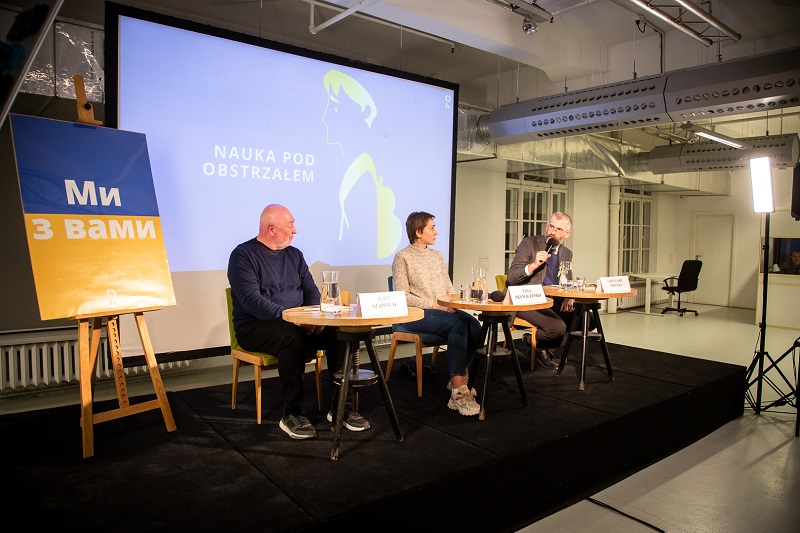
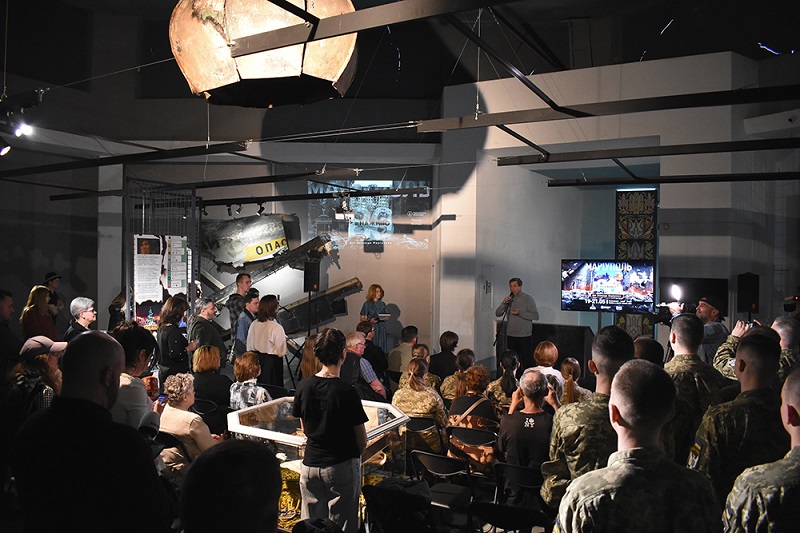
March 22nd, 2022. From left to right: Yuriy Shapoval, Yana Prymachenko, Grzegorz Motyka
– Did you know where you were going?
We were going to Poland. The original plan was completely different though; so much changed during the five days on the road. We said goodbye to our fellow travellers in Stryi. As promised, I found a place for them to live. My Polish colleagues agreed to take my mother and me in. We were very well received in Poland. Right at the border, they gave us hot food and hot tea. It was very, very appropriate because the weather was cold. It was March 9th, and it was snowing heavily. We got to Kraków after a short stopover, and there we got free tickets to Warsaw. The journey to Kraków was difficult, very long. We were traveling by train, there were a lot of people, some sitting in the aisles, some on their bags, although there seemed to be enough space. At every stop, volunteers came in and handed out water, sandwiches, fruit, sanitary pads, hygiene products, etc. People were exhausted. Everywhere we heard:
– “Where are you from?”
– “We are from Kharkiv.”
– “And we are from Chernihiv.”
– “How is it in your city?”
– “The bombs are dropping.”
“The West saw, heard and realised that Ukraine is not Russia”
– Has the focus of your professional activity changed after going abroad?
No, the focus has not changed. I stayed in Poland for some time, and my Polish colleagues supported me. At that time, I had already almost completed a large Polish project, Polish NKVD Operations of 1937-1938. A collection of documents should be published soon.
I am currently at Princeton, supported by the Scholars-at-Risk programme. This has allowed me to pursue my project, which is related to the politics of memory and Russian historical propaganda. I am grateful to Princeton for giving Ukrainian scholars the opportunity to work here. Unfortunately, it is not possible to fully immerse myself in research because the war is ongoing and all Ukrainian scholars who are now abroad are kind of ambassadors for Ukraine. Everyone participates in war-related events, public lectures and roundtables. This is very important. On the one hand, we present our work, while on the other, it is a unique opportunity to spread knowledge about our country.
– In your opinion, what should be a priority now, in a time of deep humanitarian and security crisis?
All Ukrainians are in difficult circumstances now, but each in their own way. Of course, we are not being bombed abroad, and this is a great relief. However, it is still difficult to convey the Ukrainian position here. Western Slavic studies is still focused primarily on Russia and is represented by Russian scholars and American Russian studies scholars. For a long time, the entire region of Central and Eastern Europe was viewed through the Russian prism. Russian history is quite well institutionalised in the West. When there is a strong institutional memory, it creates a powerful inertia that is difficult to overcome.
Of course, the Russian aggression against Ukraine has triggered processes of transformation and a rethinking of existing approaches in Slavic studies. It is easier to promote knowledge about Ukraine now than, say, ten years ago. The war has become a major media event. It should be apparent that Ukraine is paying a huge price to come out of the shadow of Russia, so that the world can see and hear our voices. Now they see us, but whether they can hear us is still a question. I believe that today Ukrainian intellectuals, and Ukrainian humanitarians, they have a great responsibility. We, unlike Russian intellectuals, have done some of our work, although, of course, not all of it and not to the end. We did not remain in an ivory tower, but were actively involved in public discussions. Not everyone, of course, shares this point of view. Some believe that academic research should be outside of politics. If there is a demand for historical knowledge in society, then who but a professional historian should share this knowledge and tell the story as objectively as possible? In addition, Russian historical propaganda is an attack on the profession. Who can defend professional standards better than professional historians? Unfortunately, politicians and charlatans have turned history into a weapon, a tool to justify genocide. Now we have a big problem, that of underestimating humanitarian knowledge. In the age of high technology and digitalisation, the hard sciences have become the priority. People began to believe that the humanities are secondary. This is a big question, because it is the humanities that create the “matrix” of values. The Renaissance was created by those who studied and practiced humanities—artists, writers, philosophers. They created this matrix, which gave impetus to the development of natural knowledge. Humanitarian knowledge is about organising, creating a matrix of values. History is responsible for identity, and no matter how much we want it to be, history will never be outside of politics. What can we do as professionals? First of all, we should not allow politicians to manipulate history. This is our area of responsibility as intellectuals. It seems to me that Ukrainian intellectuals are doing a good job, given the almost complete lack of state support, unlike Russian intellectuals who gradually surrendered their positions to Putin. Unfortunately, the world has forgotten about true values, and this is a direct path to the dark times of dictatorship, wars, and genocides. Global efforts are needed for the world to function properly and work in the context of globalisation. The war in Ukraine has a global impact. Rising food prices, the threat of hunger, environmental degradation and climate change are all consequences of the Russian war in Ukraine that the whole world is experiencing. Unfortunately, there is no understanding at the global level that this war can be over only when Russia has been stopped. Now Ukraine stands alone for the entire world. Of course, the West is helping, but this help is not enough. In my opinion, the world is slowly “sleep-walking” into World War III. How long can Ukrainians and Ukraine deter Russia? This is a rhetorical question, but it is obvious that we cannot do it alone indefinitely.
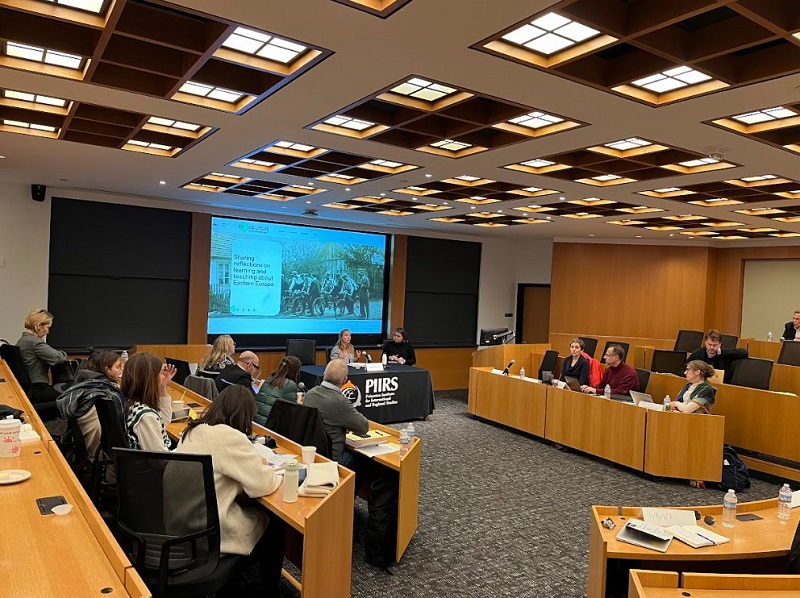
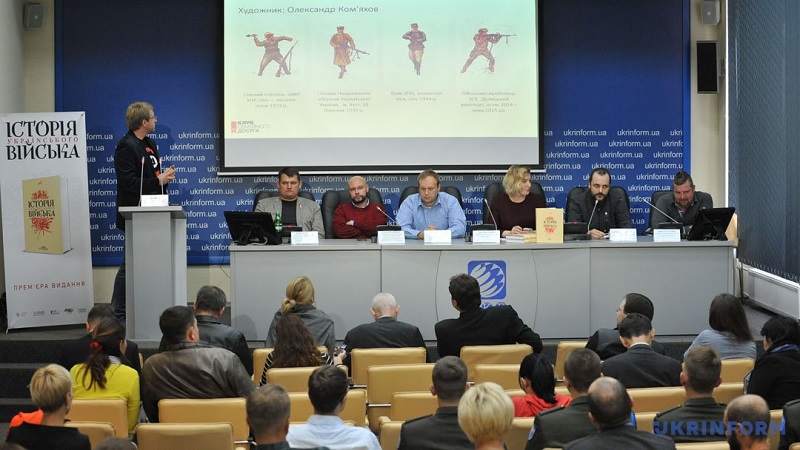
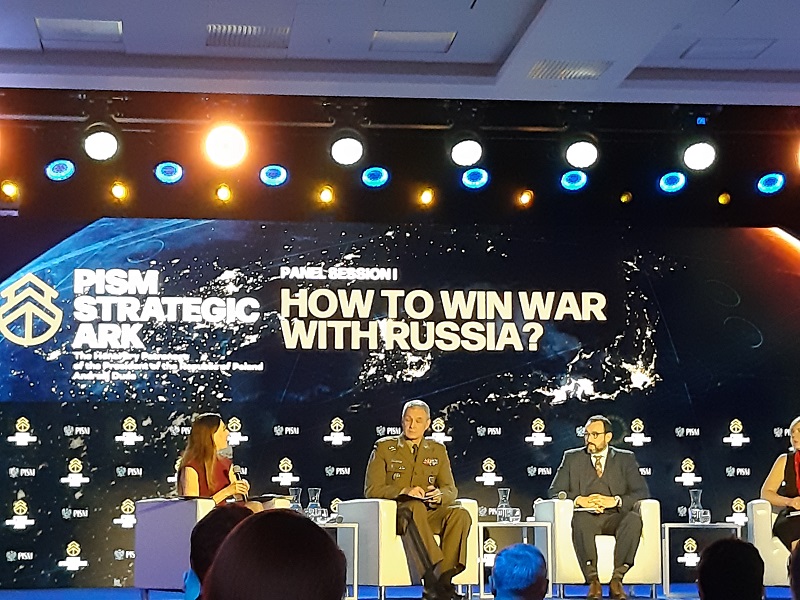
November 7th, 2023. Photo from the website of the Centre for Urban History
– Is there a sense that American academia is no longer trying to see and hear Ukraine through the prism of Russian broadcasters?
There is still interest in Ukraine, but of course, it has decreased compared to 2022. This was quite predictable. Western academia is slowly beginning to reshape its institutions and change its focus. There is a big debate now about how to teach what used to be called “Soviet studies”, how to teach the history of Central and Eastern Europe, and Eurasia in general, and how to work with politically-charged terms. For example, because of [Alexandr] Dugin (Soviet and Russian philosopher, and long-time advocate for the invasion and annexation of Ukraine), the geopolitical term “Eurasia” [which historically bound Ukraine conceptually to Russia] has been discredited to some extent. Now there are discussions about what terms to use. These are positive signals. I hope that qualitative changes will not be far off. Ukraine is paying an extremely high price to come out from Russia’s shadow, to be seen, heard and understood that Ukraine is not Russia.
– Is the influence of Russian propaganda still felt in the West?
Yes, the influence of propaganda is very powerful and, unfortunately, the inertia remains. Moreover, Russia has not ceased its propaganda. It is important to realise that we are dealing with a dangerous enemy, an enemy that has invested heavily in promoting itself, and its image, in the West, in creating a propaganda machine that still works effectively. That is why it is important that Ukrainian scholars write a strategy for Ukraine’s humanitarian development for the next twenty to thirty years, one which would take into account aspects of domestic and foreign policy. This would be a guide for the government. The problem with Ukraine and the Ukrainian government is the lack of consistency. We really need a humanitarian strategy for Ukraine’s development that would be a framework, a general direction.
– Doctor Prymachenko, how do you assess the prospects for Ukrainian academia?
Academic research and higher education have suffered greatly due to the outflow of professional staff and students. Again, everything will depend on whether the state has a humanitarian development strategy. One of the key issues for the near future is the return of Ukrainian refugees. To return, we need to understand where to go: whether there will be housing and work. If so, people will start returning. This also applies to scholars; academia is going through hard times. Against the backdrop of the challenges facing Ukraine—primarily security—academic research, of course, fades into the background. However, it is science [the social sciences and the humanities, as well as the hard sciences] that can ensure the victory and sustainable development of Ukraine. I am quite optimistic about the situation. It is believed that the longer a person stays abroad, the less likely they are to return, but in any case, some scholars will definitely return. Those who stay in the West will still be connected to Ukraine, as they will work on Ukrainian topics. It’s also good that there are people who can promote Ukrainian scholarship abroad.
The interview was conducted by Olena Kondratiuk.
The publication uses photos from the private archive of Yana Prymachenko.
This publication is also available in Ukrainian.
References and notes
1 About the project // LikBez. Historical front
2 Galushko K. Ukrainian nationalism: Lykbez for Russians, or Who Invented Ukraine and Why. – Kyiv: Tempora, 2010. – 632 p.
3 President Zelenskyi on the war with Russia: Don’t panic!
4 Rossolinskyi-Liebe H. Life of Stepan Bandera / trans. from English – Kyiv: “Anthropos-logos-film” publishing house, 2021. – 688 p.
5 More information about the bombing of Chernigov on March 3rd, 2022 can be found here: A. Ivantsiv. House with the letter Z. Stories of those who survived during one of the most tragic aerial bombardments of Chernihiv // Suspilne: Chernihiv