

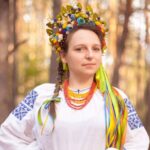
“I woke up to the noise of helicopters, they were clearly visible from the balcony”

‒ Anastasiia, the past year has changed all of us. I know that drastic changes have taken place in your life as well. You have had experiences that you could not even have previously imagined. Could you please share how your personal story of Russia’s full-scale war against Ukraine began?
To be honest, I felt quite anxious on the eve of the invasion, because there were constant discussions about war and go-bags in the media and online. But January and February have always been very productive months for me [this refers to the period of seasonal ritual holidays, which A. Pankova, as an ethnologist and folklorist, helps organise every year – S. M.], so I had something to distract myself with. As almost all of my respondents later said [1], no one could fully believe that a full-scale invasion was possible in the twenty-first century. Nevertheless, given the already long experience of our people [of the ongoing war], I decided to make certain preparations and purchases. Although I left it to the last minute. I made the final purchases on the evening of the 23rd of February [2022 – S. M.].
A brief background. I got my driver’s license on the 31st of December [2021 – S.M.]. In January [2022 – S.M.], I drove a little bit, and then I decided to go out in the evenings to practice and not to lose my skills. So, in the second half of February, I would get behind the wheel every evening and drive around the outskirts of Irpin until around one or two in the morning. On the 23rd of February, I also went out around 8p.m. That evening, I chose a route to Moshchun, passing through Blystavytsia [a village in Bucha district, Kyiv region] and Bucha on my way to Irpin. I remember stopping in a field… my body is getting goosebumps again right now [pauses]. Later, the military informed me that on the night of the 24th of February, certain enemy groups had already been in the area where I was driving, as air operations [which became known on the 24th of February at 04:31a.m. – S.M.] always have ground support. The enemy forces were definitely already in those surroundings. After making my final purchases, around 11p.m., I bought some coffee and went home. And early in the morning on the 24th of February, everything began…
I woke up to the noise of helicopters; they were clearly visible from the balcony. On the 24th of February, at about 2 or 3 o’clock, the AAW (anti-aircraft warfare) system was already operational near us. I live on the outskirts of Irpin, closer to the exit to Kyiv. The next bus stop from me is “Vodokanal”, and AAW was working very close to there. At first, it was scary, but then I got used to it because I knew it was ours. The sound was very sharp and penetrating, like a thunderstorm over your head.
– Do you live in an apartment block?
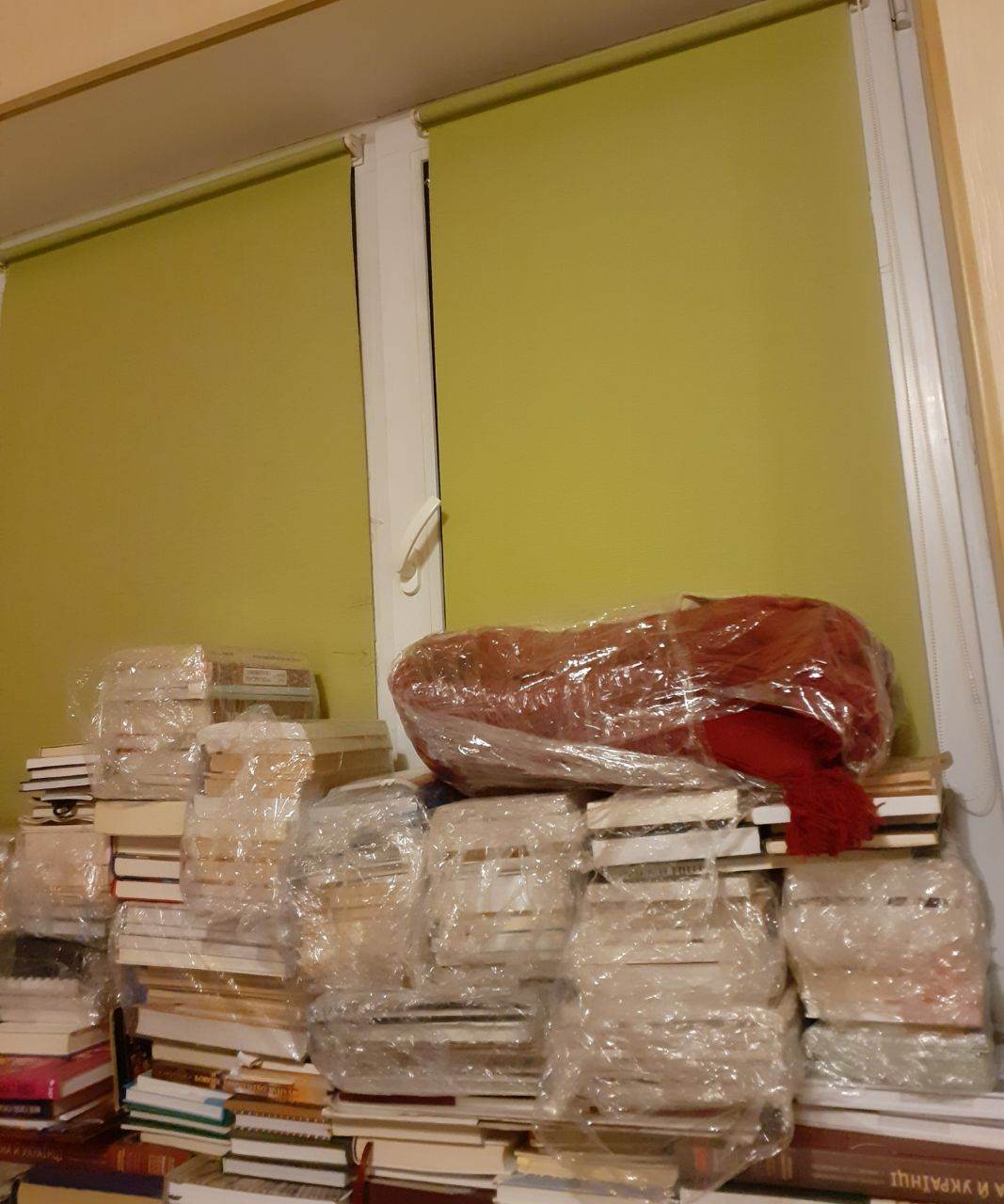
24th of February 2022.
Yes, in a five-storey building. There is a small forest near us, from which the road to Kyiv goes through the notorious Romanivskyi Bridge [a bridge that connected Bucha and Irpin’ with Kyiv, site of a previous battle – J.B.]. That’s where the AAW was located. In the darkness, flashes could be clearly seen, repeating almost every three minutes. It was then that I realised it had all started. I also realised that it would be impossible to leave the building that day because of a huge traffic jam. Local groups were posting photos from Zhytomyr highway, where traffic was at a standstill. It was good that on the 23rd of February I had filled the car up with petrol; the tank was almost full. But I realised that all this fuel could have been used up in the traffic jam, so I decided to tape up the windows and pack my go-bag.
“I took a so-called “survivalist” kit, not a backpack with the most precious belongings”
‒ What was in your go-bag?
First of all, it included medicines, food – mostly dry – some cereals, a bottle of oil, sugar, salt, I even put seasonings in, coffee, tea – obligatory – lemon, and sweets. By the way, there were hexamine tablets, different candles, and knives. I had had a dream of travelling around Ukraine, so I had bought a set of plates, a towel, and dishwashing detergent. In a word, it was very homely.
– As far as I know, you have a lot of field-trip experience. Did your go-bag look like your fieldwork backpack?
That’s an interesting question. Yes, I’ve been packing fieldwork backpacks since 2008, which is fourteen years of constant packing and travelling. In general, the fieldwork experience has helped me a lot. In particular, I have already developed the habit of packing for a fieldwork trip in ten to fifteen minutes. But this time, getting ready was like preparing for an expedition with tents for two weeks. In ethnographic expeditions, we expect to be able to find shops and buy what we need. Here, it was more like a long expedition outside of civilisation. By the way, I still have that bag packed.
‒ Did you have an evacuation plan?
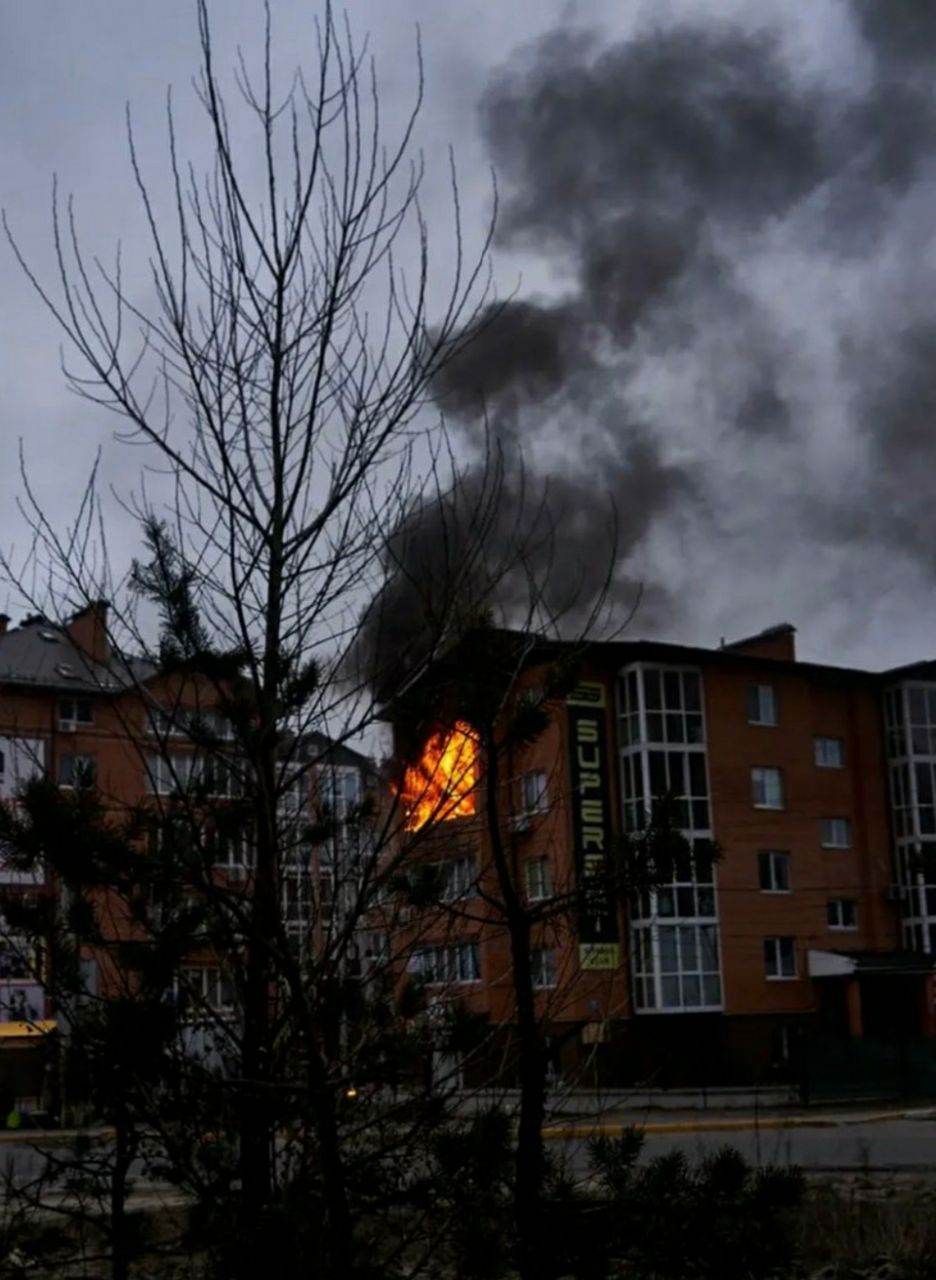
The neighbouring apartment is on fire.
5th of March, 2022.
I did not, because I could not believe what was happening until the last moment. For some reason, I was convinced that everything would end quickly. I had a feeling that it was just intimidation that would not turn into a full-scale war. But after the 24th of February, I gradually began to realise the scale of the events. I took very few clothes: a tracksuit, jeans, and three T-shirts, one of which I later lost. In general, I packed my bag well, but when I later saw a photo of my building entrance on fire in our condominium chat [the 5th of March 2022 – S.M.], I immediately thought of many things dear to my heart that I could have taken with me. I took a so-called “survivalist” kit, not a backpack with my most precious belongings [keeps silent].
I remember that I took all the fieldwork diaries and hard drives, which were quite voluminous and heavy. This is a professional foible. I divided important things, such as first aid kits, into two parts so that I could leave the heavy bags behind if necessary and carry the most important things on my shoulders. So I put my documents, first aid kit, diaries, and hard drives in my backpack.
At some point, I realised that there was a war between armies, so civilians would only get in the way. In order not to become a burden for our military, who would have to pull us out of the rubble, we decided to leave for a day or two at most [most Ukrainians initially believed hostilities would only last a few days – J.B.].
It turned out to be impossible to make contact with the territorial defence forces base, as everything in Irpin’ was locked. Even getting to where the territorial defence unit should have been, we couldn’t find anyone. My colleague and friend S., who lives not far from me, tried to get to [different] petrol stations, but there were incredible queues there. I remember going out to withdraw cash… and buying a cake. After some discussion, we decided to have a tea together. It probably looked very strange, it was a kind of black humour, but we did “celebrate” the beginning of the war on the evening of the 24th [February – S.M.]. It was just an excuse to get together with the usual company: S.’s friend and her husband, my neighbour Olia, our beloved dogs and me.
“My grandmother used to say: ‘When the war starts, you won’t hear it. Tanks will be rolling, and you will be sleeping.’”
On the 25th of February, at six in the morning, the Romanivskyi Bridge was blown up. On the second day, I was already feeling extremely tired from the constant operation of the AAW, the helicopters, and the explosions. That morning, I woke up to a very powerful explosion, much stronger than the ones I had heard before – I was thrown around a bit. I looked around but the apartment was intact, and then I fell back to sleep. Since I was a child, people used to joke about me that I slept as if I were dead in the morning. My grandmother used to say: “When the war starts, you won’t hear it. Tanks will be rolling, and you will be sleeping.” She used to say such phrases a lot after the Second World War. And this is how it happened [laughs].
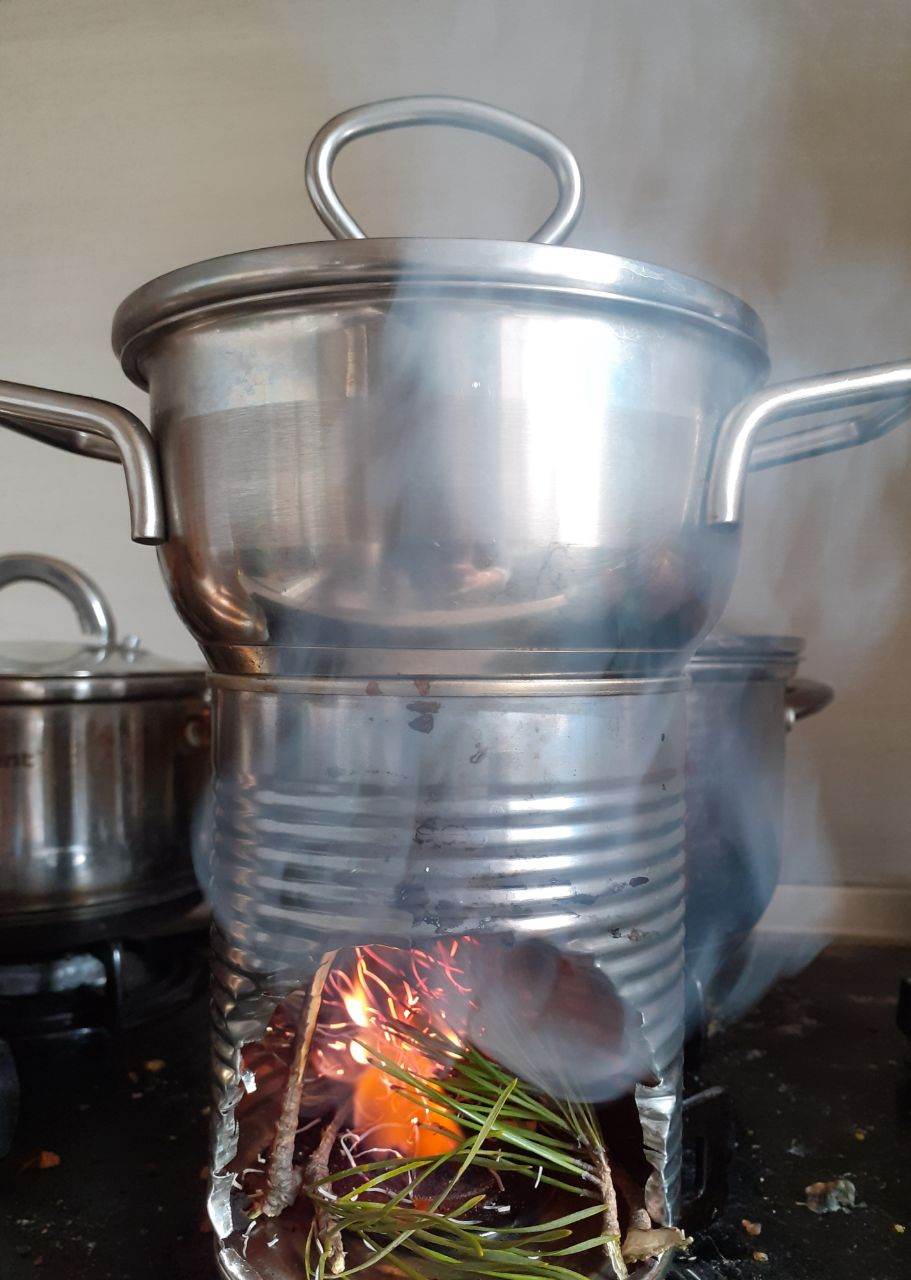
25th of February 2022.
I had vast experience that came in handy. In our pre-war life, we used to make a kind of “stove” out of tin cans to melt wax and make wax candles for copies of Ukrainian traditional wreaths. And when we lost gas and electricity on the second day of the war, we boiled water in a small saucepan on this stove, using hexamine tablets, pine branches, and candle wicks. We were so eager to have something hot and ordinary that we didn’t even pay attention to the strong smoke from the pine branches.
‒ What was your greatest fear at the beginning of the invasion?
One of the biggest fears was becoming disabled, which a military friend once told me about. When my fears started to go off the scale, the “rational” part of me seemed to be muted. Later, however, I started to dream about it. I was also very much afraid of being raped by the Russian military and even in my dreams I ran away from them, from Irpin’. When they caught me in that horrible dream, to avoid violence, I looked for arguments, like: “My surname is Russian!”, “My grandfather was born near Voronezh” [smiles].
‒ How long did you stay in Irpin’ after the war started?
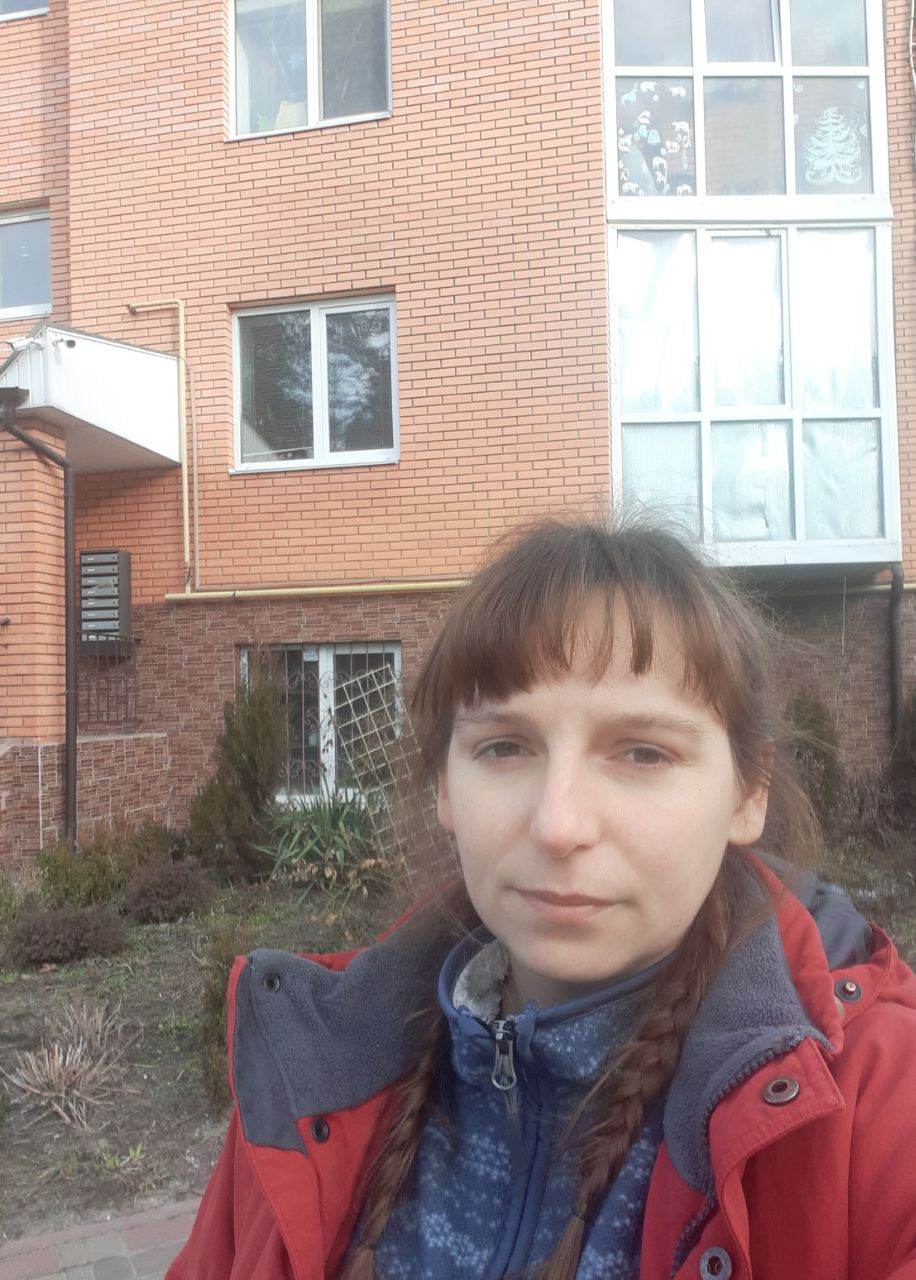
near her house before leaving Irpin’.
26th of February 2022.
As far as I remember, three days. There was information from various sources that, in addition to the helicopters that were constantly flying overhead, columns of soldiers were also advancing on Kyiv. It was clear that, on their way to the capital, the troops would not avoid our street. It took me a long time to convince my friends, and they finally agreed to leave. My friend S. and her husband had five chickens and two dogs, and they took them all to their car. I took the minimum because I expected to leave for a day. And when my neighbours put a sack of potatoes in my car, I was surprised beyond belief, because I hadn’t even taken my laptop, and they were bringing potatoes [smiles]. We decided to go to Byshiv [a village in the Fastiv district of Kyiv region, south of Zhytomyr highway – S.M.] to visit a neighbour’s friend. I knew we were going to the countryside, so I didn’t think about potatoes. Then my neighbour Olia put another bag of sand in the car for her cat. I tensed up again: wouldn’t there be sand for the cat in the village? After weighing everything up, I went to get my laptop [smiles]. We left in two cars: S. with her husband, their friend V., chickens and dogs in one, and Olya and I, with the cat, in the other one. On the way, not far from Buzova [a village in the Bucha district of Kyiv region – S.M.], we also picked up my colleague Andrii. As it turned out later, it was a very timely decision, because a few days later, Russian troops shot up many civilian vehicles on this section of the Zhytomyr road.
“Byshiv was like an observation deck for the fighting: Makariv – Korchahinets – Stoyanka – Vasylkiv”
‒ How long did you stay in Byshiv?
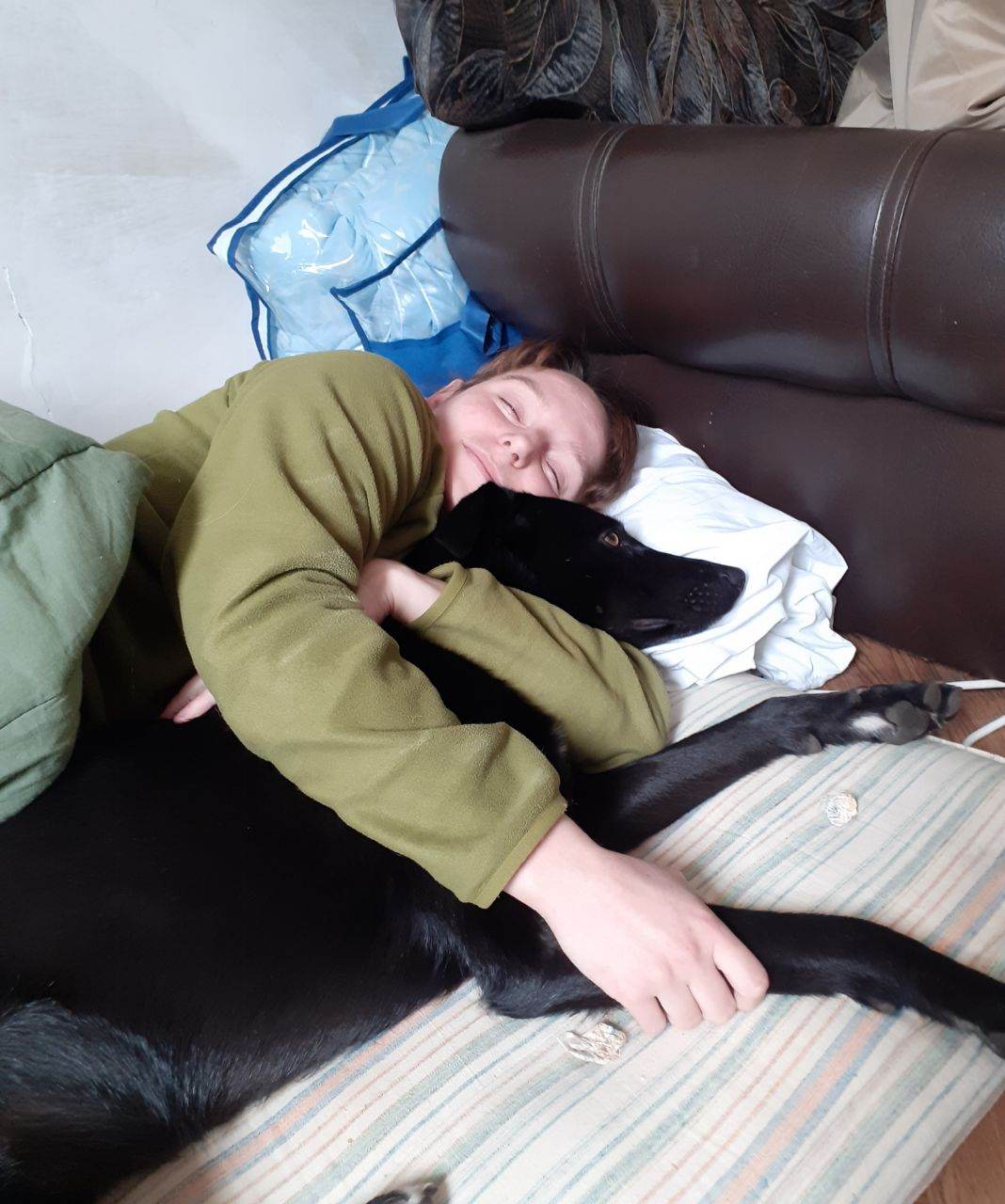
7th of March 2022.
We stayed in Byshiv for about two weeks. It was a very interesting period. At first, it was quite good, even though the small two-storey building housed twenty-three people, four of whom were children. We had an Indian family and a Pakistani family, also with children, as well as eleven cats and four dogs. The Ukrainians were all from Kyiv. Sometimes there was a cell connection. The electricity went out from time to time. Under the stairs, we had our corner with a sofa, where three of us could sleep, and three more slept on the floor. We lived in our, so to speak, “Irpin’ corner”. It wasn’t easy, but despite the difficulties, we were very grateful to our hosts and the little house that took us in.
Around the third day, we went to the local “culture house” and signed up for a waiting list at the local territorial defence unit. They told us to wait and gave us yellow ribbons. I tied one of them on my jacket and didn’t untie it for another month – I couldn’t. But we never received a call; the list of applicants was very long!
At first, we thought we had moved to a fairly quiet, peaceful place, but then it also became “hot”. The war was coming. Soon, fighter jets started flying overhead, and for a long time, we did not understand whether they were ours or the enemy’s. From Byshiv we could see the shelling of the outskirts of Irpin’, which is closer to Bucha. We also saw the fighting on the Zhytomyr road, near the turn to Buzova. It was like an observation deck for the fighting in Byshiv: Makariv – Korchahinets – Stoyanka – Vasylkiv. We lived near the forest, over which enemy convoys were launching flares: green – yellow – yellow – red. From time to time, our soldiers would shoot at those places, and this went on for a very long time.
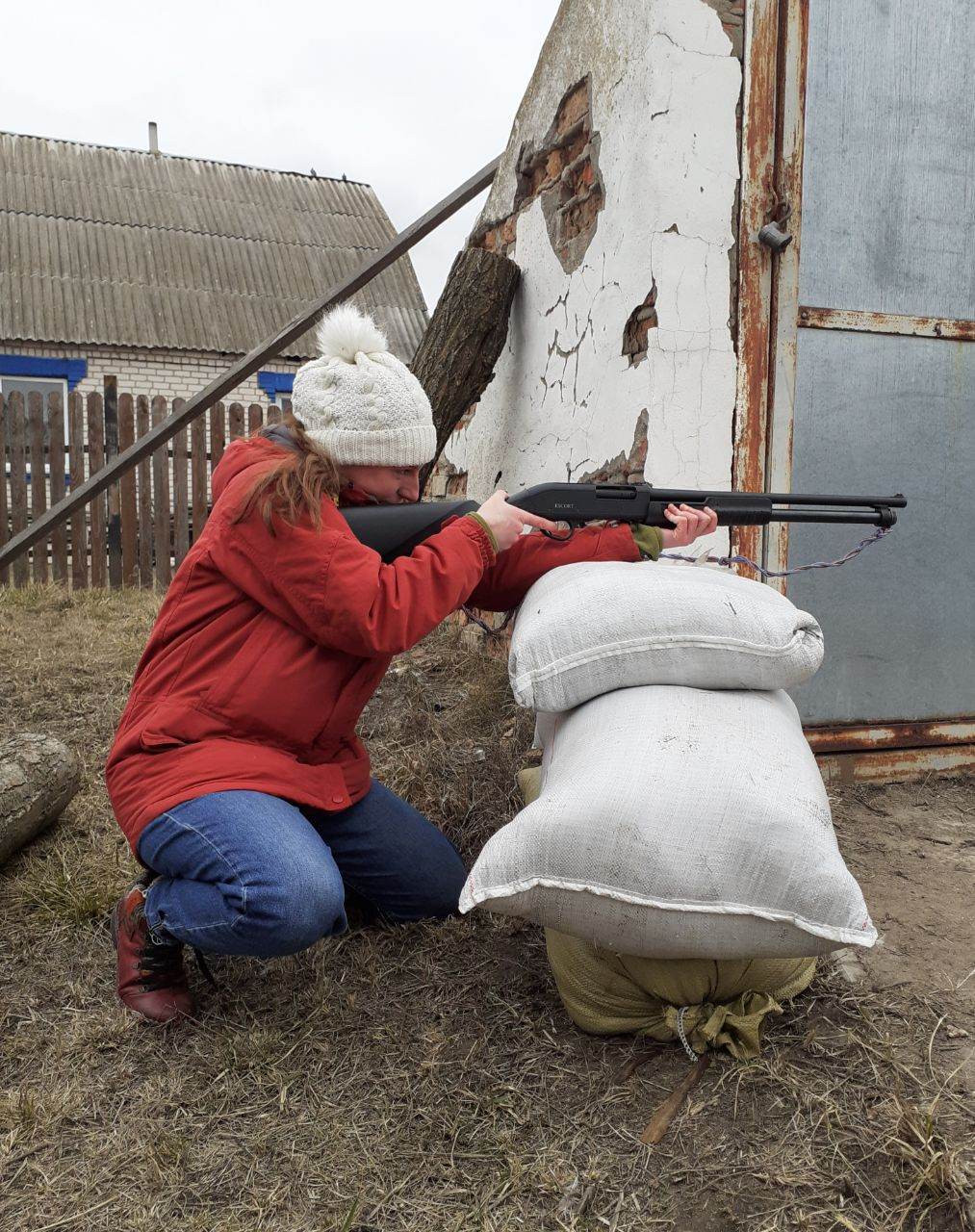
in the village of Byshiv.
28th of February 2022
During the strong explosions, I felt psychologically calmer outside, where I could observe what was happening. There were a lot of people in the building with different levels of stress resistance, so anxiety could quickly become contagious. As it turns out, you quickly get used to the explosions, arrivals, departures, fighter jets, and fires around you, and you also start to distinguish the types of weapons by their sounds. I remember one day, late at night, after a quiet day, I decided to take my friend’s dogs for a walk, and suddenly there was a huge explosion. As it turned out later, an explosive had been placed under an ammunition truck near the Byshiv culture house, two kilometres away, and it detonated. It may sound strange, but I was not afraid for a second, watching everything as if it was a spectacle. What I was afraid of was panic in the house, which was about to “explode”.
“I used to chop wood to relax a bit”
‒ How did you manage to live in one house with so many people?
We tried to share the living space. There were toilets and bathrooms on both floors, so it was easier, but you still had to queue up. The food in the first few days was very luxurious. The hosts had supplies, and everyone brought something with them. Before leaving, I packed everything I had in the freezer and took it with me. Some of my friends and acquaintances in Irpin’ did not, so when they returned a month and a half later, their fridges could simply be thrown away because of the unbearable stench that did not wash out. Local people also helped: some brought potatoes, some brought mushrooms, some brought homemade milk.
In the second week, the shops closed, there was almost no food, and you had to stand in a queue to get a certain number of loaves of bread in one hand. In the big store, I remember there were only a few packets of ketchup and three cans of pineapples. We rarely went to the centre because we understood that we needed to save fuel. Once we stood in a queue for three hours to buy cereals. By the time we got there, there was no more flour or oil, no more buckwheat. I think we managed to buy one kilogramme of rice and some barley. But there was lots of food for twenty-three people. For breakfast, we often had tea with a sandwich, but lunches and dinners were more substantial. I remember how we all used to make varenyky and pelmeni (dumplings) together. Someone would peel, someone would cut, someone else would fry.
‒ So, you shared a kitchen?
The Hindus cooked mostly their own ethnic dishes, and we could try some of theirs. All of us could not fit in the kitchen together, so we took turns eating. The landlady’s son-in-law made a fire outside and cooked delicious soups and borscht.
When the power outages started, the stone stove was a great help to us. We were lucky that it was in working order. We had to heat the house and cook on the stove. To relax a little, I often chopped wood. There was one very interesting moment. Since most of the residents of our house were “city dwellers” and had no idea how to heat a stone stove, our “Irpin’ cell” was in a good position: firstly, we had ethnographers among us, and secondly, we were also from the village. Once a situation arose that made everyone tense. The floor was still quite cool on the ground floor, but it was hot on the first floor. A misunderstanding arose because, as some of the townspeople discovered, it was impossible to “turn down” the heat in a stone stove. Explaining to those present that nothing could be done until the stove burned out was quite a task. I had to provide serious arguments to prove my expertise in this matter [smiles]. We argued a little more about pouring water over hot ash and combustion products and recalled the school chemistry course, but it resolved without a fight [laughs].
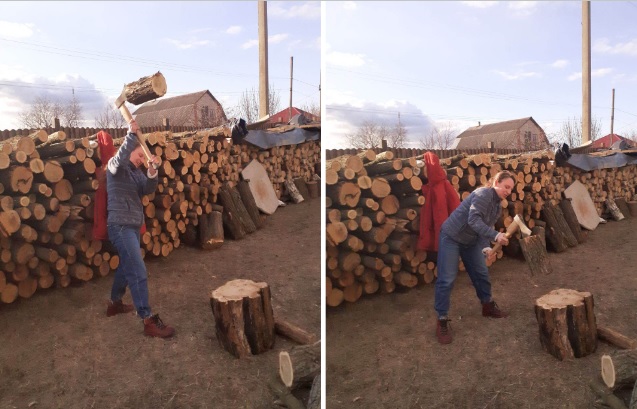
1st of March 2022.
I should also mention hygiene. In the first, early days, men dug a toilet outside. When the electricity was cut off and the pumps in the house stopped working, the outdoor toilet came in handy. It had no roof, and instead of two of the three walls, there was a wooden fence with a small river, reeds, and a forest with Russians behind it [smiles].
‒ Were there any other occasions, apart from heating the stove, when your expedition experience came in handy?
Yes, of course. Once, in Byshiv, I was perceived as one of their residents because when asked where we were coming from and where we were going, I mentioned the local names of the village’s corners. The experience of expeditionary communication was very helpful because I was able to immediately overcome the barriers between “locals” and “strangers”. I am talking about the expeditionary habit of speaking the language of the respondent. Not the dialect of Irpin’, Kyiv or Luts’k, but the local dialect. This is a special ability to feel the spirit of the village, the spirit of the life there. Since the beginning of the full-scale invasion, people have become very wary, so it helped a lot to reduce the distance from any interlocutor. It was much easier for us ethnologists.
“Several times I felt an overwhelming fear of being aimed at with a machine gun”
‒ When did you decide to leave Byshiv?
We were thinking of leaving, but it was hard to understand where to go. According to the local territorial defence, every possible variant was dangerous. Pakistani and Hindu families were the first to leave, for the west of Ukraine. Kyiv residents left at almost the same time. In the end, our “Irpin’ cell” and the owners of the house remained. The landlady’s sister, her husband and child left for the Rivne region. We were still thinking for a few days. There was almost no food, and it was getting increasingly alarming as the circle of fighting was closing.
Five days after the explosion near the culture house, our landlady’s husband insisted on going to the village of Kamianka, in the Zhytomyr region, to his parents’ place, seventy to eighty kilometres from Byshiv. We drove through villages, along field roads, overcoming checkpoints, which were no less worrying because, even though they were ours, there were people with weapons there. Several times I felt an overwhelming fear of being aimed at with a machine gun. It was a very strange feeling when we reached civilisation. We were sincerely happy to have sausages at the market in Popilnia and coffee, like Mowgli, who had just come out of the jungle and seen it all for the first time. Two weeks without civilisation had had that effect.
It was much easier for us in Kamianka. The six of us lived in a small room. Some of us slept on mattresses, others on thick sheets. We tried to help with the housework. The next day we registered with the village council and went to the school to weave camouflage nets.
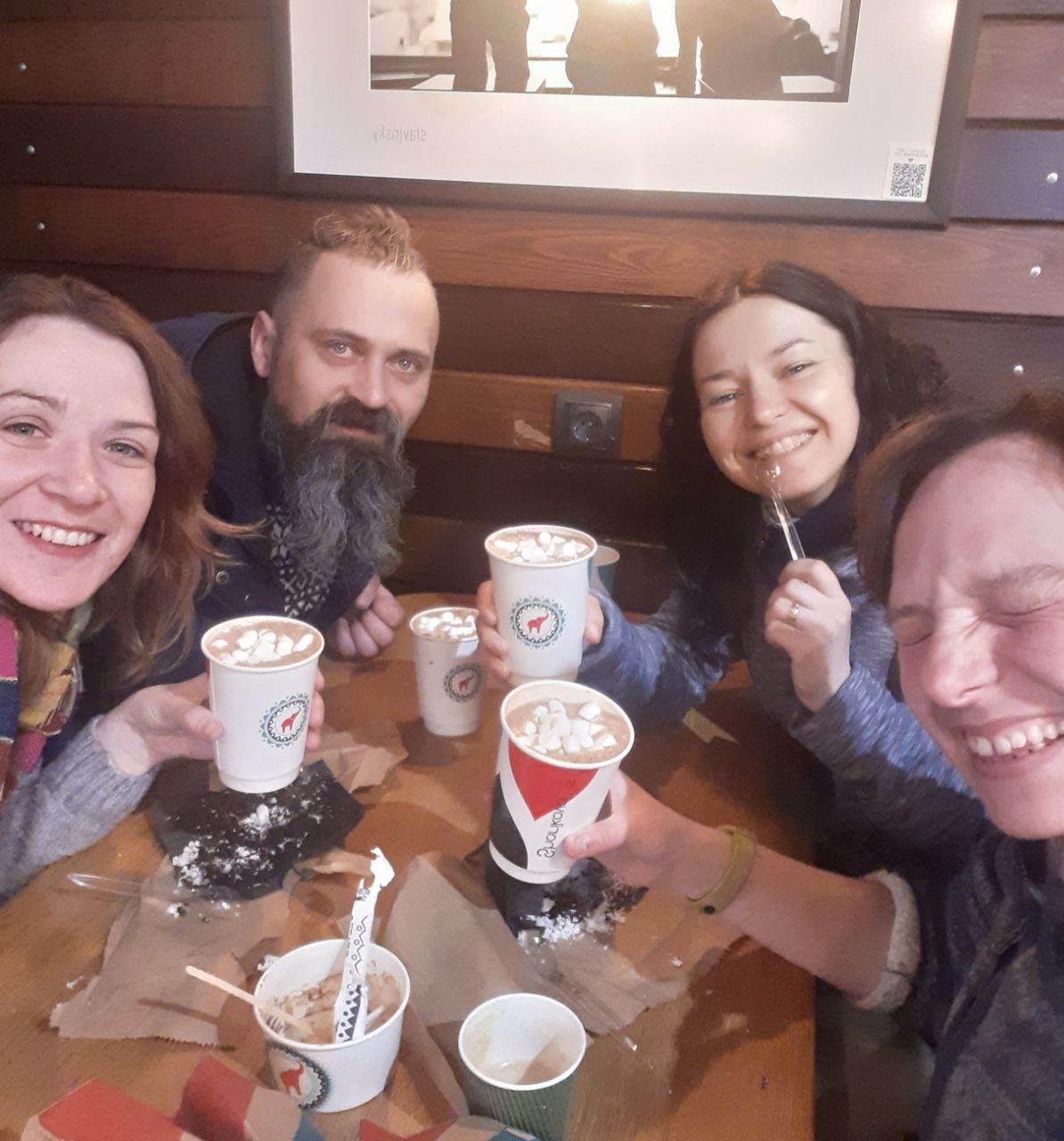
A coffee shop with treats that were sorely missed in the absence of civilisation.
13th of March 2022.
After a week in Kamianka, we decided to go to Berdychiv, where my Irpin’ neighbour Olia’s uncle lived, whom she hadn’t seen for several years, and who had sent us a can of petrol with the help of a bread delivery truck driver. So, the three of us – Olia, Andrii and I – went to Berdychiv. Our plan was to visit uncle Karpo for one day and then move on to the west of Ukraine. In fact, we stayed with him for almost two months. We were treated very well there: in a simple, native, homely way. When we had recovered a bit, we started to actively volunteer. From Berdychiv, we actually returned to Irpin’.
“We were warned not to rush home because there might be tripwires.”
‒ When did you return to your house in Irpin’?
My friend S. and I came back to Irpin’ for the first time before civilians were allowed in. At that time, we were already volunteering, so we had a little more freedom to move around. On Zhytomyr highway, towards Kyiv, there were a lot of cars with bulletholes. The most difficult thing for me has been this image, which I still recall in detail. Among a number of civilian cars with the inscription “Children”, ambulances, police cars, and specialised military vehicles, my attention was drawn to a car with a driver’s seat with bullet holes and a half-open trunk, from which children’s clothes were fluttering in the wind [crying]. Later I saw many such cars in different parts of the de-occupied Kyiv region. These cars were just abandoned on the roadsides, silently preserving the memory of owners who had not managed to escape. But at the time, I had neither the time nor the resources to reflect – I was able to “cry it out” only a few months later, when I saw videos from these places.
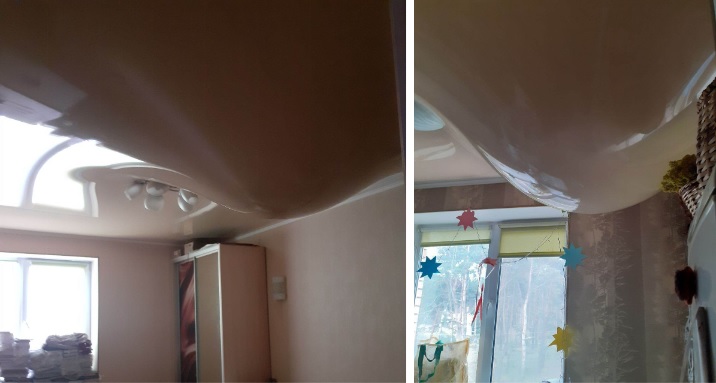
‒ What did you see at home after your return?
We were warned that it was better not to rush home because there might be tripwires, although no Russian soldiers had stayed on our street. But until the last moment, I did not know whether my apartment had been hit. When we arrived at the house, S. and I did not dare to enter alone. It turned out that the two neighbouring apartments had burned to the ground, but mine had survived, although it was completely flooded, with cracks in the walls and tiles falling off the walls in the bathroom. But the smell of burning was everywhere, and it still hasn’t completely faded. Some ceilings had retained a lot of water and sagged low, but they survived. Many wet things had to be thrown away because of mold. I remember one of the books had three different types of mold on it. The window had also been smashed by bullets.
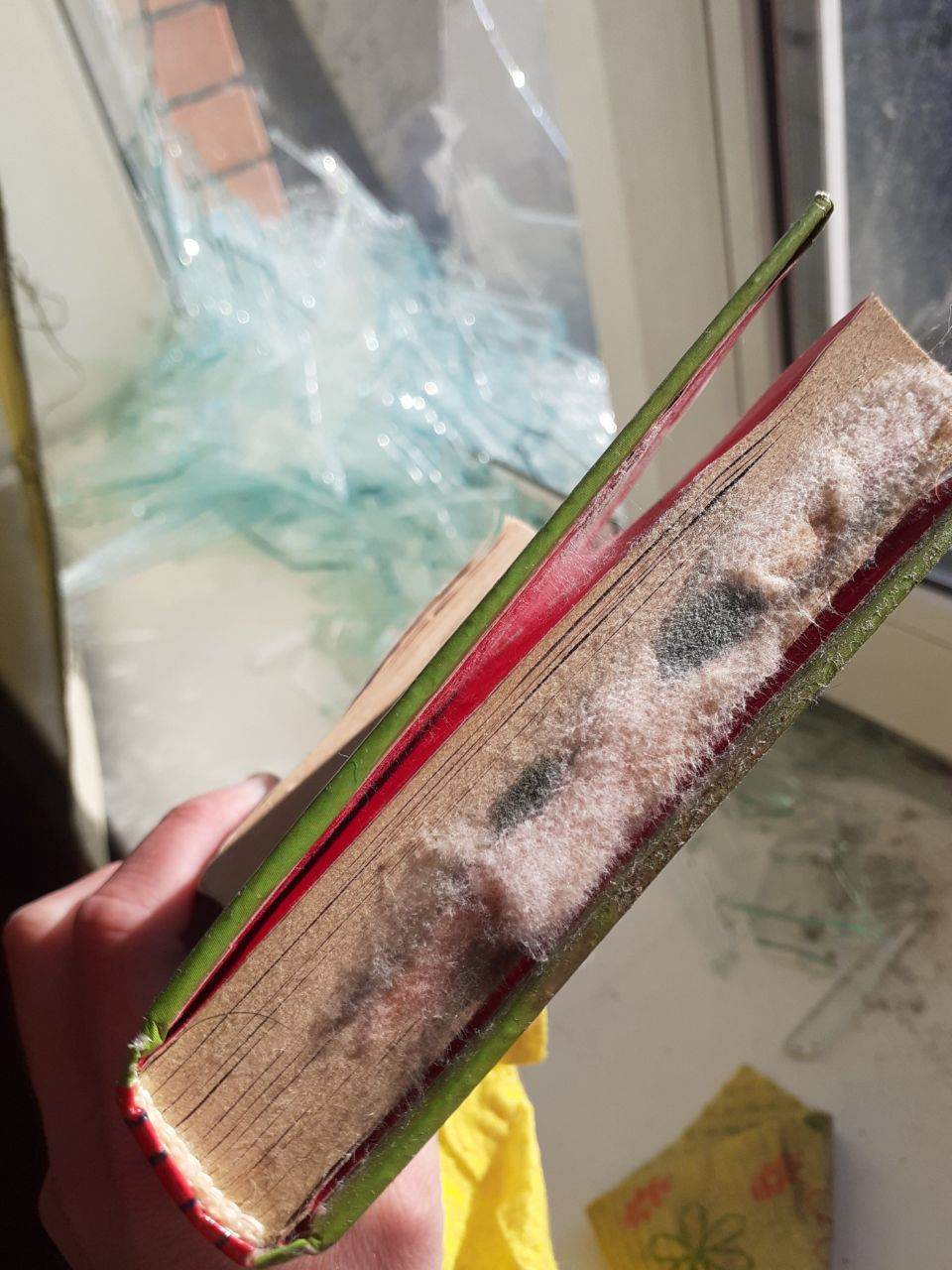
3rd of May 2022.
‒ What is the most valuable thing you have lost because of the shelling?
I had a lot of folder organisers on my floor. I went through them and threw away only one, which was the least emotionally affecting. But I still haven’t dared to look through the folders with school albums and a bunch of others. I remember throwing away a lot of broken and wet things during the cleaning, and I cried over something, but I have already forgotten what it was. The flowerpots died too. That period of cleaning was a blur, it was painful.
I have been in Irpin’ for four years now. During this time, I have become convinced that there is a Motherland but there is also a place where you are rooted, and for me, this is the city of Irpin’. So, the pain of loss was very strong. I was born in Luts’k. I came to study in Kyiv. At first, I lived in different dormitories, for two and a half years, in the village of Mykhailivka-Rubezhivka. I really liked living near this part of Zhytomyr highway, because it seemed to be homey, and there were pine forests around. I could not afford to live in Kyiv, so I settled in Irpin’. This place has become home for me.
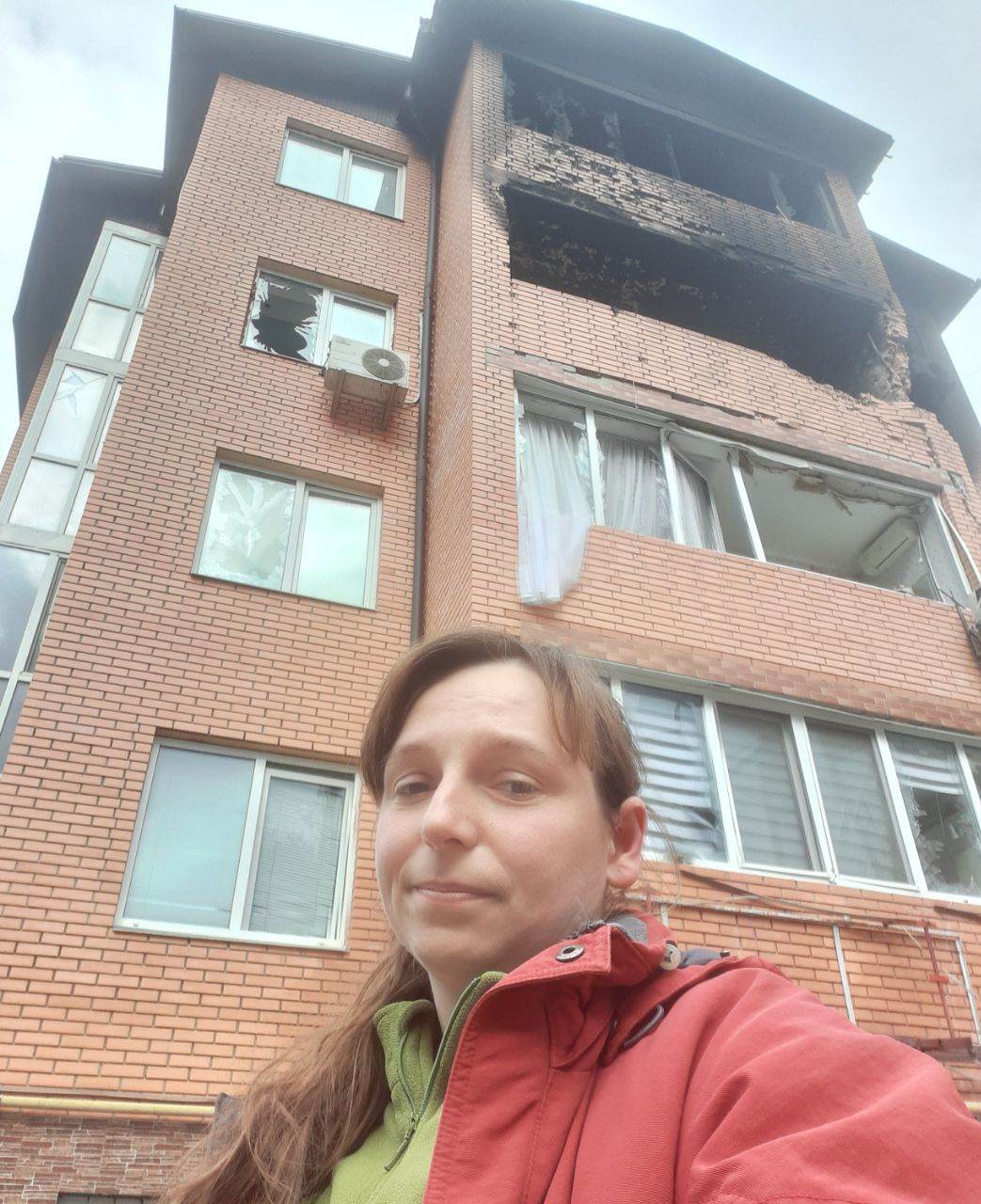
9th of April 2022.
By the way, the first thing I regretted leaving behind when I left was my own embroidered shirt and my Volyn folk costume. My neighbour Olia took the canvas, threads and patterns for a Volyn khustka (head shawl) with her, so we were a little distracted by embroidery during the evacuation. When I moved into the apartment a month later, I took my outfit, boots to match it, an unfinished shirt and a painting of a raccoon that S. had given me. Nothing practical, just emotionally precious things.
“…on the way to Ukraine from under the Baltic Sea, something started to knock in the car. My first thought was: ‘Oh, my God, what am I doing here? I haven’t even had my licence for six months, I learned to drive a car with an automatic transmission, and I’m rushing on one with a manual transmission…’”.
‒ Could you please tell us how and when you joined the volunteers?
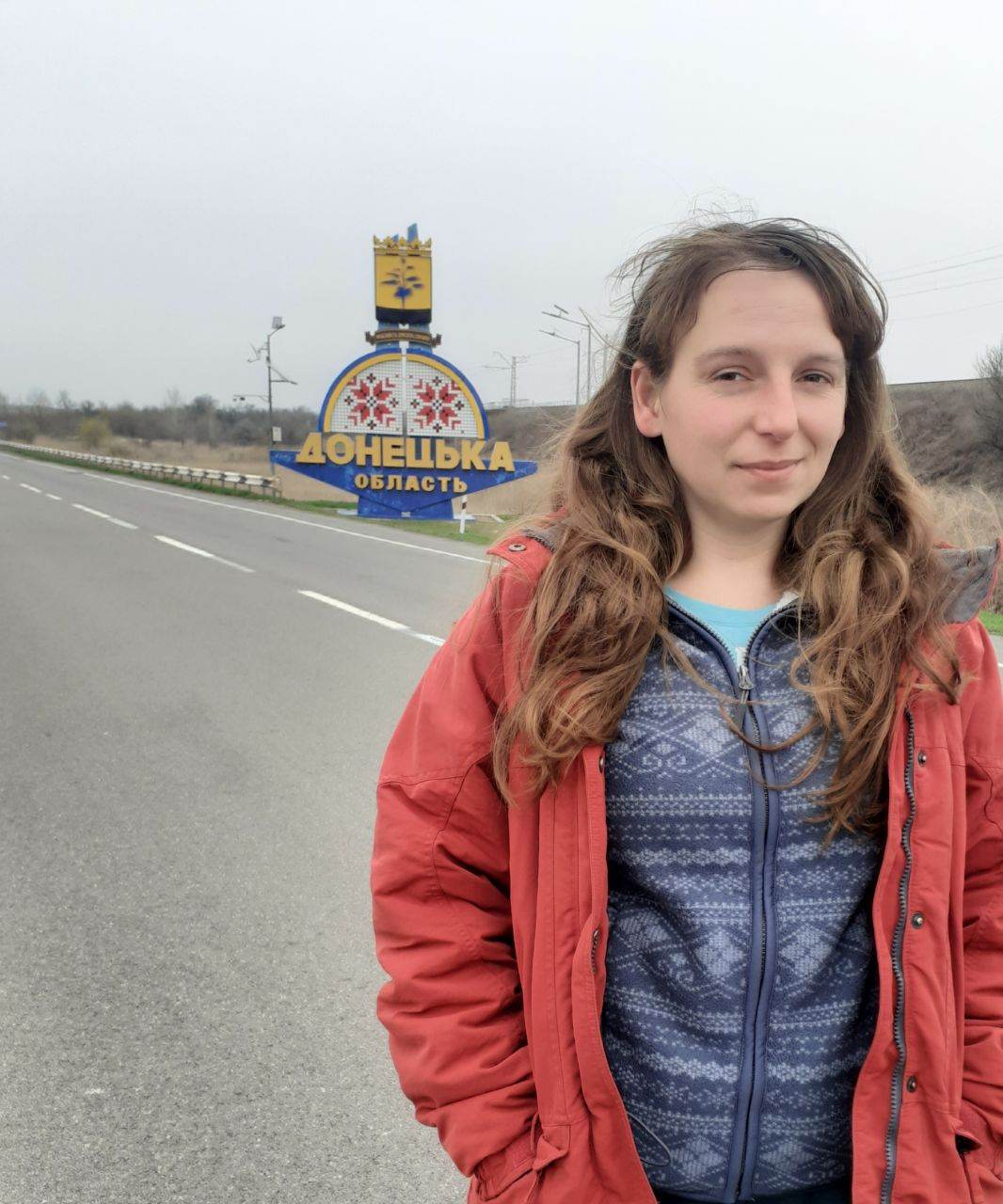
11th of April 2022
I started to volunteer full-time at the beginning of the full-scale invasion. Until the 24th of February, I had volunteered quite sporadically, mostly by joining someone else’s initiatives. After the invasion began, I felt that I could help, in Berdychiv. My friends, the guys who were defending Bucha, Irpin’ and Moshchun, lost a quadcopter on a combat mission. When I heard this, I couldn’t ignore the situation and started thinking about what I could do. But at first, I didn’t really believe in my abilities. I launched a fundraiser, asked people to join in and, to my surprise, managed to raise the required amount in three days. The next day, I received a call from S. asking me to bring the car from Warsaw. I remember handing it over to the military on the 4th of April. Then we went to Pisky as a team to drive a car and a whole van of cargo to the military. After that, there was more than one fundraiser for military things, and on the 28th of April, on my birthday, I handed over the first car I had saved up for to the guys. We drove it from Klaipeda (Lithuania) with uncle Karpo, whom we lived with in Berdychiv. And then more and more, it all started to spiral.
Another impetus for me to volunteer was a girl named O. from Rivne, who helped me with vital pills during the Byshiv episode. When she found out that I was running out of medicines and could not afford them, she miraculously sent me a parcel with them and a bunch of treats – at a time when there was no food in the shops, it was not a box, but a treasure. Her concern and warmth “revived” me. And I still carry a hand-drawn postcard with the words “Let spring come to your house” in my passport.
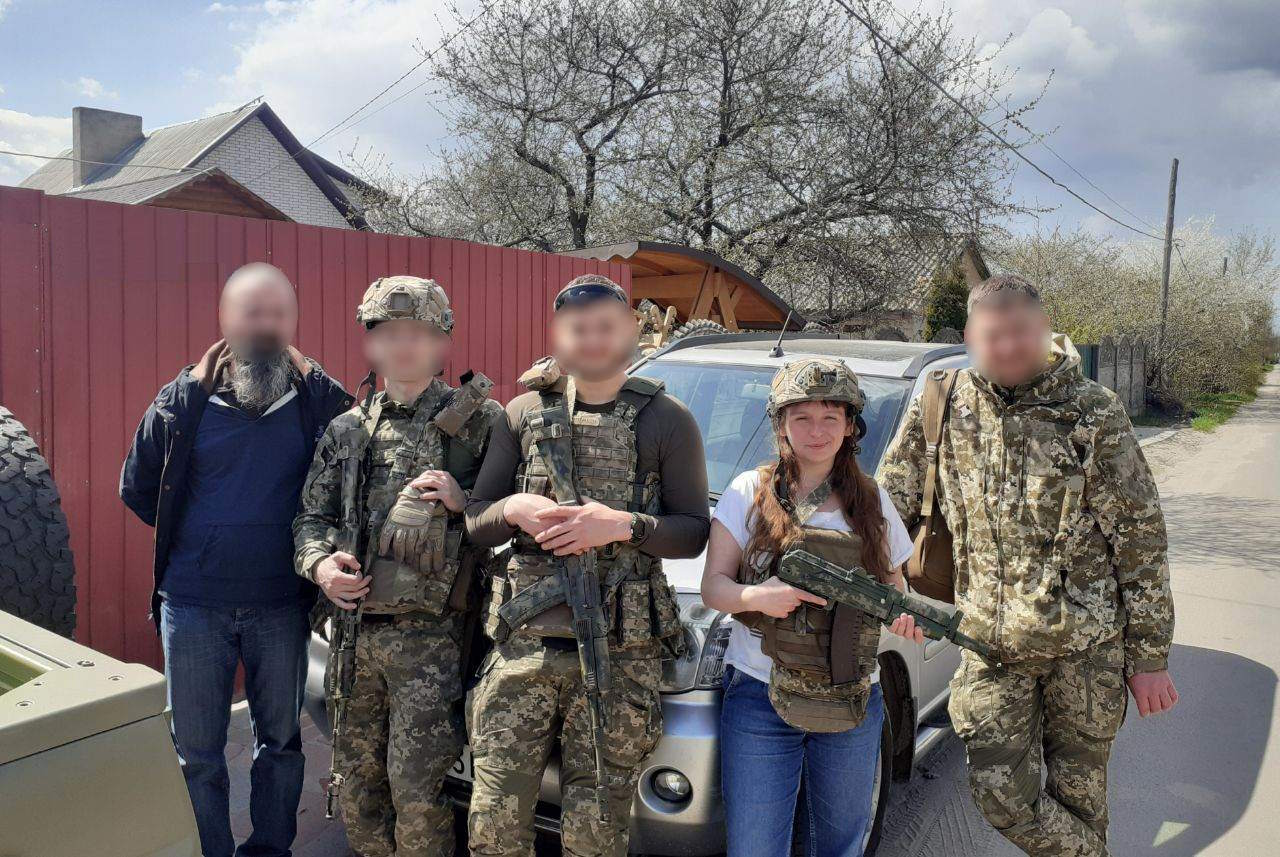
28th of April 2022.
‒ Did you immediately feel ready to drive cars over long distances, even though you didn’t have much driving experience at the time?
Having received my driving licence on the 31st of December [2021 – S.M.], I travelled on the same day on the route Lviv – Luts’k – Kyiv, and went to Chernihiv on business for Christmas, so by the time the full-scale invasion had began, I already had a little experience thanks to my own restlessness. But at times, in moments of fatigue and confusion, so-called “impostor syndrome” attacked me. Once, at five in the morning, on my way to Ukraine from the Baltic Sea region, something started to knock in the car. My first thought was: “Oh, my God, what am I doing here? I haven’t even had my licence for six months, I learnt to drive a car with an automatic transmission, and I’m rushing on one with a manual transmission…” But there was no turning back, so I got in and drove on, persevering through the difficulties.
‒ According to your observations, are there more women or men among the volunteers?
At the beginning of my so-called career as a “car smuggler”, women predominated at the border because it was easier for them to travel abroad. The youngest of the volunteers I know is a nineteen-year-old girl. But recently, the balance between men and women has been levelling out.
“Being a volunteer is a very emotional, because often your ‘customers’ are in the hottest spots”
‒ In your opinion, can volunteering be called a subculture?
I used to study subcultures, so I can say that, of course, it is possible to identify them by certain characteristics. For example, the volunteer community as a subculture has a range of tasks and certain laws, its own lifestyle, and a specific language.
‒ Do you mean there is a language of communication among volunteers?
Of course, there is a certain jargon, but I didn’t specifically track it. Often it is based on phrases borrowed from military slang, sometimes there is obscene vocabulary [smiles]. Volunteering is a very emotional thing, because often your “customers” are in the hottest spots, so the time to complete a task should be as short as possible. Unfortunately, though, it’s often not just your responsibility. You are like a link between two cars, between two realities – the front line and the market for military needs, which on both sides depend on your ability to achieve the goal. These realities are sometimes incompatible, and you have to constantly convert something from one to the other. Psychologically, it is very difficult and exhausting, so I have to slow down a bit now.
‒ Is your volunteer bag different from your go-bag?
Not drastically. During my volunteer visits, I always have files, folders, several pens and paper with me, as I have to work with documents and bring them back in good condition. This is probably the only difference. Now I take more clothes, because it has never worked out as planned – to do it in one or two days [laughs]. Different countries have different laws, paperwork procedures, speed limits, and institutional working hours. The human factor is often a delay, not only abroad but also in Ukraine. The border itself is the biggest delay, because it is a whole world.
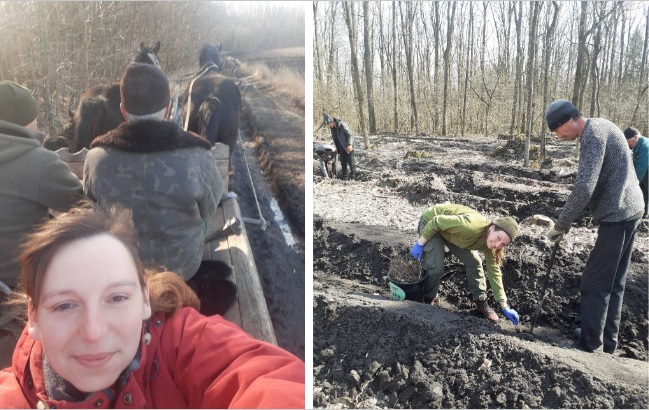
planting an oak forest near Berdychiv.
24th of March 2022.
“…the feeling of being needed and useful saves me from feeling remorse for any inaction during the war.”
‒ How do you choose which orders to take on?
Firstly, these should be requests from guys I know, so that there is someone who can vouch for the reality of and the true need for the order. In point of fact, there is room for manipulation in this industry, just like in other areas of our lives. For example, there are cases when, instead of a combat vehicle, a vehicle turns into an “arse-carrier” [a lexeme from volunteer slang – S.M.] for some private person. That is why we choose those orders where we feel we can be as effective as possible at all stages.
‒ Have you had any unusual volunteer tasks?
One day I was evacuating a Chihuahua from Pisky, Donets’k Oblast’, which had grown up in the trenches. When it became clear that the situation in that area was getting more and more difficult, a soldier asked us to take her dog to her relatives. The most difficult moment was when the owner said goodbye to the animal. It’s hard to watch a strong woman with vast military experience cry as she hugs her dog for the last time, as if it were her child [crying]. At that moment, I didn’t know what to do, because I couldn’t wait for a long time, and I didn’t want to take the animal away by force either.
‒ Has volunteering changed you?
At the moment, I feel exasperated by it. Of course, the feeling of being needed and useful saves me from feeling remorse for any inaction during the war. This is a significant lever, so to speak, personal therapy. However, thousands of kilometres of roads with an unlimited number of constant challenges still leave their footprint. I’ve only been driving for a year, but “injectors, timing belt, fuel pump” are concepts I’ve understood for a long time, not just as a simple set of incomprehensible words [smiles]. Sometimes, of course, I get frustrated, because I want to be a girl in a dress who knows nothing about the technical features of cars. But another message from the guys asking me to find a jumpstarter for a four-litre diesel engine seems to bring me back to reality. I’ll probably wear a dress for Victory Day! [smiles].
Volunteering has given me a lot of trusted friends, acquaintances, and colleagues who are instantly ready to respond to any needs and requests. I am inspired by our courageous and reliable military, inspired by our people who make the very concept of volunteering possible, because they support the Armed Forces of Ukraine with their money, thereby increasing their effectiveness on the battlefield.
“It is extremely difficult to be at a distance when a person seems to have chosen you as a ‘therapist’ of their soul”
‒ You have repeatedly taken part in expeditions to the de-occupied settlements of Chernihiv region, where you recorded traumatic eyewitness accounts of the Russian occupation. Did your own traumatic experience help you in this work?
I think that, thanks to my own experience, it was easier for me to participate in this kind of fieldwork because I had already seen the war close-up. My interviewees seemed to feel that I was “one of their own”, even without knowing about my war history. It was enough to say that you were from Irpin’, and all the communication barriers immediately disappeared. That’s about the only “advantage”.
At the same time, it was as if I was living their story, with each new person. In my opinion, if the researcher tries to be completely detached, the interviews will not be as alive, because the interviewee will feel like they are on a leash, not “holding hands” with the interviewer. But this approach is very difficult, both psychologically and emotionally. The most difficult interview I’ve ever had was with a woman whose son had been taken to Yahidne village [in Chernihiv district, Chernihiv region, occupied by Russians on the 1st of March 2022 – S.M.] and shot near the school. At first, she calmly talked about the outbreak of the war, but then she got to the death of her son. During the occupation, he dared to send data, the Russians’ locations, to our military using his smartphone, and they tracked him down. At this point in the story, the interviewee simply burst into tears, bringing down an avalanche of her pain on me. It was very difficult not to succumb to these emotions and to maintain professionalism, to remember the psychologist’s instructions before the expeditionary trips. It is extremely difficult to be at a remove when a person seems to have chosen you as a “therapist” for their soul. So, I decided to “let go” of the interview and I just listened. First of all, I am a human being, and then a scholar.
“Our mission as scholars is to record a complete and true picture of the wartime experience of Ukrainians.
‒ What do you think about the recording of testimonies about the realities of the Russian-Ukrainian war?
I am convinced that we simply have to record the testimonies of eyewitnesses to this war as quickly as possible, as our memory can fade or even “correct” traumatic memories. Our mission as scholars is to record a complete and true picture of the wartime experience of Ukrainians.
The most successful option, in my opinion, is to record interviews with the same respondent several times at various intervals in time. In this instance, it would be possible to trace the mechanism of human memory’s work: how certain traumatic memories will be blurred, while others will “emerge”. We have no right to allow our collective memory to be distorted, which the Soviet authorities used to play on very skilfully to achieve their goals. Our deceitful neighbour is not going to disappear, so we must record the truth as actively as possible in order to have something to appeal to in the future.
‒ How quickly did you feel willing to recall your experience and talk about it?
I’m quite a sociable person, so I was ready to talk to my friends and family about everything at once. After my father’s death, I was very aware of what it was like to withdraw into myself. Over time, I became convinced that it is much more useful to talk things out. But the key question here is who you open up to. Many people may devalue your experience or particular opinions. You should therefore take into account the diplomacy of your interlocutor. At some point, I remember, I got tired of constant questions. I realised that some people ask questions out of empathy, while others ask them out of curiosity. The most productive conversations for me were with my colleagues, because they often talk to you not only as friends but also as professionals. Several sessions with a psychologist also helped.
“There is a rule of three in expeditionary work that should always be kept in mind: “Professionalism”, “Respect” and “Gratitude”.
‒ As a PhD in philology, did you manage to invent your linguistic life hacks when working with respondents?
Each person should be treated individually. It’s as if you’re constantly recording their state and synchronising with it, verbally responding in kind. When it comes to the loss of loved ones or animals, it’s time to be silent and pause. These are cases when anything you can say can look like hypocrisy. In my opinion, the phrase “I understand you” should be taboo when dealing with traumatic memories, because it is simply impossible to understand the pain of loss for each person. I was once wounded by such inappropriate phrases. Each of us has our own experience, different from the others, so no one but you can fully understand it. At the same time, it is important not to turn the respondent into a kind of “monkey in the zoo” whom you have come to interview. You need to avoid professional arrogance and distance. I know, for example, that in ethnographic expeditions, some scholars deliberately keep a distance because they have a strategy. They often ask questions exclusively in literary language [official register of Ukrainian], as if to keep a distance between themselves and the informant. This should be avoided when working with trauma. You need to be as careful as possible in your statements so as not to provoke retraumatisation. Depending on the degree of trust and their state of mind, a person will either open the conditional drawers of their memory or, on the contrary, lock them securely. There is a rule of three in expeditionary work that should always be kept in mind: “Professionalism”, “Respect” and “Gratitude”.
“Our mission as historians and ethnologists is to help people take the right position in this war.”
‒ In your opinion, what is the mission of a contemporary historian or ethnologist?
I believe that today there is a war of armies at the front and a war of meanings at the rear. Our mission as historians and ethnologists is to help people take the right position in this war. If a person, for various reasons, still cannot understand where they live, what their roots are, and does not know history, then we are simply obliged to create an intellectual base for them. I am convinced that it is entirely within our capacity to change the perception of everything Ukrainian as something “low” and “secondary”. We can show every ordinary Ukrainian who doubts everything that Ukrainian culture is a self-sufficient and unique phenomenon worth knowing and being proud of.
‒ Are there any situations that you would like to re-live today in a different way?
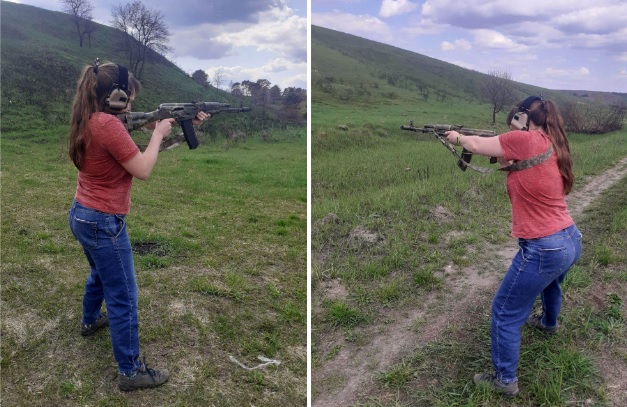
No. All the experience I have gained has been useful to me in one way or another. The only thing I can regret is a rude word that I was occasionally unable to hold back, being emotional. But everyone has moments of weakness and emotional exhaustion, especially during the war. I can tell you what I am still striving for and what I did not have time to do due to a lack of time. For example, to take professional courses in shooting and first aid.
‒ Do you have any forecast for the Russian-Ukrainian war?
I am not a person who possesses enough information to make predictions. Even individual soldiers from their locations do not see the full picture. The only thing they advise is not to relax. A year has passed, and we have somehow survived, adapted, and continue to adapt to each new challenge. So, we should not be afraid of another year of war. I believe that we shouldn’t get our hopes up so that we don’t end up in an emotional abyss because of disappointment. It is better to be prepared for trials than to get your hopes up with predictions. We will survive!
The interview was conducted by Svitlana Makhovska.
The publication uses photographs from the personal archive of Anastasiia Pankova.
This publication is also available in Ukrainian.
Links and Notes
[1] Since May 2022, A. Pankova has been a regular participant in the scholar oral history project “Humanitarian Aspects of the Russian-Ukrainian War of 2014-2022(23): Historical and Cultural Visions and Modern Survival Strategies”, which aims to record and preserve evidence of Russia’s war crimes in the territory of Ukraine, in particular in the Chernihiv region.