


Russia’s war against Ukraine is a profound historical caesura that in the future could be attributed no less significance than the historical turning points of 1989–91 and 1945. Should such an estimation of the war emerge, there would be a need for a concept not only of a “short twentieth century” from 1914 to 1989–91 but also of a “long twentieth century” ending with Russia’s current war against Ukraine. It is not yet clear what kind of changes will be seen in Russia itself as a consequence of its futile attempt to reimpose its imperial hegemony over Ukraine. But it is obvious that the Russian attack on Ukraine in February 2022 is deeply connected with Russia’s failure to come to terms with its traumatic history of mass violence and war in the first half of the twentieth century. This history includes not only World War II and German occupation but also, most importantly, Soviet mass crimes and the Soviet imperial heritage. Had a genuine critical examination of the history of the Soviet Union—and of the mass crimes of the Stalin era, in particular—taken place in Russia, the present-day war against Ukraine would not have been possible.

Thus, Russia’s war against Ukraine is likely to change our views of the twentieth century in a very fundamental way—especially views in Germany and other countries of the former “West.” During the second half of the twentieth century, and especially since the 1970s, in Germany and other Western countries, the Holocaust has been the foremost negative “signature of the era,” as German philosopher Jürgen Habermas put it in the mid-1980s, referring to Auschwitz.[1] On the inter- national level, the Holocaust became the main point of reference for an international sense of morality.[2] By contrast, in former Communist Eastern Europe—in the Baltic states and Poland, in particular—it has been emphasized that the Soviet Union should be considered alongside Nazi Germany as the other most murderous regime of twentieth-century Europe.[3] In Ukraine, such a view is strongly related to the memory of the Holodomor, which received greater attention among the Ukrainian public during the presidency of Viktor Iushchenko following the Orange Revolution in 2004. However, in Ukraine (more than in the Baltic states, for example), the question of whether there had been one or two evil regimes in twentieth-century Europe was for a long time highly controversial. In Ukraine, the Soviet (and later Russian) narrative of the “Great Patriotic War” and its all-Soviet victory over fascism enjoyed a measure of influence until 2014, when Russia used this narrative to justify its occupation of Crimea; Russia then repeated this line to instigate a war in the Donbas not long afterward. This resulted in the near-complete delegitimization of that narrative among the Ukrainian public.[4] Such a rethinking, however, has not been fully undertaken by the Western European or broader international public, although undeniably (as will be outlined in more detail below), a slow boost of attention has been given to the experiences of the countries of Eastern Europe and to Soviet mass crimes.[5]
Russia’s War, the Soviet Past, and the West
Russia’s current war against Ukraine challenges the predominant Western view of Europe’s twentieth century and makes the case to consider not one but two murderous regimes and their crimes as the “signature of the era,” to paraphrase Habermas. Here, I propose four arguments to support this thesis.
1) The motives on the Russian side for the full-scale invasion of Ukraine were fundamentally historical in nature. Vladimir Putin apparently sees as his principal mission the task of restoring Russian rule or hegemony over the territories of the former Soviet Union. Moreover, he claims for the Russian Federation a position in international relations that would be equivalent to that of the Soviet Union.[6] All of these developments have been possible because an in-depth critical confrontation with, and re-evaluation of, Joseph (Iosif) Stalin’s rule, Soviet mass crimes (including those against different national groups), and the history of the Soviet Union more generally did not take place in Russia. On the contrary, in recent years scholars have observed a process of the rehabilitation of Stalin in Russia, which accelerated after the beginning of the full-scale invasion of Ukraine in February 2022.[7] In fact, one can find in Putin’s view of Ukraine and the West also many elements of an older, essentially nineteenth-century, Russian nationalism, as his 2021 pamphlet “On the Historical Unity of Russians and Ukrainians” proves. In it, based on distorted interpretations of history and culture, Putin denies Ukraine and Ukrainians the right to a nation-state separate from Russia.[8] Such Russian nationalist views did not disappear in the Soviet Union; rather, they continued to exist and were influential, particularly during the period of Leonid Brezhnev’s rule (a time when Putin was serving in the KGB).[9]
2)Another closely related ideological precondition of the current war against Ukraine is Russia’s cult of victory in the so-called Great Patriotic War of 1941–45. This cult also originated in the Soviet Union, but in Putin’s Russia, it became even more predominant. The Russian symbol of the “Great Patriotic War,” instead of serving as a warning against a new war, has been used as proof of Russia’s great- ness and military might and as justification for Russia’s claim to a hegemonic status in relation to its neighbours and its demand for a privileged status in international relations.[10]
3)The accusation that Ukraine is ruled by a “Nazi regime”—which was used by Putin as one of the main justifications for the full-scale invasion of Ukraine— has its source in the Soviet propaganda image of an enemy “Ukrainian bourgeois nationalism” largely identified with fascism. This Soviet enemy image of “Ukrain- ian nationalism” not only presented a highly distorted narrative of that national- ism’s history—especially during World War II—but also used as one of its core elements the notion that “Ukrainian bourgeois nationalists” were a fundamentally alien element in Ukrainian society who were introduced into the country from the outside in service of enemies of the Soviet Union. This Soviet narrative claimed that “Ukrainian nationalists” had no real support among the Ukrainian people. According to that view, after the Ukrainian nationalists had been expelled from Ukraine together with the Germans by the victorious Soviet Army, they continued their evil activities from abroad on behalf of the enemies of the Soviet Union, primarily the Americans. Putin’s view of the conditions in Ukraine in recent years and of the role of the United States (US) and European Union (EU) there (especially since 2014, as outlined in his historical essay “On the Historical Unity of Russians and Ukrainians” and in his speeches prior to the full-scale invasion of February 2022) strongly resembles this older Soviet enemy image.[11] This also suggests that Putin refers to the “Nazi regime” and the “banderovtsy”[12] in Ukraine not only for propagandistic reasons but also because the Soviet concept of “Ukrainian nationalism” still influences his and broader Russian views of Ukraine—it may have con- tributed to the initial expectation on the part of the Russian leadership that a quick victory would be possible and that the alleged “Nazi regime” in Kyiv had little support among the Ukrainian people.[13]
4)The Western, and especially German, disbelief that Russia would start a major war resulted largely from historical images of the twentieth century that have since proven misleading. In Germany and other Western countries, it has often been overlooked that in Russia, the memory of the “Great Patriotic War” was not fundamentally congruent with the view of World War II that was predominant in other countries—namely, that it represented a warning against any war. In the Rus- sian context, it was remembered much more steadfastly as a military triumph and as justification for Russia’s exceptional status in international relations. In effect, this type of veneration of the “Great Patriotic War” was actually promoting a new war. In the German and broader Western world views, an imaginary notion of the Soviet Union predominated in which the USSR appeared primarily as a victim of German aggression and a country that had made enormous sacrifices in the war against Nazi Germany. The problem with this is not that it is untrue. Clearly, the Soviet Union hugely contributed to the defeat of Nazi Germany, and its people suffered enormously from the war and the German occupation. But at the same time, the Soviet Union constitutes the other most violent and most genocidal regime in European history. This latter fact was consistently pushed to the background by the remembrance of the Soviet contribution to the victory over Nazi Germany.[14] As a result, even though the German and broader Western public spheres usually reacted very sensitively to any phenomena in Eastern Europe and elsewhere that they considered fascist, they hardly took notice of the overall absence of critical reckoning with Soviet mass crimes, and they ignored tendencies toward the rehabilitation of Stalin and his regime in Russia.
It should be said that the current war against Ukraine—the largest war in Europe since World War II—did not originate from a lack of a critical engagement with fascism or with issues of collaboration with Nazi Germany in Ukraine or elsewhere. Rather, it stemmed from the absence in Russia of a meaningful critical reckoning with the legacy of Soviet mass crimes—especially during the period of Stalin’s rule—and with Soviet history in general.
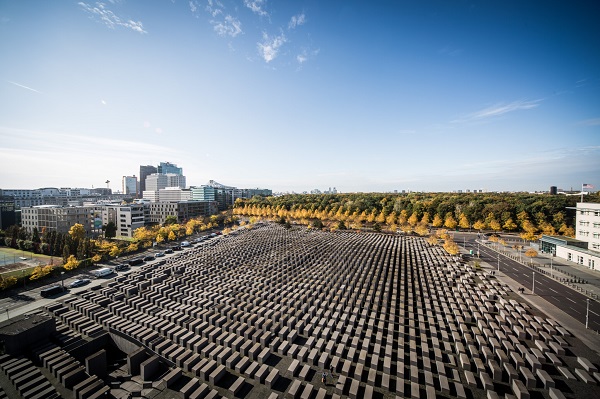
The Memory of the Holocaust and of Soviet Mass Crimes in Europe since the 1990s
Since the 1990s, a process of mutual permeation has generally characterized European remembrance of the Holocaust and of Soviet mass crimes. During the postwar decades, and especially since the 1970s, the memory of the Holocaust has become increasingly important in Western countries. In Eastern Europe, it was largely only after the end of Communist rule that a similar heightened sense of the relevance of Holocaust memory set in. As in the countries of the West, this process provoked critical discussions about these nations’ own roles and involvement in the Holocaust. Such discussions have been all the more heated in the countries of Eastern Europe, which much more than other European states were profoundly affected by the Holocaust owing to their large pre-war Jewish populations and the fact that their territories were the site of the actual mass murder of Jews in the Holocaust.[15] The most intense controversy took place in Poland after the publication of Jan Tomasz Gross’s book Sąsiedzi (published in the English as Neighbors) in 2000.[16] In Eastern Europe today, questions about collaboration and participation in the Holocaust remain controversial.
In Western countries, a new discussion about Soviet mass crimes began in the 1990s following the end of Communist rule in Eastern Europe. It mostly unfolded within the framework of critical reflection on the reasons why so many in the West had supported the Soviet Union, or at least had had an ambiguous attitude to- ward it. In addition, new sources and knowledge about Soviet mass crimes became available after the opening of the Soviet archives. During this period, however, such discussions were still dominated by mental patterns that had developed over the course of the Cold War. Eastern European experiences and voices only had a minor role in these discussions. The relationship between the significance of the Holocaust and of Soviet mass crimes continued for the most part to be seen as competitive. As in the Cold War period, broaching the topic of Soviet mass crimes would often generate a suspicion that German mass crimes, and the Holocaust in particular, were being trivialized, and it would arouse feelings that such conversations were aimed at turning attention away from the perpetrators of mass crimes under German rule. Such distraction was in fact sometimes used, especially in West Germany, in the initial postwar period during the difficult process of coming to terms with the German mass crimes of World War II.[17]
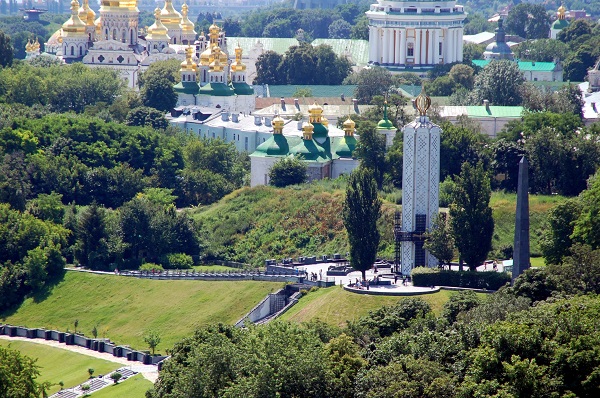
At the same time, another major political controversy of the Cold War period in Western societies that contributed to the sidelining of the recognition of Soviet mass crimes—that is, the question of political relations with the Soviet Union and the policy of détente—disappeared with the dissolution of the Soviet Union. In the German case, the controversies surrounding the policy of détente were closely interrelated with conflicts regarding the recognition of World War II–era German mass crimes in the countries of Eastern Europe. The debate concerning Le livre noir du communisme (The Black Book of Communism) that occurred in 1997–98, primarily in France and Germany, can serve as an example. The editor of the book, Stéphane Courtois, invited criticism not only by citing in his lengthy introductory chapter some exaggerated figures for the victims of Communist regimes but also by endeavouring to argue that the Communist regimes had been worse than National Socialism.[18] Overall, however, such debates remained predominantly within Western societies and centred on Communism and anti-fascism and how their historical roles should be re-evaluated.[19]
After the turn of the century, Eastern European experiences and views received more attention in these debates. The enlargement of the EU in 2004 was an important turning point. One of its consequences was that Eastern European experienc- es and perspectives received greater weight in European memory politics. Based on decisions of the European Parliament and European Council (discussed from 2009 to 2011), 23 August, the anniversary of the 1939 Molotov-Ribbentrop Pact (Hitler-Stalin Pact), became a European day of remembrance for “all victims of totalitarian and undemocratic regimes.”[20] By that time, the Holodomor had already been recognized by the European Parliament as a “crime against the Ukrainian people, and against humanity”—in 2008, long before most Western European national parliaments had adopted similar statements.[21] Finally, in September 2019, the European Parliament adopted a resolution where on the basis of the Molotov-Ribbentrop Pact, it attributed complicity to the Soviet Union in the launching of World War II, and it also expressed regret that a condemnation of the crimes committed by Stalin’s dictatorship—something akin to the Nuremberg trials against Nazi Germany—had never taken place. This resolution called for the recognition of the “crimes committed by communist, Nazi and other dictatorships” as a part of a “common culture of remembrance” [22] in Europe. Thus, the Eastern European historical experience found its way into a resolution of European Parliament more clearly than ever before. But this was not a standpoint that enjoyed broad support in Germany and Western Europe, even though the resolution was passed by a large majority that included many votes from Western European MEPs. The wider public hardly noticed it.
Nevertheless, changes did take place among the Western public. This is indicated by the enormous success of Timothy Snyder’s books Bloodlands, first published in 2010. [23] It has been one of the most influential history book of the last two dec- ades. It combines an analysis of the rules of the Soviet Union and Nazi Germany over Ukraine, Belarus, and Poland in the 1930s and 1940s, thus adopting an Eastern European perspective. Since the publication of the English-language edition in 2010, it has been translated into forty languages. There was some criticism of the book, as was to be expected. Overall, however, the work was surprisingly positively received.[24] This demonstrated the genuine interest also existing in Western societies to include Soviet mass crimes of the Stalin era into the narratives of twentieth-century European history. In the two to three decades prior, such attempts had generated mostly a suspicion of the downplaying of Nazi crimes.
After February 2022
The inclusion of Eastern European, and especially Ukrainian, experiences and views into German and Western mental images of twentieth-century history has been strongly amplified as a consequence of Russia’s war against Ukraine—as is clearly shown by the various resolutions on the Holodomor undertaken by Western European parliaments. On 30 November 2022, the German Bundestag approved by a great majority a resolution recognizing the Holodomor as an act of genocide. Several other Western European countries issued similar resolutions in 2022 and 2023.[25]

The November 2022 Bundestag resolution on the Holodomor, together with resolutions from other countries, indicates that Russia’s war against Ukraine may change predominant views about the history of the twentieth century. The Bundestag resolution, after recalling the Holocaust and other German crimes during World War II in occupied Eastern Europe, adopts the view that Ukraine in the twentieth century “suffered under two totalitarian systems”—the Soviet Union un- der Stalin and Nazi Germany during World War II—and declares the Holodomor “part of our common history as Europeans.” The resolution continues with the statement that the Holodomor “joins the list of inhumane crimes committed by totalitarian systems in the course of which millions of lives were extinguished, especially in the first half of the twentieth century in Europe.”[26] The Holodomor, it would seem, is becoming more and more fixed in the public memory as the quintessential crime representing the legacy of the Stalin regime, just as the Holocaust epitomizes the legacy of the Nazi regime.
This essay was published in the latest issue of the journal “Ukraine Moderna”: Kai Struve. Russia’s Invasion of Ukraine and the Twentieth Century: Questions Arising from the Current War, Ukraina Moderna, Volume 35, December 2023, pp. 167-178.
The publication uses images provided by the Author and sourced from public domains.
Notes and References
1 Jürgen Habermas, Eine Art Schadensabwicklung, vol. 6 of Kleine politische Schriften (Frankfurt am Main: Suhrkamp, 1987), 163. During the same period, Dan Diner introduced the term “rupture in civilization” (also referring to Auschwitz) to describe the Holocaust— Dan Diner, ed., Zivilisationsbruch: Denken nach Auschwitz (Frankfurt am Main: Fischer Taschenbuch, 1988).
2 Elazar Barkan, The Guilt of Nations: Restitution and Negotiating Historical Injustices (New York: W. W. Norton, 2000).
3 On the complex and controversial processes of remembering after 1989–91 the violence and mass crimes of the twentieth century in Eastern European countries, see Małgorzata Pakier and Joanna Wawrzyniak, eds., Memory and Change in Europe: Eastern Perspectives, Studies in Contemporary European History 16 (New York: Berghahn Books, 2016); and Uilleam Blacker, Alexander Etkind, and Julie Fedor, eds., Memory and Theory in Eastern Europe, Palgrave Studies in Cultural and Intellectual History (New York: Palgrave MacMillan, 2013). Regarding Latvia, see Katja Wezel, Geschichte als Politikum: Lettland und die Aufarbeitung nach der Diktatur, The Baltic Sea Region: Northern Dimensions—European Perspectives / Die Ostseeregion: Nördliche Dimensionen—Europäische Perspektiven (Berlin: Berliner Wissenschaft erlag, 2016). Regarding Lithuania, see Ekaterina Makhotina, Erinnerungen an den Krieg—Krieg der Erinnerungen: Litauen und der Zweite Weltkrieg, Schnittstellen: Studien zum östlichen und südöstlichen Europa, ed. Martin Schulze Wessel and Ulf Brunnbauer, vol. 4 (Göttingen: Vandenhoeck & Ruprecht, 2017). For a critical view, see Dovid Katz, “The Baltic Movement to Obfuscate the Holocaust,” in Mass Violence in Nazi-Occupied Europe, ed. Alex J. Kay and David Stahel (Bloomington: Indiana Univ. Press, 2018), 235–61.
4 On memory conflicts in Ukraine, see Georgiy Kasianov, Memory Crash: The Politics of History in and around Ukraine, 1980s–2010s, Historical Studies in Eastern Europe and Eurasia, ed. Alexei Miller, Alfred Rieber, and Marsha Siefert, vol. 7 (Budapest: Central European Univ. Press, 2022). Regarding use in the Donbas since 2014 of motifs from Soviet myths of the “Great Patriotic War,” see Alexandr Osipian, “Historical Myths, Enemy Images, and Regional Identity in the Donbass Insurgency (Spring 2014),” in “Russian Media and the War in Ukraine,” ed. Julie Fedor et al., special issue, Journal of Soviet and Post-Soviet Politics and Society (Stuttgart) 1, no. 1 (2015): 109–40; and Dmytro Tytarenko, “‘Der Feind ist wieder in unser Land einmarschiert […]’: Der Zweite Weltkrieg in der Geschichtspolitik auf dem Gebiet der ‘Donecker Volksrepublik’ (2014–2016),” Jahrbücher für Geschichte Osteuropas (Stuttgart) 68, nos. 3–4 (2020): 508–56.
5 See, e.g., Claus Leggewie, Der Kampf um die europäische Erinnerung: Ein Schlachtfeld wird besichtigt, with Anne Lang, Beck’sche Reihe 1835 (Munich: Verlag C. H. Beck, 2011), 21–27, 127–43; and Aleida Assmann, Das neue Unbehagen an der Erinnerungskultur: Eine Intervention, 3rd expanded and updated ed., C.H. Beck Paperback 6098 (Munich: Verlag C. H. Beck, 2020), 154–65.
6 Putin very clearly outlined his views (based on his historical argumentation) on what Russia deserves from its neighbours, and in international relations overall, in his pamphlet “75th Anniversary of the Great Victory: Shared Responsibility to History and Our Future,” Events, President of Russia, 19 June 2020, 00:00, accessed 4 November 2023, http://en.kremlin.ru/ events/president/news/63527. See also Timothy Snyder, The Road to Unfreedom: Russia, Europe, America (New York: Tim Duggan Books, 2018), 67–111 and passim; and Catherine Belton, Putin’s People: How the KGB Took Back Russia and Then Took On the West (New York: Farrar, Straus and Giroux, 2020). Since the beginning of the full-scale war in February 2022, there has been an accumulation of countless statements by Russian officials and public figures expressing such, or even more extreme, aims.
7 Anton Weiss-Wendt, Putin’s Russia and the Falsification of History: Reasserting Control over the Past (London: Bloomsbury Academic, 2021), 149–58.
8 “Article by Vladimir Putin ‘On the Historical Unity of Russians and Ukrainians,’” Events, President of Russia, 12 July 2021, 17:00, accessed 4 November 2023, http://en.kremlin. ru/events/president/news/66181; for a critique of the historical argument, see Andreas Kappeler, “Revisionismus und Drohungen: Vladimir Putins Text zur Einheit von Russen und Ukrainern,” in “Der Geist der Zeit Kriegsreden aus Russland,” ed. Manfred Sapper and Volker Weichsel, special issue, Osteuropa (Berlin) 71, no. 7 (2021): 67–76, accessed 6 January 2024, https://zeitschrift-osteuropa.de/site/assets/files/37313/oe210706.pdf.
9 On the historical continuities of Russian nationalist views, see Martin Schulze Wessel, Der Fluch des Imperiums: Die Ukraine, Polen und der Irrweg in der russischen Geschichte (Munich: Verlag C. H. Beck, 2023). On Russian nationalism in the Soviet Union and regarding the Soviet impact on the rise of Ukrainophobia in Russia in recent years, see also Taras Kuzio, “Soviet and Russian Anti-(Ukrainian) Nationalism and Re-Stalinization,” in “Between Nationalism, Authoritarianism, and Fascism in Russia: Exploring Vladimir Putin’s Regime,” ed. Kuzio, special issue, Communist and Post-Communist Studies 49, no. 1 (March 2016): 87–99.
10 Weiss-Wendt, Putin’s Russia, 83–119; and Ludmila Lutz-Auras, “Auf Stalin, Sieg und Vaterland!” Politisierung der kollektiven Erinnerung an den Zweiten Weltkrieg in Russland (Wiesbaden: Springer VS, 2013). See also Philipp Bürger, Geschichte im Dienst für das Vaterland: Traditionen und Ziele der russländischen Geschichtspolitik seit 2000, Schnittstellen: Studien zum östlichen und südöstlichen Europa, ed. Martin Schulze Wessel and Ulf Brunnbauer, vol. 11 (Göttingen: Vandenhoeck & Ruprecht, 2018). On war remembrance during the Soviet period, see also Nina Tumarkin, The Living and the Dead: The Rise and Fall of the Cult of World War II in Russia (New York: Basic Books, 1994).
11 “Article by Vladimir Putin ‘On the Historical Unity’”; Vladimir Putin, “Address by the President of the Russian Federation,” 21 February 2022, The Kremlin, Moscow, transcript and video, 55:56, Events, President of Russia, 21 February 2022, 22:35, accessed October 22, 2023, http://en.kremlin.ru/events/president/news/67828; and Vladimir Putin, “Address by the President of the Russian Federation,” 24 February 2022, The Kremlin, Moscow, transcript and video, 28:03, Events, President of Russia, 24 February 2022, 06:00, accessed 4 November 2023, http://en.kremlin.ru/events/president/news/67843.
12 In contemporary Russian propagandistic language, the term banderovtsy is largely synonymous with “Ukrainian Nazis.” It is derived from the name of the politician and ideologue of Ukrainian nationalism Stepan Bandera (1909–59). Although Bandera was the leader of only one wing of the Ukrainian nationalist movement during World War II and in the postwar years (from 1941, rather nominally), Russian propaganda expands the term banderovtsy to refer to all members of the Ukrainian nationalist movement, and especially of the Organization of Ukrainian Nationalists (OUN) and Ukrainian Insurgent Army (UPA), who resisted the Soviet occupation in Western Ukraine until the early 1950s. Putin used this term, for example, in his speeches during the 9 May 2022 Victory Parade on Red Square and on the eightieth anniversary of the Stalingrad victory, 2 February 2023. See Vladimir Putin (speech), 9 May 2022, Red Square, Moscow, transcript and video, 59:37, in “Victory Parade on Red Square: President of Russia–Supreme Commander-in-Chief of the Russian Federation Armed Forces Vladimir Putin Attended a Military Parade Marking the 77th Anniversary of Victory in the 1941–1945 Great Patriotic War,” Events, President of Russia, 9 May 2022, 11:00, accessed 4 November 2023, http://en.kremlin.ru/events/president/ news/68366; and Vladimir Putin (speech), 2 February 2023, Volgograd, transcript, in “Gala Concert for 80th Anniversary of Defeating German Nazi Forces in Battle of Stalingrad: Vladimir Putin Made a Speech at the Gala Concert on the 80th Anniversary of the Defeat of the German Nazi Forces by the Red Army in the Battle of Stalingrad,” Events, President of Russia, 2 February 2023, 17:35, accessed 4 November 2023, http://en.kremlin.ru/events/ president/news/70434.
13 Il’ia Zhegulev, “Kak Putin voznenavidel Ukrainu,” Rassledovaniia, Verstka, 25 April 2023, accessed 4 November 2023, https://verstka.media/kak-putin-pridumal-voynu; and Kai Struve, “Altes Feindbild, neuer Krieg,” in Facetten der Gegenwart: 52 F.A.Z.- Essays aus dem Epochenjahr 2022, ed. Daniel Deckers (Paderborn: Brill / Schöningh, 2023), 121–31. See also Martin Kragh and Andreas Umland, “Ukrainophobic Imaginations of the Russian Siloviki: The Case of Nikolai Patrushev, 2014–2023,” Centre for Democratic Integrity, accessed 4 November 2023, https://democratic-integrity.eu/ ukrainophobic-imaginations-of-the-russian-siloviki/.
14 Already in 2014 (and also in the years after that), the point was made on various occasions that if one is to invoke a special German obligation toward Russia on account of the German war against the Soviet Union, then this obligation should be directed at least as much toward Ukraine since Ukraine was affected by the crimes of the German occupational regime to a greater degree than Russia was. See Timothy Snyder, “Spielchen mit der Vergangenheit,” Kultur, Der Spiegel, no. 8, 17 February 2014, 108–10, accessed 6 January 2024, https://magazin.spiegel.de/EpubDelivery/spiegel/pdf/125080828; and Timothy Snyder, “Putins Projekt,” Politik, Frankfurter Allgemeine Zeitung, 13 April 2014, updated 14 April 2014, 10:33, accessed 4 November 2023, http://www.faz.net/aktuell/politik/die-gegenwart/ ukraine-putins-projekt-12893812.html. This opinion has now been widely accepted. However, this was a different sort of blind spot of memory than the one outlined above, where the German and Western views of twentieth-century history have thus far allowed Russia to avoid confronting in any genuine, critical way the legacy of Soviet mass crimes.
15 On the remembrance of the Holocaust in Eastern European countries during that period, see John-Paul Himka and Joanna Beata Michlic, eds. and with an intro., Bringing the Dark Past to Light: The Reception of the Holocaust in Postcommunist Europe (Lincoln: Univ. of Nebraska Press, 2013).
16 Jan Tomasz Gross, Sąsiedzi: Historia zagłady żydowskiego miasteczka; Pamięci Szmula Wasersztajna, Biblioteka Krasnogrudy (Sejny: Fundacja Pogranicze, 2000); and Jan T. Gross, Neighbors: The Destruction of the Jewish Community in Jedwabne, Poland (Princeton: Princeton Univ. Press, 2001). For the debate following the publication of Gross’s book, see Antony Polonsky and Joanna B. Michlic, eds., The Neighbors Respond: The Controversy over the Jedwabne Massacre in Poland (Princeton: Princeton Univ. Press, 2004). On the relationship between this debate and the remembrance of 1939–41 Soviet crimes in eastern Poland, see also Elazar Barkan, Elizabeth A. Cole, and Kai Struve, eds., Shared History— Divided Memory: Jews and Others in Soviet-Occupied Poland, 1939–1941, Leipziger Beiträge zur jüdischen Geschichte und Kultur 5 (Leipzig: Leipziger Universitätsverlag, 2007).
17 This was still a feature of the Historikerstreit of the mid-1980s, especially in the interventions of Ernst Nolte in these debates, but it was strongly rejected by German scholars and the German public. Key contributions to this debate are published in Ernst Reinhard Piper, ed., “Historikerstreit”: Die Dokumentation der Kontroverse um die Einzigartigkeit der nationalsozialistischen Judenvernichtung, Serie Piper 816 (Munich: Piper Verlag, 1987). For the broader context, see also Klaus Grosse Kracht, Die zankende Zunft Historische Kontroversen in Deutschland nach 1945 (Göttingen: Vandenhoeck & Ruprecht, 2005).
18 Stéphane Courtois et al., Le livre noir du communisme: Crimes, terreur, répression, with Rémi Kauffer et al. (Paris: Éditions Robert Laffont, 1997); and Stéphane Courtois et al., Das Schwarzbuch des Kommunismus: Unterdrückung, Verbrechen und Terror, with Rémi Kauffer et al., trans. Irmela Arnsperger (Munich: Piper Verlag, 1998). Contributions from the debate can be found in Horst Möller, ed., Der rote Holocaust und die Deutschen: Die Debatte um das “Schwarzbuch des Kommunismus” (Munich: Piper Verlag, 1999); and Jens Mecklenburg and Wolfgang Wippermann, eds., “Roter Holocaust”? Kritik des Schwarzbuchs des Kommunismus (Hamburg: Konkret Literatur Verlag, 1998).
19 François Furet, Das Ende der Illusion: Der Kommunismus im 20. Jahrhundert, trans. Französischen von Karola Bartsch et al. (Munich: Piper Verlag, 1996); first published in French—François Furet, Le passé d’une illusion: Essai sur l’idée communiste au XXe siècle (Paris: Les Éditions Calmann-Lévy / Éditions Robert Laffont, 1995). See also Anson Rabinbach, “Introduction: Legacies of Antifascism,” in “Legacies of Antifascism,” ed. David Bathrick et al., special issue, New German Critique no. 67 (Winter 1996): 3–17, and other articles in this periodical; and Antonia Grunenberg, Antifaschismus—ein deutscher Mythos, Rororo aktuell, ed. Ingke Brodersen and Begründet von Freimut Duve (Hamburg: Rowohlt Taschenbuch Verlag, 1993).
20 Stefan Troebst, “23 August: The Genesis of a Euro-Atlantic Day of Remembrance,” Remembrance and Solidarity: Studies in 20th Century European History 1 (December 2012): 15–51.
21 Resolution 2010/C 15 E/16 of the European Parliament of 23 October 2008 on the commemoration of the Holodomor, the Ukraine artificial famine (1932–1933), 2010 O.J. (C 15E) 78, accessed 4 November 2023, https://eur-lex.europa.eu/legal-content/EN/TXT/?uri=CELEX%3A52008IP0523&qid=1696608689857. In December 2022, the European Parliament declared the Holodomor a genocide—Resolution 2023/C 177/14 of the European Parliament of 15 December 2022 on 90 years after the Holodomor: Recognising the mass killing through starvation as genocide (2022/3001(RSP)), 2023 O.J. (C 177) 112, accessed 4 November 2023, https://eur-lex.europa.eu/legal-content/EN/TXT/?uri=CELEX%3A52022 IP0449&qid=1696608911501.
22 Resolution 2021/C 171/06 of the European Parliament of 19 September 2019 on the importance of European remembrance for the future of Europe (2019/2819(RSP)), 2021 O.J. (C 171) 25, accessed 4 November 2023, https://eur-lex.europa.eu/legal-content/EN/TX T/?uri=uriserv%3AOJ.C_.2021.171.01.0025.01.ENG&toc=OJ%3AC%3A2021%3A171%3A TOC.
23 Timothy Snyder, Bloodlands: Europe between Hitler and Stalin (New York: Basic Books, 2010).
24 Regarding the book’s reception, see Jaques Sémelin, “Timothy Snyder and His Critics,” trans. Kate McNaughton, review of Bloodlands: Europe between Hitler and Stalin, by Timothy Snyder, Reviews, Books and Ideas, Collège de France, 14 February 2013, accessed 4 November 2023, https://booksandideas.net/Timothy-Snyder-and-his-Critics.html. See also the extensive Wikipedia article about this book, where one will find references to many reviews and a long list of awards that the book has received—“Bloodlands,” Wikipedia, the Free Encyclopedia, Wikimedia Foundation, last modified 29 November 2023, 07:06 (UTC), https://en.wikipedia.org/wiki/Bloodlands.
25 See the list on the website of the Holodomor Museum in Ukraine—“Worldwide Recognition of the Holodomor as Genocide,” Holodomor Museum, accessed 2 February 2024, https:// holodomormuseum.org.ua/en/recognition-of-holodomor-as-genocide-in-the-world/.
26 “Bundestag ordnet Holodomor als Völkermord ein,” Deutscher Bundestag, 30 November 2022, accessed 4 November 2023, https://www.bundestag.de/dokumente/textarchiv/2022/ kw48-de-holodomor-923060; and Antrag [Motion], Deutscher Bundestag: Drucksachen [BT] 20/4681, accessed 8 January 2024, https://dserver.bundestag.de/btd/20/046/2004681. pdf (Ger.; translation Kai Struve).



,_150214,_ako.jpg)