


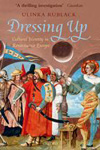
 Dressing Up. Cultural Identity in Renaissance Europe
by Ulinka Rublack
Oxford University Press, 2012, 376 p.
Winner of the Roland H. Bainton Prize for History 2011
Dressing Up shows why clothes made history and history can be about clothes. It imagines the Renaissance afresh by considering people´s appearances: what they wore, how this made them move, what images they created, and how all this made people feel about themselves.
Using an astonishing array of sources, Ulinka Rublack argues that an appreciation of people´s relationship to appearances and images is essential to an understanding of what it meant to live at this time – and ever since. We read about the head accountant of a sixteenth-century merchant firm who commissioned 136 images of himself elaborately dressed across a lifetime; students arguing with their mother about which clothes they could have; or Nuremberg women wearing false braids dyed red or green. This brilliantly illustrated book draws on a range of insights across the disciplines and allows us to see an entire period in new ways. In integrating its findings into larger arguments about consumption, visual culture, the Reformation, German history, and the relationship of European and global history, it promises to re-shape the field.
Readership: All those interested in the history of clothing and fashion and the cultural history of Renaissance and Early Modern Europe
Prologue 1
Introduction 2
Looking at the Self 3
The Look of Religion 4
Nationhood 5
Looking at Others 6
Clothes and Consumers 7
Bourgeios Taste and Emotional Styles Epilogue
An Old Regime of Dress?
Notes
Select Bibiliography
Index
Ulinka Rublack, Senior Lecturer in early modern European history at Cambridge University and a Fellow of St John’s College. She teaches early modern European history at Cambridge University and is a Fellow of St John’s College. One of the most original scholars of her generation, she has previously published The Crimes of Women in Early Modern Germany and Reformation Europe. She is editor of Gender in Early Modern German History and the Oxford University Press Concise Companion to History (2011).


