


 Agnieszka Matusiak Wyjść z milczenia. Dekolonialne zmagania kultury i literatury ukraińskiej XXI wieku z traumą posttotalitarną, Wrocław-Wojnowice 2018, Wydaw. KEW im. Jana Nowaka-Jeziorańskiego, ss. 388
SUMMARY
(in English)
GETTING OUT OF SILENCE. DECOLONIAL STRUGGLES OF THE UKRAINIAN CULTURE AND LITERATURE OF THE 21ST CENTURY WITH POST-TOTALITARIAN TRAUMA
In the book, the silence in the title symbolizes the content removed from the Ukrainian social consciousness into the sphere of the collective unconsciousness, and this removal, following the Freudian thought, becomes the cause of the emergence of social trauma(s) that are translated into cultural practices. I believe that the trauma, experienced by the Ukrainian society under the influence of totalitarianism and its posttraumatic symptoms, which after the collapse of the Soviet empire manifested themselves in a number of narratives, political, economic, social and cultural experiences, belongs to central socio-cultural problems as in other countries of the former Eastern Bloc, being at the same time one of the most abandoned research areas of the modern Ukrainian studies — both domestic and foreign.The dramatic events taking place in Ukraine since the end of 2013: The Dignity Revolution, the annexation of Crimea and the war in the eastern Ukrainian regions, tragically updated and activated this issue, showing how the unprocessed / suppressed traumas of totalitarian oppression — especially from World War II, when the extreme impact of two totalitarian regimes: sovietism and nazism cumulated in Ukraine, symbiotically affecting to some extent almost the first decade of the post-war period, somewhat “paved the way” for the conflict in the social space of modern Ukraine, in which the memorial sphere became a beginning for implementing the neo-imperial ideas of Putin’s Russia.In this respect, I treat my book as a modest contribution to the ongoing debate in Ukraine, trying to find answers to questions on what constitutes the essence and what is the specificity of processes, phenomena and mechanisms of emancipation of the Ukrainian culture from totalitarian and post-totalitarian domination — Soviet and Soviet heritage and what shape the experience of Ukrainianness takes today and what are the processes and mechanisms that decide about this shape? Behind what metaphors, symbols, figures, narratives, discourses its experience is hidden, and what imaginarium determines it.
However, in my research I am not interested in exploring cultural representations of trauma, but in studying cultural works as transmission channels of experience, bearing the mark of the trauma of the Absent.The affective research approach adopted by me is aimed at enabling a more effective understanding of the Ukrainian past, how Ukrainians establish and negotiate their relations with the past, based on what criteria and values they do it, and what motivates their actions, owing to which the Ukrainian society is at such and not a different stage in history.Therefore, I decided that the subject of my research, representative of the topic undertaken, will be artworks (B.I. Ettinger): literary texts (prose, dramatic), quasi-literary texts (essays), as well as film, photography and cultural activities that have significantly captured the psychosocial state of the de-colonised /de-totalitarized Ukrainian entity (both individual and collective) together with the essence of phenomena and processes that shape cultural identity of this entity (both in the macro and micro scale), which after the collapse of the Soviet Union faced the need to deal not only with a considerable spectrum of numerous challenges that appeared every day as a result of a fresh transformation reality, opening Ukraine to the direct impact of the empire of globalization, but at the same time, also with the heritage of a complicated past: colonial 19th-century and totalitarian 20th-century. I treated these works as specific cultural, social and artistic laboratories (in the meaning of B. Latour), in which the Ukrainian creators submitted those topics, problems and issues that remain problematic for the latest Ukrainian culture, as well as for the Ukrainian society in general, to the experimental study with a view to their acquisition. I embedded the analysed works into the optics of the de-colonial revolution, and especially the transgressive power of performativity which lies in it, leading to the emergence of truths whose foundation is not being, but the coloniality of being, the “colonial wound” (in the meaning it was given by Walter Mignolo). In other words, I tried to identify these works in the Ukrainian culture and literature that, due to their de-colonial potential, carry scenarios of performative processing of the trauma of World War II and its posttraumatic symptoms from the period of systemic transformation after 1991. The intention of such studies was the desire to change the dominant belief in contemporary Ukrainian studies that the post-communist trauma abounded only in negative effects for Ukrainian society and culture. My research was to prove that paradoxically, in addition to the obvious negative socio-cultural consequences, post-totalitarian trauma also provoked a number of positive effects, including the most important one: “forcing” the Ukrainians to redefine their identity (collective and individual) in the face of a war with the Russian aggressor, however, much more thorough than in 1991, and later in 2004 during the Orange Revolution, which in the symbolic plan can be regarded as the entry of the Ukrainian society into the path of conscious decolonization, i.e. epistemic, political and ethical decolonization. In other words, using psychoanalytic terminology: I consider this moment as the beginning of processing post-totalitarian trauma and gradual acquisition of the painful colonial-totalitarian heritage.
Sigmund Freud’s psychoanalytic concepts of trauma were crucial to my research, as were selected post-Freud ideas — in the first place, Jacques Lacan’s thoughts, but also those growing out of the transdisciplinary roots of the latest psychology, philosophy, anthropology, sociology, historiography and widely understood cultural studies along with the appropriate ethical, affective and performative turn, so those trends that constitute traumastudies. I refer particularly to the works of Nicolas Abraham and Maria Török, DominicLaCapry, Cathy Caruth, Marianna Hirsch, Bracha I. Ettinger, Jill Bennett et al.
My monograph consists of an Introduction, three analytical chapters and an ending.In the first chapter, entitled Memorial He-story.PavloAr’je and Volodymyr Lys, I examine the trauma of World War II and the attempts to process it in the contemporary Ukrainian society from the perspective of the male experience created by male writers.In turn, in the second chapter entitledMemorialShe-story. Maria Matios and Oksana Zabużko, I follow women’s experiences and emotions associated with the Second World War and their significance as a kind of traumatic memorial heritage for the identity of contemporary Ukrainian generations, which the women’s writing tries to address in the right way. And the third part of the book, Theirstory?Ourstory?Holocaust refers to the Jewish experience of the Second World War, which until the first decade of the 21st century was being removed from the Ukrainian cultural memory.In this chapter, in addition to Katia Petrovsky’s novel Maybe Esther as a contextual background, I reach for photographs documenting the Holocaust of the Jewish population of Kiev in Babi Yar. In the last chapter of the monograph, which I treat as a kind of coda for my investigations, I discuss the trauma of the current war in Donbass, which overlaps with the traumatogenic experiences of World War II, as well as the post-war and transformation periods after 1991.The exemplification material for my reflections in this part are the cultural events that occurred in the Ukrainian social space after the Kiev Maidan in 2013/2014, essays by Ivan Dziuba, SerhijLoznica’s 2018 film Donbass, Igor Minaiev’s 2018 film The Cacophony of Donbass and prose by Vladimir Rafiejenko.
Spis treści
Wstęp 11
Memorialne He-Story. Pawło Arje, Wołodymyr Łys 47
Memorialne She-Story. Maria Matios, Oksana Zabużko 81
Their Story? Our Story? Holocaust 165
„Widok cudzego cierpienia”. Fotograficzne świadectwo Zagłady w Babim Jarze 173
Trauma utraty. Może Estera Katii Petrowskiej 183
Zamiast zakończenia
W przededniu nowej wojny: Majdan 3.0 215
Donbas: moja miłość… moje życie, moja śmierć, moje zmartwychwstanie 244
Bibliografia 337
Summary 379
Indeks nazwisk 383
_____________________________
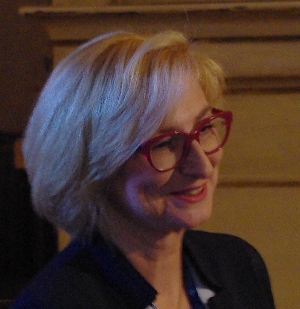 Аґнєшка Матусяк – професорка Вроцлавського університету, докторка гуманітарних наук, завідувачка Відділу україністики в Інституті слов’янської філології, а також Центру постколоніально-посттоталітарних студій на Філологічному факультеті Вроцлавського університету (Польща). Наукові інтереси: історія російської та української літератури XX століття, постколоніальні, посттоталітарні та ґендернії студії. Авторка монографій «Мотив сну в прозі старших російських символістів. Федір Сологуб» (Вроцлав, 2001), «У колі української сецесії. Вибрані проблеми поетики творчості письменників Молодої музи» (Вроцлав, 2006) та «Химерний Яцків. Модерністський дискурс у прозі Михайла Яцкова» (Львів, 2010). Редакторка томів: «Великі теми культури у слов’янських літературах» (т. VII, VIIІ, IX Вроцлав, 2007, 2009, 2011), «Українські трансґресії ХХ–ХХІ ст.: Звільнити майбутнє від минулого? Звільнити минуле від майбутнього? Культура — Історія — Політика» (Вроцлав–Львів, 2012) та «Miscellanea Posttotalitariana Wratislaviensia 1/2013: Між пам’яттю та забуттям. Посткомуністична травма» (Вроцлав, 2013), а також «Перехресні стежки українського маскулінного дискурсу: культура і література XIX–XXI ст.» (Київ, 2014). Шеф-редакторка наукової серії «Вроцлавські посттоталітарні студії», а також наукових часописів «Miscellanea Posttotalitariana Wratislaviensia» (Вроцлав) та «Між. Полоністично-українознавчі наукові студії» (Київ-Львів-Вроцлав). Членка наукових комітетів часописів: „Slavica Wratislaviensia” (Вроцлавський університет), „Porównania” (Університет ім. А. Міцкевича у Познані), „Kyiv-Mohyla Arts and Humanities” (Національний університет «Києво-Могилянська академія»), “Проблеми сучасного літературозхнавства” (Одеський національний університет ім. І. Мечникова) та „Університетськи Гуманітарні Студії” (Києвський національний університет ім. Т. Шевченка). Стипендіатка Українського наукового інституту Гарвардського університету (2013). Очільниця міжнародного наукового проекту «Посттоталітарний поколіннєвий синдром у слов’янських літературах Центральної, Східної та Південно-Східної Європи у світлі постколоніальних студій», за підтримки Міністерства науки вищої освіти Польщі. Живе і працює у Вроцлаві.


