


 Traitors, Collaborators and Deserters in Contemporary European Politics of Memory. Formulas of Betrayal / Ed. by Gelinada Grinchenko, Eleonora Narvselius. Palgrave Macmillan, 2018. 414 p.
Bridges an obvious gap in the market of Anglophone academic literature as it provides a multidisciplinary and transnational perspective on the subject of treason, betrayal and collaboration. Focuses not on historical underpinnings, but rather on mnemonic transformations of the “facts” of betrayal and collaboration. Suggests an updated scholarly perspective that incorporates theoretical suggestions of memory studies, anthropology and cultural studies.
This volume offers a multidisciplinary approach to shaping and imposition of “formulas for betrayal” as a result of changing memory politics in post-war Europe. The contributors, who specialize in history, sociology, anthropology, memory studies, media studies and cultural studies, discuss the exertion of political control over memory (including the selection, imposition, silencing or ideological “twisting” of facts), the usage of “formulas for betrayal” in various cultural-political contexts, and the discursive framing of the betraying subject for the purpose of legitimizing various memory regimes and ideologies.
Content
- Introduction: “Formulas of Betrayal”—Traitors, Collaborators and Deserters in Contemporary European Politics of Memory (Narvselius, Eleonora (et al.))
- Monuments for Deserters!? The Changing Image of Wehrmacht Deserters in Germany and Their Gradual Entry into Germany’s Memory Culture (Dräger, Marco)
- From Traitors to Role Models: Rehabilitation and Memorialization of Wehrmacht Deserters in Austria (Pirker, Peter (et al.))
- Reinventing Collaboration: The Vlasov Movement in the Postwar Russian Emigration (Tromly, Benjamin)
- Taking an Intellectual Stance Between Communist Resistance and Fascist Collaboration: Jean Paulhan and the Épuration Process in France at the End of WWII (Perret, Caroline)
- Intellectuals in Times of Troubles: Between Empowerment and Disenchantment During the Orange Revolution and Euromaidan (Yurchuk, Yuliya (et al.))
- Discussing Wartime Collaboration in a Transnational Digital Space: The Framing of the UPA and the Latvian Legion in Wikipedia (Kaprāns, Mārtiņš (et al.))
- In the Ninth Circle: Intellectuals as Traitors in the Russo-Ukrainian War (Zaharchenko, Tanya)
- Collaboration and the Genocide of Roma in Poland (Kapralski, Sławomir)
- The Soviet Punishment of an All-European Crime, “Horizontal Collaboration” (Voisin, Vanessa)
- “Organized Bestial Gangs”—The Second World War and Images of Betrayal in Yugoslav Socialist Cinema (Andersen, Tea Sindbæk)
- Collaboration and Collaborators in Ukraine During the Second World War: Between Myth and Memory (Borovyk, Mykola)
- Silken Braids Under the German Boot: Creating Images of Female Soviet Ostarbeiters as Betrayers and Betrayed (Grinchenko, Gelinada (et al.))
- Betrayal of Memory in Hungarian Public Memorials of the Twentieth Century (Harlov-Csortán, Melinda)
- Betrayal and Public Memory: The “Myroslav Irchan Affair” in the Diaspora—Homeland Disjuncture (Khanenko-Friesen, Natalia)
- Post-War and Post-Communist Poland and European Knightly Myths of Loyalty and Betrayal: Pasikowski’s Acquis Mythologique Communautaire (Toczyski, Piotr)
_______________________________
 Гелінада Грінченко – історикиня, докторка історичних наук, професорка кафедри українознавства філософського факультету Харківського національного університету ім. В. Н. Каразіна. Головна редакторка часопису «Україна Модерна». У 2001 р. захистила кандидатську дисертацію, у 2011 р. здобула ступінь доктора історичних наук (тема дисертації – «Українські остарбайтери в системі примусової праці Третього райху: проблеми історичної пам’яті»). З 2001 р. працює в Харківському національному університеті імені В.Н.Каразіна: до 2003 р. була викладачкою кафедри історіографії, джерелознавства та археології історичного факультету, з 2003 р. – доцентка, з 2011 р. – професорка кафедри українознавства філософського факультету. Викладає курси: «Всесвітня історія», «Історична антропологія», «Історична пам’ять у соціокультурному контексті», «Усна історія», «Антропологія повсякдення», «Методика наукового дослідження». Наукові напрями – усна історія, memory studies, історична антропологія, історія повсякдення, історія Другої світової війни. Авторка понад 120 наукових робіт. Із 2006 р. очолює Українську асоціацію усної історії. З вересня 2014 р. – головна редакторка журналу «Україна Модерна» Стипендіатка Вільного Університету м. Берлін (1998), Українсько-австрійського бюро кооперації (1999), Центрально-Європейського Університету в Будапешті (2000), Американської ради наукових товариств (2003, 2010), Фонду Герди Хенкель (2004, 2012), Канадського інституту українських студій (2004, 2006), Центру CASE (2009, 2010) та інших. Викладала на літніх школах Європейського університету в Санкт-Петербурзі та Національному університеті «Києво-Могилянська академія». У 2015-16 рр. – запрошена професорка Рурського університету (м. Бохум, Німеччина). Брала участь у міжнародних наукових конференціях та семінарах у Великобританії, Італії, Литві, Нідерландах, Мексиці, Португалії, Польщі, Росії, США, ФРН, Чехії та інших країнах. Підготувала 4 кандидатів наук. Живе і парцює у Харкові.
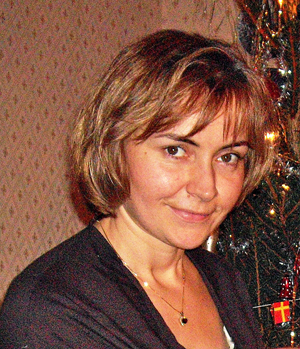 Елеонора Нарвселіус – етнологиня, кандидатка філологічних наук (Львівський університет), докторка філософії (Ph.D.) за спеціальністю Ethnic Studies (Університет Лінчопінга, Швеція). Наукова співробітниця Центру досліджень Європи в Лундському університеті (Швеція). Авторка книги “Ukrainian Intelligentsia in Post-Soviet L’viv: Narratives, Identity and Power” (New York – Toronto – Plymouth, UK: Lexington Books, 2012). Наукові зацікавлення: дослідження еліт, проблематика колективної пам’яті в Центрально-Східній Європі, дослідження культурної спадщини й комерціалізації історії. Серед недавніх публікацій – статті “Волинь 1943–1944 рр. і довоєнна польськість в інтелектуальній полеміці Західної України” (//uamoderna.com) та “Lviv and Chernivtsi: Two Memory Cultures at the Western Ukrainian Borderland” // East/West: Journal of Ukrainian Studies, vol.I, no. 1, 2014 (в співавторстві з Нікласом Бернсандом). Живе і працює у м. Лунд, Швеція.


