Warning
During the past decades, the term Mördersprache has largely disappeared from public discourse. Europeans thought that it became a thing of the past, this long-gone dark 20th century of totalitarianisms, genocides and concentration camps. In 1949, German philosopher of Jewish background Theodor Adorno opined that it was barbaric to write poetry after Auschwitz. Fellow Holocaust survivor, poet Paul Celan from the multicultural city of Czernowitz, clearly saw German as a murderers’ language.
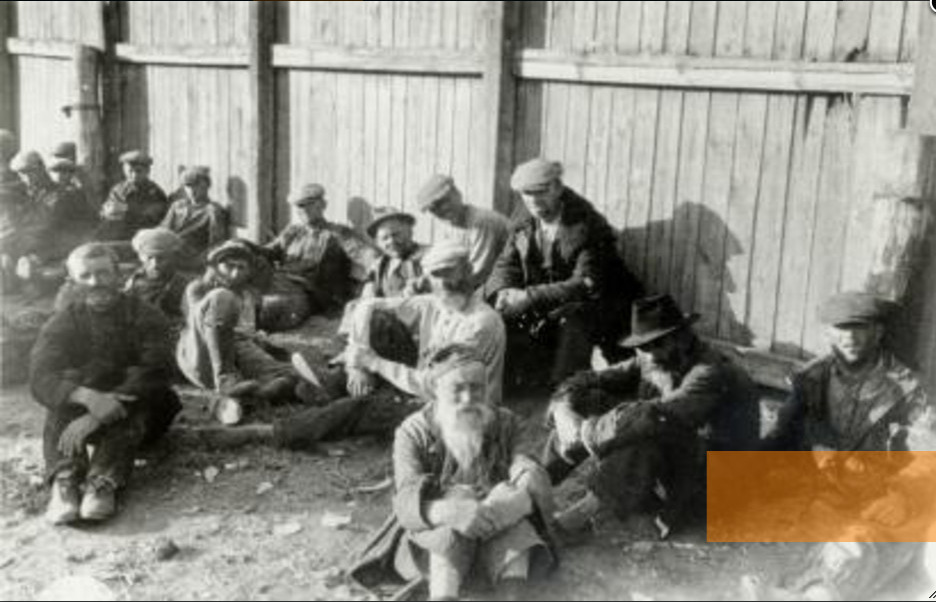
‘Good Germans,’ or émigré German-language writers from Germany and Austria, who during World War II criticized nazism were unable to save their language and its reputation from this accusation. Neither Brothers Mann nor Bertolt Brecht and Alfred Döblin did manage to stop the Third Reich from capturing German for the highly effective nazi propaganda, tasked with ‘justifying’ the Holocaust of the Jews and the Roma. After all, Berlin saw most such émigré writers as ‘non-Germans’ on account of their Jewish background shared by most of them. From the nazi perspective the fact that Hannah Arendt, Hermann Broch, Joseph Roth or Gabriele Tergit dared to write in German purportedly defiled this lofty ‘Aryan’ language.
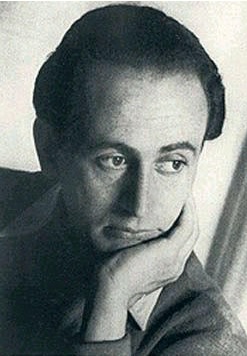
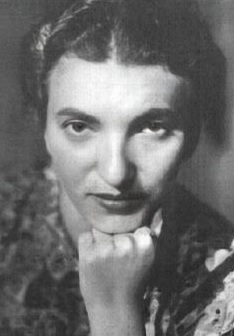
After the war, it fell to Celan in Paris and his fellow Czernowitz poet Rosa Ausländer to rescue their Muttersprache (mother tongue) from the lasting curse cast on it by the nazi genocidaires and their willing executioners, or ordinary Germans and Austrians. With their poems these two poets drank up and blotted out the Schwarzmilch (black milk) of Auschwitz. They singlehandedly wrung out the postwar German of toxic nazi words, usages and allusions. In the next step, Ausländer and Celan returned plurality, openness and acceptance to this language through re-establishing the centuries-long and mutually enriching connection between German and Yiddish. Nazis severed this connection with dire consequences. (More dire for Yiddish, because not a single locality is left in postwar Europe where it would be the language of everyday communication.)
Thus, German was made back into a Dichtersprache (poets’ language). No one else could achieve this feat but Holocaust survivors, inmates of nazi ghettoes and death camps, who saw their all families and communities wiped out in the Shoah. Not a single Christian German-language poet from Austria and Germany was capable of exorcizing their murderers’ language. Their shared language, culture and Aryanness (or non-Jewishness) made them into accessories to this crime of crimes.
But thanks to the two Czernowitz poets, who devoted their lives to this seemingly impossible task, postwar democratic Europe was presented with the unexpected gift of German the Dichtersprache. No one expected that the name of the German language would ever be cleared.
Making a Murderers’ Language
On 24 February 2022, the Russian army pounced with all its force on peaceful Ukraine in an unprovoked and unjustified war that still rages on. Like the Third Reich, today’s Russia dragooned culture as a tool of propaganda and as a weapon of warfare. The Kremlin improved on the nazi model considerably, due to the new possibilities afforded by the electronic mass media and the internet. So, now not a single Russian citizen or Russian-speaker can claim that they did not know about the war and its crimes. They had no choice but to hear about and watch the Russian army’s genocidal mass killings of Ukrainians or the state-sponsored theft of Ukrainian children for the purpose of turning them into Russians.
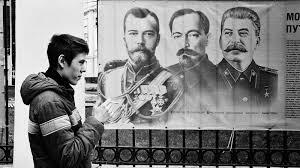
Yet, Russian and Russian-language émigré writers have been deafeningly silent on the rise of rashism, or Russian neo-imperialism and the cult of death, during the past three decades. Somehow none saw it fit to devote a poem or novel to the Chechen genocide (1994-2001), or post-Soviet Russia’s wars of conquest waged on Moldova (1992), Georgia (2008) and Ukraine (2014). Well, I am mistaken, many leading figures of Russian culture went amok in breathless support of their country’s illegal annexation of Ukraine’s Crimea. Like loyal nazi authors who extolled the regime’s annexations of Austria, the Sudetenland and Czechia, or the cleansing of Germany of Jews, Roma, homosexuals and the disabled.
This unrepentant acceptance and even blind love of Russian imperialism has been a rarely discussed constant in Russian culture, literature and politics for long, way too long. Yes, Leo Tolstoy criticized Fyodor Dostoyevsky for his thoughtless jingoism in support of the Russian war on the Ottoman Empire in 1877-78. But this towering figure of Russian belles lettres did not reflect on the crimes of tsarist imperialism beyond his brief novel Hadji Murat. In this book Tolstoy patronizingly empathizes with a Caucasian Muslim leader of military resistance against Russian imperial encroachments. On the contrary, the author’s opus magnum in the form of voluminous War and Peace is devoted to the tribulations of the Orthodox and Slavophone Russia under the Napoleonic invasion.
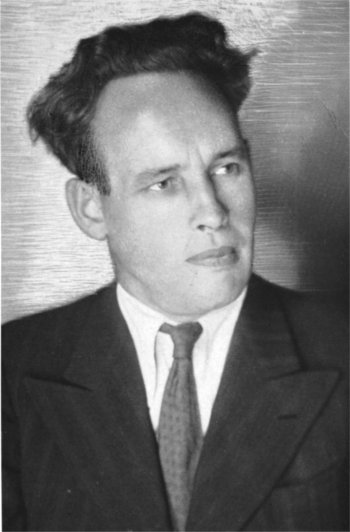
The tradition of seeing ethnic Russians as eternal victims and others as inherently anti-Russian, or otherwise unworthy of notice, continues to this day. For instance, in Aleksandr Solzhenitsyn’s three massive volumes on the Soviet system of concentration and death camps The Gulag Archipelago, only Orthodox Slavophone Russians feature. This Nobel laureate in literature does not care to mention the fact that the first extensive work of reportage covering the gulag concentration camps was published 20 years earlier, in 1950. It was the Ukrainian émigré writer Ivan Bahrianyi’s massive novel Sad Hetsymanskyi (Garden of Gethsemane) that revealed the hidden truth about Soviet totalitarianism. This book faithfully portrays the multiethnic and polyglot character of gulag inmates, who obviously stemmed from all nooks and corners of the Soviet Union.
The big Ukrainian novel still awaits its translation into any Western language. Leading Russian writers excel at reading in French, German or English and skilfully include in their books allusion drawn from literatures composed in these Western languages. Yet, in a typically colonial fashion, they have hardly ever ‘lowered’ themselves to peruse–let alone consult–books written in other Soviet (or now post-Soviet) languages, be it Chechen, Estonian, Kyrgyz or Ukrainian.
Russian or Russian-language writers appear to identify the oft-evoked ‘greatness’ of Russian literature with imperial grandeur, even if they proclaim to criticize imperialism. Poignantly, such criticisms failed to deliver not an expansive novel but even a little work on the tsarist genocide of Circassians (1864), the Soviet genocide of Ukrainians (Holodomor, 1932-33), or the Russian genocide of Chechens (1994-2001).
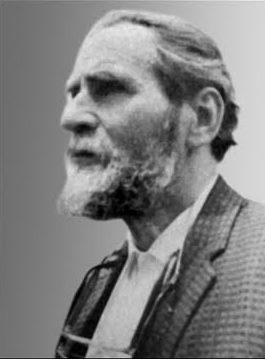
It is left to genocide survivors to write about their fate. For instance, in 1961 Ukrainian poet Vasyl Barka’s sweeping novel on the Holodomor Zhovtyi kniaz (The Yellow Prince) came off the press. Fortunately, it was already translated into German, French and Polish, though not into English. Neither does it surprise Russian commentators and students of literature that ethnic non-Russians should devote their works to tragedies suffered by the Russian people. For example, the great novel on the warfare against the Germans waged across the Soviet territory Life and Fate was written by Vasily Grossman, a Soviet writer of Jewish origin. ‘In return,’ after World War II, he witnessed in the Soviet Union the denial of the Jewish character of the Holocaust, the state-ordained execution of the country’s Yiddish-language authors at the turn of the 1950s, and the subsequent liquidation of Yiddish culture, publishing and education.
Язык убийц Iazyk Ubiits
At present, numerous Russian oppositionists, figures of culture, journalists and common people who disagree with the Russian invasion of Ukraine fled their country and found asylum usually in the European Union. Yet, after the initial nine months of the conflict, not a single literary work of note composed in Russian has been devoted to this unjust war.
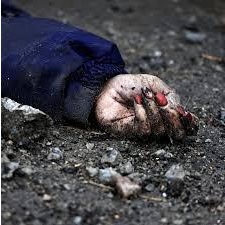
The discovery of the genocide of Ukrainians in Bucha, carried out by the Russian military, did not move a single Russian émigré writer to compose even a little story or poem on this tragedy. Now, we know that Russian genocidaires have left a string of mass graves in most Ukrainian localities that found themselves under Russian occupation. The Russian factory of death closely follows the nazi model of Einsatzgruppen (special task forces) who summarily kill anyone seen as anti-Russian and sweep ‘uncertain elements’ into a gulag-style galaxy of makeshift death camps and torture chambers. The goal is to ‘re-educate’ Ukrainians so at long last they would see that they were, are and must be none other than Russians.
The flattening of the city port of Mariupol and other Ukrainian towns, or widely reported killings of Ukrainian children and women, have failed to shock and stop a Russian writer in their tracks to such a degree that they would consider it a moral imperative to make these tragic events known to the world in the form of a literary work. At this stage, I do not know what could shake Russian authors out of their moral stupor and unthinking love of lethal Russian imperialism, even after they decided to flee their country. For sure, not the ongoing industrial scale bombardment of Ukraine’s vital infrastructure, which is to make sure that most Ukrainians would have to live through the coming winter of 2022-23 without heat or electricity.
After all, Russian writers already had an opportunity to speak up between 2014 and 2022, when Russia waged a localized war against Ukraine in the eastern part of this country. But in line with the long and well-established tradition of imperial blindness in this country, Russian writers preferred to remain silent on this ‘little inconvenience of war.’ So, it is not surprising that the current tragic events have not convinced them to change their ‘principled’ stance in favor of rashism.
As a result, there are willing or unconscious accessories to their country’s war propaganda and the ongoing genocide of the Ukrainians. Not only Russia’s leadership and military, but also its writers and figures of culture have worked hard to make sure that Russian has irrevocably been made into a язык убийц iazyk ubiits, another Mördersprache. The game is over. Now it is exclusively up to Ukrainians and Crimean Tatars to reinvent Russian as a poets’ language at some point in the future after the war’s end. If they ever choose so.
Until a Ukrainian Celan and Ausländer, or Ukrainian survivors of the genocide perpetrated by Russia, come forward and devote their lives to exorcise Russian from its newly gained notoriety as a murderers’ language, writing poetry in Russian after Bucha will be barbaric. At present the rashist language of Russian shares the same odious distinction with nazi German.
World’s Response
What does Russian’s status as a murderers’ language, iazyk ubiits, mean for Europe and the globe? First of all, it is a warning not to treat culture idly as a neutral pastime. After all, during World War II and in its wake, nazi writers and their works supportive of the Third Reich and the Endlösung (Holocaust) were consigned to oblivion in the West. The same fate should await these Russian writers and their propaganda writings, who now openly support the Kremlin’s genocidal war on Ukraine. Second, cultural institutions making use of Russian literature and other cultural products, be it in the original or translation, should beware, lest they become a conduit for the Russian genocidal propaganda.
Instead of just abstaining, also some proactive measures can be taken. Above all, the best of Ukrainian literature could and should be translated and made available to readers across the West. Why not to ensure expediated translations into English and the publication of the monumental novels by Ivan Bahrianyi and Vasyl Barka? What is more, the international use of Russian signage and information should be reconsidered in museums, airports and places of touristic attraction.
Such Russian signage and information could be entirely replaced with Ukrainian counterparts. This would make Russian travellers think. Yet, such a move would not deprive them of access to vital information, because Russian is close to Ukrainian, and both are written in the Cyrillic alphabet. After all, one of Moscow’s rashist ‘arguments’ on why Russia ‘had to’ invade Ukraine is the claim that purportedly Ukrainian is a dialect of Russian. Hopefully, this change in international signage practices would convince some open-minded Russians to start reading in Ukrainian and engaging with Ukrainian culture. This group would prepare a future ground for exorcising this rashisht murderers’ language of Russian. It will be a long process, which will take at least three to four generations. If it happens at all.
October 2022
Publishing Note:
This essay was written in the first year of Russia’s full-scale invasion of Ukraine. Then the West still harbored illusions about Russia, and about America, too. In the wake of the liberation of Bucha, Irpin and other localities in early April 2022, it became obvious that the Russian occupation forces are ready to use genocide-scale massacres as a modus operandi. It was a rude awakening for Europe and the world. Four years on, by 2026, nothing has changed in this regard.
The Kremlin’s imperialism is steeped in language and ethnicity, as exemplified by the slogan of the ‘borderless Russian world.’ Hence, in Moscow’s view, Ukrainians who do not agree to speak Russian, let alone to pretend that they are Russians, must perish when they find themselves under Russian rule. The Russian ‘liberation’ of Ukraine is none other than genocide, the genocide of Ukrainian language, culture and nation.
Their opinion clouded by Russian propaganda, many Western Europeans turn a blind eye to this ugly reality. They still prefer to talk about ‘deep humanism’ of Russian literature and culture. In the unthinking manner of useful idiots, they parrot Kremlin propagandists’ exhortations to the un-cancel-able ‘great Russian language’ in which ‘great’ Pushkin, Tolstoy or Dostoyevsky wrote. Imperialist languages kill. They do empires’ bidding, both with imperial subjects’ mouths and hands. That is how murderers’ languages are born–modernity’s black milk.
January 2026