


Ashkenazic Jewry between Poland-Lithuania, Russia and the US
In the early modern period, the majority of the world’s Jews lived in the Commonwealth of the Kingdom of Poland and the Grand Duchy of Lithuania. This now forgotten realm extended from what today is Latvia and southern Estonia in the north to present-day Moldova in the south and from central Poland in the west to eastern Ukraine in the east. In English the polity is known under the shorthand name of Poland-Lithuania, while in most post-Polish-Lithuanian polities it is dubbed the ‘Commonwealth’ or Rech Pospolita in Slavic. The only exception is Poland, where the Commonwealth is claimed exclusively for the current Polish national master narrative under the anachronistic designation of (the pre-partition) Poland.
In the late 18th century, Russia – alongside the post-Polish-Lithuanian polity of Prussia and with the Habsburgs’ participation – partitioned Poland-Lithuania. The Commonwealth was erased from the political map of Europe. The lines of division changed during the Napoleonic wars before stabilizing in the wake of the Congress of Vienna (1815). As a result, Russia effectively annexed over four-fifths of the Polish-Lithuanian territory.
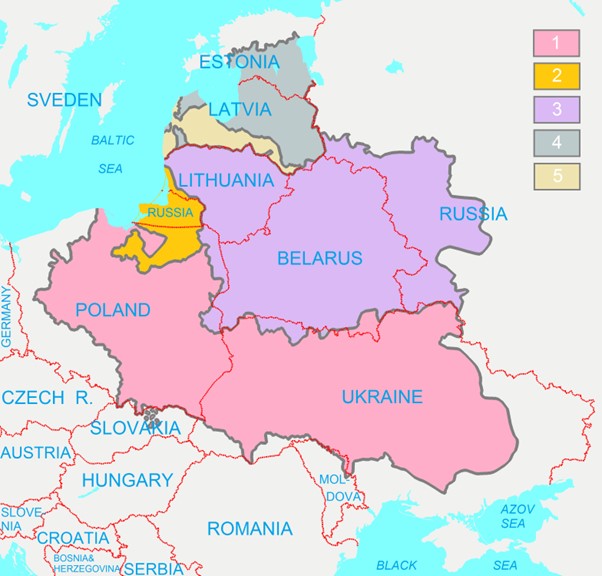
In turn, without leaving their hometowns of almost one millennium, most of the globe’s Jews found themselves within the Russian Empire. On this account, nowadays it is popular to refer to Ashkenazim as ‘Russian Jews.’ Yet, it is a misnomer. First of all, they are members or descendants of the Polish-Lithuanian Jewry. Following the annexation of the majority of Poland-Lithuania, St Petersburg created there a Pale of Settlement, which Jews were prohibited to leave. This territorial ghetto coincided with the Polish-Lithuanian lands within the Russian boundaries, including the northern Black Sea littoral seized then from the Ottomans and the Crimean Khanate. Jews – as ‘foreign infidels’ (innorodtsy) – had to be prevented from defiling the confessional purity of Russia’s canonically Orthodox hinterland, or the tsarist empire’s metropole.
The Pale survived until the Bolshevik revolution in 1917. Unlike Poland-Lithuania, this territorial ghetto offered no protection against the government’s and the Christian population’s antisemitic excesses. The Christian churches’ two millennia of anti-Jewish propaganda, married with modern technologies of warfare and population control, resulted in the successive waves of unprecedented pogroms during the 1880s. With the tsarist authorities inciting or at least turning a blind eye, Christians regularly roughed up, robbed and even killed their Jewish neighbors across the breadth and length of the pale.
From Pogroms to the Shoah
In search of safety, justice and prosperity, survivors left en masse for Western Europe and the Americas. They went especially to the United States. As a result, in the 1920s, New York became the world’s largest Jewish city. At that time, Jews constituted a plurality of all the New Yorkers. The more concealed antisemitism of WASP (white Anglo-Saxon Protestant) Americans caught up with Polish-Lithuanian Jews in the wake of the Great Depression. Newly introduced restrictive immigration quotas that also covered Jews remained in place for four decades. When nazis persecuted Jews during the 1930s and carried out the Holocaust in the first half of the subsequent decade, the globe’s leading democracy turned a cold shoulder to Jews.
Prior to the Holocaust, the two totalitarian powers of the Third Reich and the Soviet Union contracted an alliance in 1939. On this basis, Hitler and Stalin conquered and partitioned Central Europe. As part of the totalitarian, nazi-communist, alliance, the Soviets readily adopted antisemitism from Germany. In the Soviet empire Jews were not to be exterminated, but the official distrust led to mass expulsions of Jews to Siberia and Central Asia, especially from the conquered territories. This punitive (or in the Soviet propaganda’s vocabulary, ‘reeducation’) measure paradoxically saved these Jewish expellees from the Holocaust, provided they survived the privations of exile and gulag concentration camps.
After World War II, Holocaust survivors and the aforementioned Jewish expellees attempted to recreate their Yiddish-language communities and cultural life in the Soviet Union and across the Soviet bloc, that is, especially in Poland. The zone of this pale shadow of the prewar vibrant Yiddishland tightly coincided with the Polish-Lithuanian lands. Moscow allowed the feeble revival for a couple of years in the Soviet Union itself. But, at the turn of the 1950s, the country’s Yiddish-speaking Jewish elite were executed, while numerous low-ranking Jewish officials were sentenced to decades in the gulag camps. Following the Soviet example, similar ‘anti-Zionist actions’ followed in Czechoslovakia, Hungary and Romania. The very last of these antisemitic actions, in 1968, extinguished the very last flame of Yiddishland that still persisted in communist Poland.
Mercurian People
Yuri Slezkine is an American historian of Jewish extraction who defected from the Soviet Union. In his 2004 monograph The Jewish Century, he proposed that Jews were one of the Mercurian peoples of the globalized modernity, alongside, the Armenians, overseas Chinese and the Roma. As an archetypic middleman, through commerce, education and financial services these Mercurian peoples have connected the world’s other nations into today’s global community. For instance, many customs and practices of academic research, banking, entrepreneurship, trade and marketing first emerged in Jewish shtetls, be it in the yeshiva, market squares or within transnational networks of Jewish merchants and bankers that once thrived across Yiddishland.
Prior to the Holocaust, such networks extended from the desperately poor Jewish peddler in a remote shtetl to the rich Jewish investor, given to holidaying in the French Riviera. At the height of the first age of globalization, before the Great War, this vibrant web of individualized economic and cultural connections allowed for the exchange of ideas, goods and investment from the farthest reaches of the Russian Empire to Western Europe, North America, numerous Latin American states, Mandatory Palestine, South Africa, Kenya or Australia.
The Holocaust eradicated Yiddishland and its inhabitants. Yet the networks they had created and run for centuries remain. Now they are staffed with newcomers of other ethnic backgrounds who learned (and often stole without acknowledging) modernity from Jews. Nowadays, in the global North, practically all the populace are highly educated and acquainted with the methods of international commerce and communications. All became members of the worldwide Mercurian guild of modernity. The same is true of the elites in the global South, alongside growing numbers of people with full elementary and further education.
Science Fiction or Observed Reality?
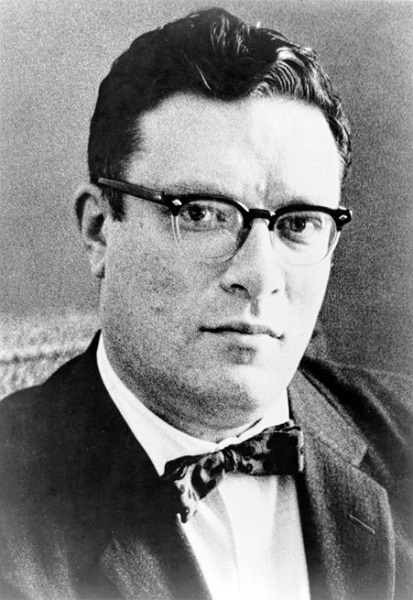
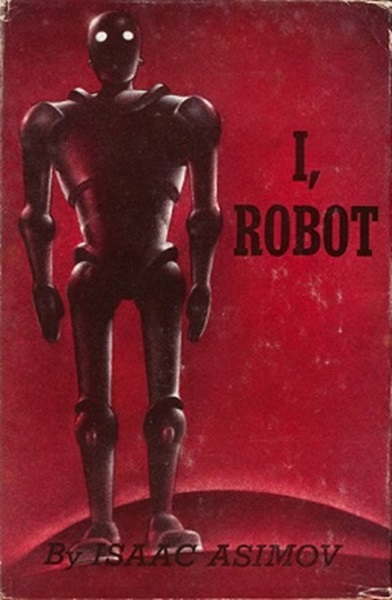
Science fiction as a defined genre with self-aware writers emerged in the interwar period, mostly in the United States. The two postwar decades heralded the golden age of science fiction, including the spread of this genre to Britain and Western Europe. This period is strongly associated with the prolific American writer Isaac Asimov (1920-1992). In 1942 he began penning stories that spawned his trademark Foundation book series (1951-1993), which chronicles the rise and fall of galactic empires. What is more, in the iconic story collection I, Robot (1950), Asimov formulated the three laws of robotics. To this day these laws constitute the core of the discussion on the ethics of the development and uses of robots and AI.
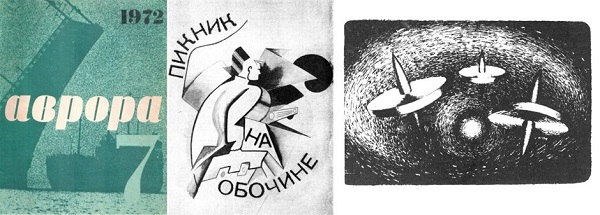
From the perspective of the Soviet dogma of socialist realism, science fiction was a suspected genre in the Soviet bloc, irrespective of its technological optimism shared with the main ideological tenets of marxism-leninism. In the period of the political thaw that followed the official end of dogmatic Stalinism in 1956, science fiction was cautiously embraced as part and parcel of the future-oriented Soviet vision of worldwide communism. Despite quite a few Soviet writers who tried their hand at this genre, from the perspective of readers and global observers of belles lettres, Soviet science fiction became synonymous with Brothers Strugatski, namely, Arkady (1925-1991) and Boris (1933-2012). In their haunting 1972 novel Roadside Picnic, the tandem prefigured the subgenre of postapocalyptic fiction. But more importantly, this book is now read as a foretelling of the Chernobyl nuclear disaster (1986), which decisively contributed to the breakup of the Soviet Union.
Last but not least, science fiction became accepted as part of mainstream literature during the 1960s and 1970s. This achievement materialized largely thanks to Polish science fiction author Stanisław Lem’s (1921-2006) oeuvre. His most renowned novel Solaris (1961) is constructed and written in a non-genre manner with the conscious use of artistic prose. It showed that non-genre writers could write science fiction or embrace its elements in their works. A similar service to world literature was performed by Gabriel Garcia Marquez who in what became ‘magical realism,’ de facto espoused fantasy for highbrow literature.
In his science fiction writings, Lem offered fully-fledged characters and did not shy from pessimism about the future. Both traits are characteristic of mainstream literature and aptly reflect the human condition. This direction of literary development did not endear Lem to communist controllers of ‘cultural production’ in Poland. After all, the communist future was propagandized to be workers’ paradise. Lem warned that it was going to be a fool’s paradise or some cuckoo land. This realization was yet another step toward literature and away from the genre ghetto of science fiction.
Lem’s pessimism showed up in Solaris as the impossibility of communication with extraterrestrial intelligence. It became a leitmotif of his books, which encouraged Brothers Strugatski on the path toward their masterpiece Roadside Picnic.
Hiding in Plain Sight
In his classic work Holocaust and Modernity (1989), Jewish-Polish sociologist Zygmunt Bauman (1925-2017), expelled from communist Poland in 1968, warned ‘we know what we did not know in 1941; that also the unimaginable ought to be imagined’ (p. 85). Asimov, Lem and Brothers Strugatsky did exactly that. And for that matter, decades before Bauman formulated his famous admonition. The question arises whether these four creators and innovators of global science fiction in the 20th century had something in common with Bauman and each other.
At the first glance, this looks unlikely, apart from Lem and Bauman sharing for a while the same communist Poland as their homeland. But let us look more closely at the family background and lived experience of these iconic SF writers. Asimov was born in the small village of Petrovichi, nowadays in Russia, to Yiddish-speaking Jewish parents. They registered the baby with the gentile authorities in Russian as Исаак Юдович Азимов Isaak Iudovich Azimov. In their Ashkenazic shtetl, the boy was known in Yiddish as יצחק אַזימאָװ Yitskhok Azimov. The area was contested between then briefly independent Belarus, Bolshevik Russia and Poland. To escape the hopelessness and uncertainty of the Great War that seemed to continue there unabated, in 1923, the family took leave of Europe and emigrated to the United States.
Today, local historians of culture and literature, forgetful of antisemitism, claim Asimov both for Belarus and Russia. The region of Smolensk, where Petrovichi lies, belongs to the historically ethnic Belarusian lands. The family’s surname clearly indicates that they stemmed from a Belarusian-speaking area. It means ‘winter grains’ or азіміна azimina in Belarusian. In contrast, in Russian this term is озимина ozimina and the same in Polish, ozimina.
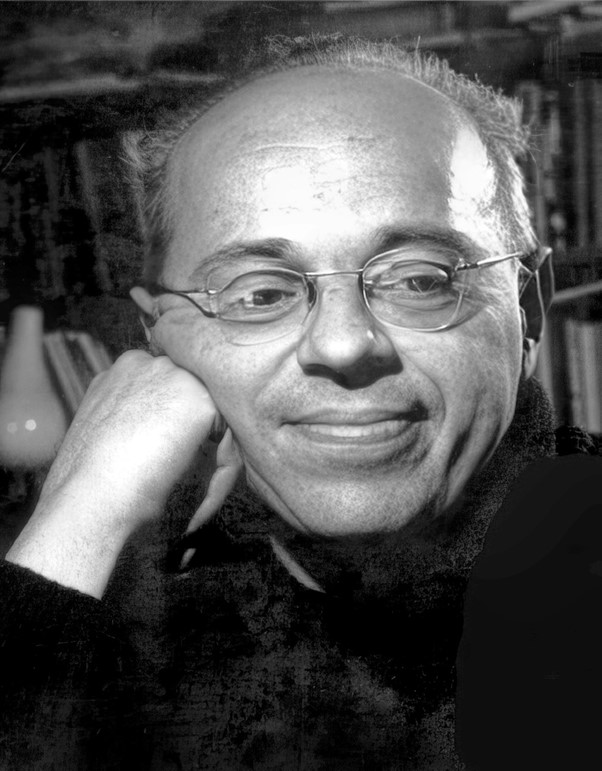
Stanisław Lem was also born to Jewish parents but fully assimilated with the Polish-speaking elite in Lwów (at present, Lviv in western Ukraine). His father Samuel was a wealthy ENT medical doctor. Before the Great War life was good for his family in the regional capital of the crownland of Galicia in Austria-Hungary. Yet, the increase in political and popular antisemitism convinced Samuel to alter the spelling of his surname from Lehm to Lem. The former form was a clearly German term for ‘clay.’ But in the social and ethnic context of Galicia, it was interpreted as an obvious sign of Jewishness, the surname stemming from the Yiddish word ליים leym for ‘clay.’
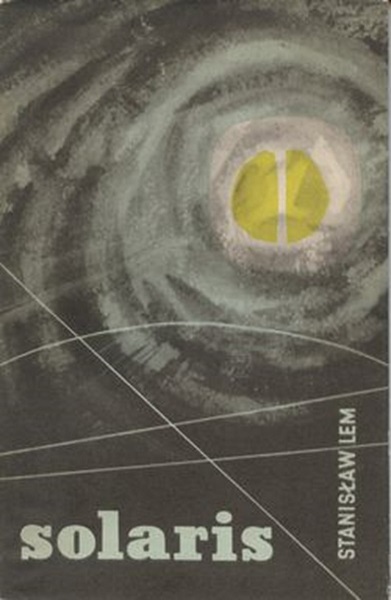
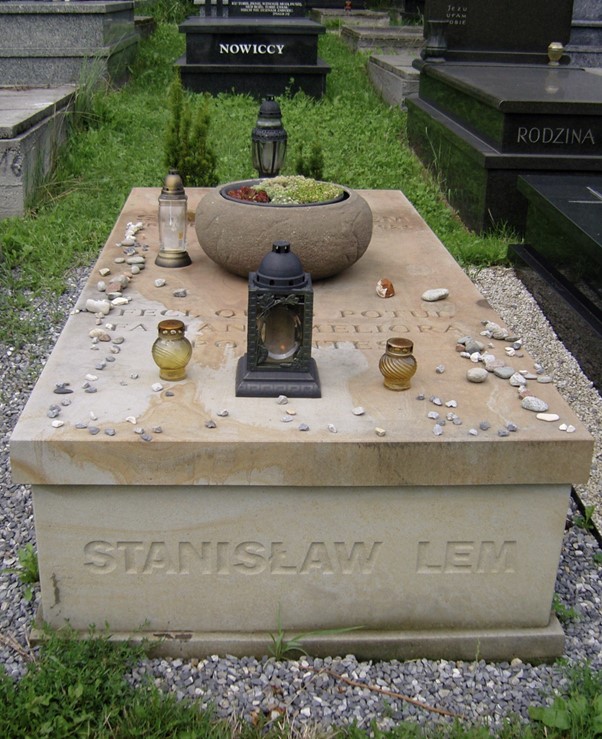
Dropping the offending ‘h,’ allowed for deniability of the Jewish origin. The argument came handy during numerous pogroms at the end of World War I and in its immediate aftermath, including the antisemitic bloodbath in Lwów in November 1918. This horrific pogrom took place when the independence of the Polish nation-state was proclaimed. Hence, Lem’s parents did not take chances and endowed their son with an utterly un-Jewish first name. Stanisław is a clearly Slavic name, most popular among gentile Poles. At school in interwar Poland, Lem attended religious instructions in the Jewish religion. But the future writer survived the subsequent Soviet and German occupations of Lwów on false ‘Aryan’ papers, which identified him as a Catholic.
When the family realized that the Allies agreed to the incorporation of the eastern half of interwar Poland into the Soviet Union, they moved to Galicia’s second most important city that remained within postwar Poland, that is, Cracow. During the war and immediately afterward they experienced the privations and indignities of Soviet rule and made sure to steer away of it.
Unlike Asimov in New York, Lem senior and junior had to conceal their Jewish background as a precaution and the sine qua non precondition of survival in the times of active antisemitic persecutions and extermination. Nothing changed in this regard either in communist or in postcommunist Poland. Lem stayed clear of any questions or discussions about the Jewish origin of his family. The 1968 expulsion of Jews and the near-official probe that was to confirm the non-Jewish origin of a presidential candidate in 1990 confirmed Lem’s fears that it was better to say nothing about his Jewish background. The famous writer stayed silent on this subject until his death.
Brothers Strugatsky also knew that they should avoid revealing their Jewish origin. Like in communist Poland, Jewishness was a serious social and political liability in the Soviet Union. The brothers’ father Nathan was born in the homogenously Jewish village of Dubovychi, near the historic town of Hlukhiv in present-day Ukraine’s region of Sumy. Now, this area is dangerously close to the Russo-Ukrainian front. Nathan intended to follow into the footsteps of his father Zalman from Kherson (today’s Ukraine), who had gained university education and become a lawyer. But the Great War, the Bolshevik revolution, the civil war or party work plotted to keep Nathan away from fulfilling his dream. He persevered, attending extramural and evening courses whenever an opportunity appeared.
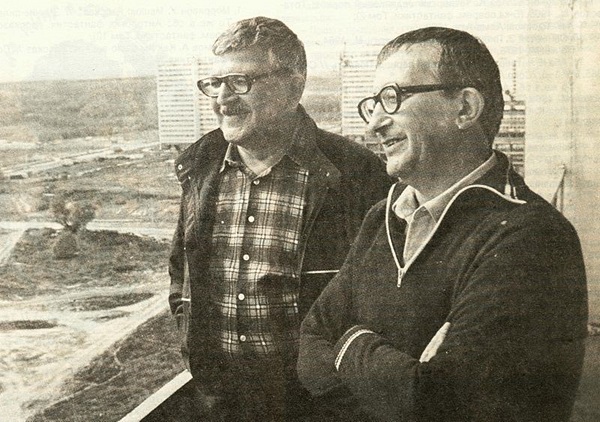
Political purges and ethnically designed repressions convinced Nathan (who wisely married a Russian Orthodox girl) to give his sons clearly un-Jewish first names, popular among ethnic Russians. Thanks to Zalman’s earlier decision, the family’s surname was already unobtrusively Slavic. The word струг struh in Ukrainian or strug in Polish stands for the woodworking tool of hand plane. The family knew well about the Holodomor in Soviet Ukraine and the Holocaust. On top of that, they lived through the siege of Leningrad (St Petersburg). Instead of surrendering this city to the Germans, the Soviet authorities defended it at the cost of genocidal-scale losses among its inhabitants, due to rife starvation. The city’s prewar civilian population of 3.5 million was reduced to a tenth of this number. Staying low, and not sticking out ethnically or otherwise from among the docile Russian masses was instrumental to survival in the Soviet Union. This type of conformity is again the required norm in the present-day warmongering and neoimperial Russia.
However, in the Soviet Union it was difficult to hide one’s origin effectively, due to the bureaucratic requirement of having to reveal the name of the father in one’s own name. The institution of patronymic compelled Arkady and Boris to append ‘Natanovich’ to their names. Yet, the brothers cleverly avoided this necessity, choosing to be known on the covers of their co-authored books, simply as ‘Brothers Strugatsky’ (Братья Стругацкие) or alternatively as Arkady and Boris Strugatsky (Аркадий и Борис Стругацкие). Otherwise, when an antisemitic censor insisted, the writers resorted to acronyms AN and BN in addition to their shared surname. Spelling out this ‘N’ was out of question.
Vicious Circle: Between Mercury, Antisemitism and Genocide
Do Asimov, Lem and Brothers Strugatsky have something more in common than a vague recollection of their Jewish origin? All these four world-renowned writers stem from the lands of the former Polish-Lithuanian Commonwealth. In one way or another they were Polish-Lithuanian Jews. During the 1930s and 1940s, this region became Europe’s notorious Bloodlands, where the Soviet and German totalitarian regimes’ genocidal projects and occupations spatially overlapped in quick succession. Lem and Brothers Strugatsky experienced the tragedy of this lethal situation in full force and had to navigate the narrow path to success in the postwar Soviet bloc.
Asimov was spared this hard fate, thanks to his parents’ propitious decision to leave for America. Yet, from the press, discussions with his Jewish relatives and acquaintances and as a serviceman in the US army, Asimov learned in detail about the Holocaust and the extermination of European Jewry under German occupation. Subsequently, the postwar Soviet persecutions of the country’s Jews time and again made it to the front pages of the US press.
All the four science fiction authors observed or personally experienced modernity and technology at its most murderous cutting edge. Thanks to this poisonous knowledge, they learned how to ‘imagine the unimaginable’ before even Bauman formulated his dictum. Like the writers, this sociologist belonged to the same social, ethnic, post-confessional milieu of Poland-Lithuania’s Yiddish-speaking Ashkenazic Jews. In 1989, lecturing at the University of Leeds in Britain, Bauman could safely state that modernity as we know it today produced the Holocaust and, too, became a product of the Holocaust. Part and parcel of this process is the West’s curious absentmindedness regarding the near-instantaneous disappearance, during World War II, of the full-fledged Yiddish-language European culture with 12 million speakers worldwide.
Holocaust survivors managed to establish their Central European nation-state of Israel in the Middle East. Nazi Germany and its program of the Final Solution were resoundingly condemned at the Nuremberg Trials. Until recently it was unacceptable to openly voice antisemitic sentiments in the West, especially in Germany. (Now the taboo appears to be over.) Yet, there was nothing but education and morality to stop people from whispering into one another’s ear that ‘Hitler was a great leader’ and ‘Jews deserved their fate.’
In the postwar United States, initially, there was no market for books on the Holocaust. In the Soviet bloc censors did not allow open discussion on the Shoah. Instead – consciously or not – Asimov, Lem and Brothers Strugatsky smuggled this bitter knowledge under the glittering guise of science fiction. In the writers’ books, if the reader observes closely, the ghettoization and dehumanization of targeted groups, pogroms, ethnic cleansing and acts of genocide are meticulously portrayed. These four authors knew about the future from their lived present. Unfortunately, this present refuses to be consigned to the past. Instead, it keeps becoming our future. Let us be clear-minded about the situation, it is us ‘people who doom people to this fate.’
Published for the first time. The publication uses illustrations from open sources provided by the Author.


