Introduction
In episode 4 of the 2019 TV mini-series Chernobyl, a peasant granny refuses to leave when a Soviet soldier attempts to evacuate her from her land and kill her cow because of radiation contamination. She claims that in her life, many soldiers had come before, and none had managed to force her out of her house. Among the previous attempts, she recalls, “Then there was Stalin and his famine. The Holodomor. My parents died. Two of my sisters died. They told the rest of us to leave. No.” This scene is intended to demonstrate the horrors Ukrainians experienced in the twentieth century. However, the way this granny describes them is not how an old peasant woman would have expressed herself in Soviet Ukraine. She would not have called the famine of 1932-33 the Holodomor. It was only in the last years of the Soviet Union and after its collapse that Ukrainians learned the term holodomor.
Holodomor meaning the policy of the Soviet leadership to starve Ukrainian peasants is not the word’s original sense. Ukrainian writers and journalists used it in different ways before the 1932-33 famine and even a few decades afterwards. The anti-Soviet activists and writers who sought to bring attention to the famine as a Bolshevik policy to starve Ukrainians and as part of a larger policy to destroy the Ukrainian nation [1] lacked a specific term. The word holodomor was adopted to communicate the unique genocidal policy of the Stalinist regime.
In this article, I argue that the Ukrainian word holodomor was conceptually redefined from its prior meaning and employed by members of the Ukrainian diaspora to frame Soviet collectivization as genocidal and anti-Ukrainian. First, I will explore the meanings of the word holodomor before it became connected to the Ukrainian famine of 1932-33. Then I will trace its use to represent the famine, giving it a new sense. Finally, I will briefly examine how the word became popular amongst the North American Ukrainian diaspora to define the unique historical event—the Great Famine of 1932-33, or Holodomor.
Before addressing the various meanings of holodomor, it is necessary to briefly touch on sources and methodology. Facing a potentially endless number of sources where the word holodomor can be found, I limited my research largely to the press—it being a public sphere where different actors interact with each other more or less equally.[2] Through this lens, I consider the shifts in lexical meanings of the word holodomor as a collective act in which famous and anonymous authors, newspaper editors and their readers participated in different ways. They all derived meaning from books, academic articles and other sources, but also attached particular senses to the term by using it in specific ways, in manners that were understandable to a given newspaper’s audience.
Holodomor as a Person
Before 1932-33 and a few decades after, the word holodomor was used in the Ukrainian press with a different meaning from what we are familiar with today. In the first half of the twentieth century, the West Ukrainian and diaspora press described a starving person as a holodomor. The word did not imply a deliberate policy to starve people or even mass famine as a phenomenon. The word holodomor consists of two parts: holod—famine, and mor—plague. There is also an expression with these two words, moryty holodom, which mean to famish or to starve. Famines were phenomena often experienced in poor and overpopulated Galicia in the Habsburg Monarchy of the nineteenth century. Therefore, it is not surprising that peasants coined this word combining famine and plague to describe a person (rather than famine in its entirety). [3]
Before World War II, Dilo was one of the most popular daily newspapers in Eastern Galicia, representing moderate Ukrainian national views, notably, the Ukrains’ke natsional’no-demokratychne obiednannia (Ukrainian National Democratic Alliance, or UNDO). [4] Its authors often used holodomor to describe people who suffered from lack of adequate food. For example, prominent UNDO member and cultural activist Andrii Chaikovs’kyi used the word holodomor in a short humorous story about a Lviv student who meets a stranger who confuses him with another person. In their conversation, the stranger criticizes the university canteen: “Your university canteen is stupid… on Easter, you won’t smell what [my customers] eat on a weekday … You are holodomors!” [5] The stranger exaggerates the situation of students who did not eat well, saying that they were like those who suffered from famine, or holodomors. In this context, the word clearly refers to a malnourished person.
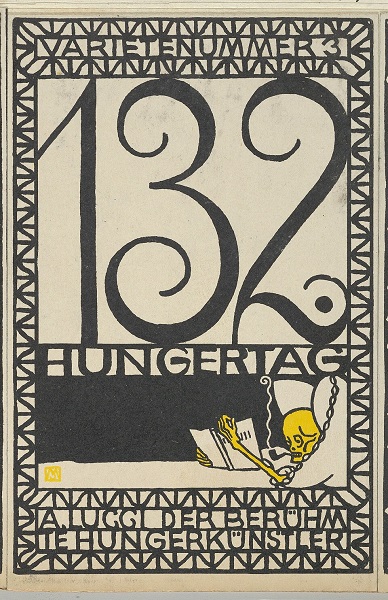
Going through the pages of Dilo, I identified several ways in which holodomor was used to mean a person. The first is the use of holodomor to mean a specific profession—someone who ate very little and then demonstrated their body, usually at circuses, for money. For example, publicist Roman Kupchyns’kyi wrote a short humorous text about the famous Polish holodomor Kurokyi, who “survived a few days without eating or drinking, presenting himself to be looked at for money.” [6] The quote serves well as a definition of holodomor as a profession. Holodomors demonstrated as entertainment the extreme conditions the human body can endure.
The word could also refer to a social group. Holodomor could describe the unemployed and poor who are malnourished as a result of their condition. For example, a short news text about a demonstration of the unemployed in London features the title “Holodomors in London,” although there is no discussion of famine in the United Kingdom. [7] The term could also be applied to the poverty of Ukrainian peasants in Galicia. Dilo published a speech by Olena Kysilevs’ka, a Ukrainian activist and senator in the Polish parliament, who when discussing various social issues in Galicia and Volhynia uses the term holodomors to emphasize the extreme poverty of Ukrainian peasants. Under the subtitle “Need” we find the following text:
“When, on this year of the Ukrainian Sokil jubilee, 1000 young boys from different parts of Galicia started doing exercises shirtless, their appearance terrified the public. Of course, they are holodomors with cobbler’s chests, maybe even having tuberculosis [tuberkuliky]”. [8]
Here, holodomor is used as a rhetorical tool to demonstrate the visually noticeable results of poverty and how people’s bodies change under such conditions.
Kysilevs’ka not only talks about poverty but also about an alarming public health issue related to social conditions. In the end, she compares holodomors with carriers of tuberculosis (tuberkuliky). The connection between social and medical problems is a common trope in Western political thought, and Galician politicians and the press were no strangers to this trend, [9] often linking the term holodomor to tuberculosis, as Kysilevs’ka does in her speech.
Writers often called a malnourished person a holodomor and a carrier of tuberculosis at the same time. For example, in an article about the Ukrainian missionary Rafail Krychyts’kyi, who had travelled to South America, a reporter describes him as “a ruin of a man, a holodomor or sukhitnyk [a carrier of tuberculosis].” [10] An even more direct connection is made in an article discussing the milk industry as a possible source of tuberculosis in Galicia. The article’s central question is “could we accuse the milk industry of playing the role of ‘holodomor’?” [11] Here holodomor does not describe a person but an industry, and not a person suffering from starvation but the cause of it.
There are more prominent instances outside of Dilo and even of interwar Galicia where the word holodomor describes not one who suffers but a person responsible for starvation or famine. In the Canadian Ukrainian Communist newspaper Ukrains’ki robitnychi visti (Ukrainian Workers’ News), in an article titled “Enough of Famine! Let’s Fight against Holodomors!” one of the final paragraphs even calls for action against the Canadian authorities as perpetrators of famine:
“As we see, the dominion government, provincial governments, and municipal and city governments organize a united offence against unemployment relief. Stopping the unemployment relief will affect all those with whom the unemployed workers live and all small businesses where unemployed buy their everyday products. That’s why all unemployed, married and single, all workers that still have their jobs today but tomorrow will join the unemployed must fight the lowering of unemployment relief in the united front, against the deterioration of unemployed life standards. ENOUGH OF FAMINE! In Canada, half of the population is dying out, more than are born. LET’S FIGHT AGAINST THE HOLODOMORS!” [12]
The Canadian Ukrainian Communists were not referring to those who suffered from famine but rather those who caused it. Nevertheless, reading this paragraph from today’s perspective, one may interpret holodomor as a policy, not a person. The second-to-last sentence talks about the government policy that led to the death of many Canadians; the following sentence then calls to fight it. Still, within the context of the whole paragraph, which started with accusations against different levels of authority in Canada, an interpretation of holodomors as people holds up. It is more convenient to mobilize people against a concrete group (the Canadian authorities) than against their actions or policies. Finally, the interpretation of holodomor to mean a person has stronger grounding if read in the broader context in Dilo that I have explored.
Holodomor as an instigator of famine is not far from the idea of holodomor as a policy of starving people. The Ukrainian newspaper Nashe slovo (Our Word), published under Nazi rule in Brest, contains a text addressed to the Ukrainian peasants celebrating Nazi victories against the Soviets. An anonymous author reassures Ukrainian peasants that “collective farms, holodomors of your families, will never return.” [13] From this sentence today’s reader would understand holodomor to mean a conscious policy of starvation. However, as in the Ukrains’ki robitnychi visti article, holodomor means somebody (or something in this case) causing a famine. Holodomors is being used here as a synonym for collective farms, which led to the starvation of many Ukrainian peasants, according to the author.
If holodomor in most of the Dilo articles means a person affected by the famine, the the other newspapers suggest that holodomor may also refer to perpetrators. In all cases, at this point holodomor meant people or entities, not policy or genocide. However, the word was applied in other senses that various writers and activists attached to it.
Holodomor as a Policy
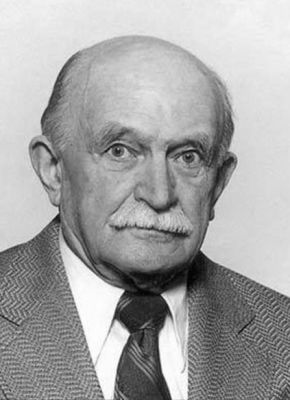
It is hard to pin down the first uses of the popularization of the term holodomor to mean a policy, but I can trace its early usage to specific authors in the North American Ukrainian diaspora. Notably, the word can be found in Pavlo Shtepa’s book Moskovstvo, which discusses the perennial anti-Ukrainian policy of Russia. [14] Shtepa was a Ukrainian nationalist born in the Kuban’ in 1897, who emigrated to Czechoslovakia after the revolutionary events on the territory of the former Russian Empire. There he got his education in the Ukrainian institute in Poděbrady and developed connections with Ukrainian emigres. In 1927, he emigrated to Canada, where he spent the rest of his life working with the weekly newspaper Novyi shliakh (The New Pathway), which was affiliated with the Organization of Ukrainian Nationalists (Mel’nykivtsi), and publishing his works on race, nation, and ethnicity.
Moskovstvo is one of Shtepa’s theoretical works on the history of the Russian nation and state. He presents Russia as a perennial imperialist force whose aim was to enslave their neighbours, notably, Ukrainians. This essentialist view of Russia was quite popular in the nationalist section of the Ukrainian diaspora at that time, and Shtepa’s work followed the basic tropes. He uses the word several times in the already established meaning, arguing that Moscow purposefully starved the Ukrainian population to enslave it. In the first mention, he describes Ukrainians from the perspective of Moscow as “‘separatists, assigned for a holodomor.” [15] He then talks about the specific “Moscow holodomor of 1933” and the fact that “Moscow did not organize a holodomor in the Don and Volga regions.” [16] In all cases, Shtepa explicitly uses holodomor to indicate a deliberate policy to starve people. To specify the Ukrainian case, he uses an additional marker, the year 1933. This new meaning of holodomor as a policy is connected but differs from the holodomor to mean a person.
Looking to find any possible influences on Shtepa in his use of this meaning, I followed Iaroslav Hrytsak’s lead on the Czechoslovak period in Shtepa’s biography, [17] in which he explains the etymology of the word as coming from the Czech word hladomor, which was used in the Czech daily Večernı́k P.L. in the article “Hladomor v SSSR.” The Czech author claims that the famine in Ukraine in 1932-33 was no accident but a conscious state policy to suppress the rebellious Ukrainian peasants. [18] While the author here clearly associates the famine with Soviet policy, the Czech word hladomor itself does not mean a state genocidal policy to starve a group of people. Its standard meaning rather is “mass famine” that may have environmental causes as well as be state influenced. [19]
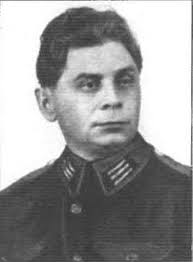
Looking at texts by Ukrainian authors in Czechoslovakia from that period, one notices that the word hladomor is found only in their Czech language texts. The Ukrainian diaspora was quite active in Czechoslovakia, where it established cultural and educational institutions as well as presses. More importantly, they closely followed events in Soviet Ukraine and described them to both Ukrainian and Czech audiences. In 1933, they established an information bulletin, Hlad na Ukrajině (Famine in Ukraine), which was published twice a month. It covered all accessible information about the famine in Soviet Ukraine and the Kuban’, international reaction to it, and debunked Soviet propaganda. In the introductory text of the first issue, its editor Iurii Dobrylovs’kyi, a medical doctor and active member of the Ukrainian diaspora, established the basic interpretation of the event:
“It is no secret to anyone that this hladomor in Ukraine is neither a natural nor an accidental occurrence—quite the opposite, it is an entirely logical conclusion of anti-Ukrainian Soviet policies directed at complete seizure and subjugation of Ukraine, as the Soviet leadership was convinced that it would be futile to try to turn this land to the Bolshevik faith peacefully or violently.” [20]
Here, hladomor has the standard Czech meaning “mass death by starvation” and does not imply specific state policy. However, Dobrylovs’kyi clearly claims that this hladomor is a result of a deliberate Soviet policy intended to make Ukrainians obedient. Also, it is the final act in a process of subjugation that was preceded by other repressive policies, particularly fabricated criminal cases against the Ukrainian intelligentsia. The constancy of anti-Ukrainian policy was a basic narrative about Soviet Ukraine established in those years by the Ukrainian anti-Soviet emigration in Czechoslovakia. Still, at this stage, holodomor (or hladomor) was not yet ascribed a specific meaning describing state policy.
Ukrainian emigres in Czechoslovakia did not borrow hladomor from Czech or use holodomor as a synonym to it. The same issue of Hlad na Ukrajině has a text by one of the intellectual leaders of the Ukrainian diaspora in Prague, Ol’herd-Ipolyt Bochkovs’kyi, criticizing the French politician Édouard Herriot, who denied any famine in the Soviet Union in 1932-33. Bochkovs’kyi’s critique was published in three languages—Czech, French, and Ukrainian. Importantly, while he uses hladomor in the Czech language, in the Ukrainian and French this or any similar word is absent. Talking about Soviet industrial achievements in the Czech text, Bochkovs’kyi rhetorically asks whether they are worth it if they “led to the state of hladomor and cannibalism.” [21] In the Ukrainian and French versions, he finishes this question differently: “with unprecedented terror, horrible atrocities, torture to death.” [22] Mass famine was part of the terror and repressions in the Soviet Union for Bochkovs’kyi as well as Dobrylovs’kyi. However, they did not coin a specific word for it, using the term hladomor only in Czech to indicate the scale of the famine.
In the 1930s, there was a clear notion of terror by famine in the Ukrainian anti-Soviet writings on the 1932-133 famine, but the Ukrainian diaspora did not yet have a specific term for it. Its leading periodical in Czechoslovakia, Informatsiinyi Lystok, came the closest to this idea with the term holodova polityka (the famine policy), which they used in their Ukrainian texts discussing the famine. [23]
Returning to Shtepa’s text, holodomor does not seem to have a traceable Czech origin. In fact, he left Czechoslovakia in 1927, even before the diaspora press began actively using the term hladomor in their Czech texts. Ukrainian writers and activists did not borrow it into Ukrainian texts or reinvent it in the Czech. However, Shtepa and the rest of the Ukrainian anti-Soviet diaspora shared the idea that the famine was an element of Soviet anti-Ukrainian policy. Shtepa gave this policy a catchy name that became common in the following decades after Moskovstvo was published.
Holodomor as a Genocide
Interpretation of the famine of 1932-33 as a genocide was common in the Ukrainian diaspora after World War II. Raphael Lemkin, who was the principal author of the United Nations Convention on the Prevention and Punishment of Genocide in 1948 and coined the term genocide in international law, applied the concept to the Ukrainian case. Lemkin argued that the famine of 1932-33 was one element of the genocide of Ukrainians. Although the Ukrainian famine was not recognized as a genocide on the international level at that time, Lemkin claimed that Soviet policy fit his definition of genocide, “This is not simply a case of mass murder. It is a case of genocide, destruction, not of individuals only, but a culture and a nation.” [24] Lemkin had contacts with the Ukrainian diaspora, who already shared the notion of a conscious Soviet policy against Ukrainians, and he gave a speech at a diaspora rally in New York in 1953 in which he condemned Bolshevik policy. [25] Thus, Lemkin’s concept of genocide corresponded to a large extent to the Ukrainian diaspora’s interpretation of anti-Ukrainian Soviet policy during the 1932-33 famine.
When in the 1960s the word holodomor gained the new meaning of a specific policy, it was a matter of time before it came to mean a genocide of Ukrainians. Looking at one of the oldest Ukrainian diaspora dailies, Svoboda, one can see this slow transition in the term’s meaning. Initially, Svoboda used holodomor in the same way as Dilo had in the interwar years. [26] However, even before Shtepa, Svoboda used the word slightly differently. In 1958, one of its readers published a short text about the Soviet Ukrainian famine, which the author called holodomorne narodovbyvstvo—a holodomor genocide. [27] Holodomor is used here as an adjective and does not necessarily indicate a policy but the means by which the genocide happened. This wording appears to be a modification of famine policy (holodova polityka), a term popular in the interwar Ukrainian press in Czechoslovakia. [28] In the broader context, the phrase holodomorne narodovbyvstvo was a step towards the establishment of a specific term to describe the Ukrainian genocide.
The situation started changing a few years after the publication of Moskovstvo by Shtepa. It is hard to determine whether his book had a strong influence on the Ukrainian diaspora public. Whether Shtepa popularized the word holodomor as a policy or just followed the trend, holodomor became one of the main words describing the Ukrainian famine of 1932-33. [29] Still, it was not a straightforward path, and there is another related word found on the pages of Svoboda—holodomorstvo. [30] The suffix -stvo refers to a phenomenon, usually derived from a word describing a person. Moreover, holodomorstvo may imply a result of activities by instigators of famine (holodomors). Therefore, it does not describe famine as a phenomenon, for which Ukrainian has the word holod, but rather, famine as a result of a specific policy. In the 1970s, most mentions in Svoboda of the word holodomor and its derivatives were about the famine of 1932-33, which influenced the word’s meaning, tying it more closely to a policy of starving people.
The word holodomorstvo was a clear attempt to coin a specific term that would capture a unique event in Ukrainian history and was found most often in announcements of diaspora commemoration activities. While holodomorstvo was attached to the 1932-33 famine in Ukraine, in more general cases, one finds the word holod (famine). [31] Also, some of Svoboda’s writers used this word in their publications. For example, in an article calling to have a monument dedicated to its victims, author K. Stepovyi follows the example set by the announcements and calls the 1932-33 famine holodomorstvo. He does on one occasion imply that the term could be applicable outside of this period, saying that the 1932-33 famine is “the biggest holodomorstvo.” This could be either a rhetorical use intended to amplify the scale of famine, or it might imply other instances of policies of starvation. In any case, the author does not develop the latter sense and does not talk about other famines. In the end, K. Stepovyi clearly claims that holodomorstvo was an act of genocide (narodovbyvstvo). [32] In all cases, holodomorstvo is another linguistic invention to describe the famine of 1932-33 as the result of Soviet genocidal policy against Ukrainians.
In the issues of Svoboda from the 1970s, holodomor was used in parallel to holodomorstvo. For example, a 1973 lecture by Valentyn Koval’ in Montreal, dedicated to the 40th anniversary of the famine, was called “Sorokarichchia holodomoru i komuno-moskovs’ka ahentura” (The 40th Anniversary of the Holodomor and Moscow-Communist Agents). The annotation of the lecture clearly indicates that holodomor is also an applicable term to other Soviet famines in Ukraine:
“The purpose of the recurring artificial holodomors in 1921-33 and 1946 organized by Moscow in Ukrainian and adjacent lands, which led to the 25 million victims of the Ukrainian people, is known to everyone—to weaken the biological substance of the Ukrainian nation and its physical force.” [33]
In this sentence, we can see that holodomor is synonymous with famine because it is preceded by the word artificial, and the sentence clarifies that it was organized and not a natural occurrence. Such usage led to a situation where holodomor acquired the meaning of a man-made famine aimed to suppress Ukrainians.
In an article that directly connects the famine of 1932-33 with genocide and even the Holocaust, Ukrainian writer Volodymyr Biliaiv contributed to the popularity of the term holodomor. His article “Panorama ukrainis’koho ‘Holokostu’” (The Panorama of the Ukrainian “Holocaust”) follows the standard description of the famine of 1932-33 as the most brutal act in Moscow’s perennial war against Ukrainians. The text’s main purpose is to highlight Moscow’s national and anti-Ukrainian motivation to use famine to subdue and assimilate Ukrainians. [34] In this regard, his usage of holodomor is similar to that of Shtepa, who did not elaborate on the term but had the same view of Ukrainian history. [35] To Shtepa’s notion of holodomor, Biliaiv adds the idea of genocide, calling the famine narodovbyvstvo.
After the experiments with derivative words holodomorne and holodomorstvo, Ukrainian anti-Soviet emigre writers gradually adopted the original word holodomor, adding a sense of genocidal policy, which was at the core of the interpretation of the 1932-33 famine in Ukraine. The 1980s was the decade in which the current meaning of holodomor as a genocidal policy of the Soviet leadership against Ukrainians was solidified. Svoboda authors eventually stopped using similar words like holodomorne, narodovbyvstvo, or holodomorstvo. The years 1983 and 1984 were the last when holodomorstvo was used in Svoboda. Commemorating the 50th anniversary of the famine, 17 issues of Svoboda mentioned holodomorsvto, while at least 26 numbers used holodomor. After 1984, only holodomor can be found on the pages of the daily, and there is no use of holodomor in the old meaning to indicate a person.
By the late 1980s, holodomor as a genocide became the main meaning of the word, eclipsing the previous meanings and other terms. It was now ready to expand beyond the public sphere of the North American Ukrainian diaspora and become a universal symbol for the genocidal interpretation of the 1932-33 Ukrainian famine. [36] More importantly, with the start of glasnost and then the collapse of the Soviet Union, the word and the interpretation it symbolized would travel on to Ukraine. [37]
Conclusion
Over six decades, the trajectory of the word holodomor demonstrates how a relatively marginal word became a symbol and a term for one of the most significant events in Ukrainian national history. It is likely that its relative initial rarity and a meaning that Ukrainian speakers can easily grasp made it a fitting candidate to describe a unique event.
Initially, holodomor was a term outside of politics, meaning a person suffering from malnutrition or an instigator of famine. The press referred to professional holodomors as entertainers or to poor malnourished people. As well, when there was a chance that famine had resulted from human activity, the press could use holodomors to describe those who deprived others of food. This latter meaning matched well with the idea that the Soviet leadership had planned anti-Ukrainian measures. Pavlo Shtepa connected this narrative with the word holodomor, giving the “famine policy” a unique Ukrainian name: holodomor. In this context, as genocide came to be considered the worst crime against humanity, it was not difficult for the notion of a deliberate policy to starve people to take on the sense of genocide. Leaving behind more complex terms derived from the word holodomor, Svoboda authors chose the simplest one. Thus, holodomor became the word to describe the Ukrainian genocide, similar to cases where other nations have framed mass atrocities as genocide using specific words from the national or other languages, the Holocaust or Shoah being the best-known case.
This reconstruction of the evolution of the term holodomor remains incomplete. For example, I can say only with a certain level of confidence that Shtepa was the first who used holodomor to mean a Soviet policy against Ukrainians in 1932-33. This small research project tentatively presents the main points regarding when the word changed in meaning. Further studies are required to determine the details of how holodomor became such an important and widely used word, both outside and inside Ukraine.
Notes and References
1 I do not argue that this narrative is a fabricated story but rather one way to interpret Soviet collectivization in Ukraine.
2 For the theory of the public sphere as a space of equal communication of bourgeoisie, see, Jurgen Habermas, The Structural Transformation of the Public Sphere: An Inquiry into a Category of Bourgeois Society (Cambridge, MA: MIT Press, 1991). For critical remarks about Habermas’ theory and different inequalities and exclusions it hides, see, Craig Calhoun (ed.), Habermas and the Public Sphere (Cambridge, MA: MIT Press, 1996). For this study, Habermas’ notion of equality of interactions in the press is sufficient for the purpose of exploring how holodomor gained its current meaning, although it is clear that the space of Ukrainian press was not inclusive of marginalized groups.
3 The Polish glodomór has the same meaning, a starving person. See, Franciszek Sławski, Słownik prasłowiański, Volume VIII (Wrocław – Warszawa – Kraków: Zakład narodowy im. Ossolińskich, Wydawnictwo PAN, 2001), p. 30. The Ukrainian press in Galicia could have been influenced by the Polish language in this case.
4 I chose Dilo not only because of its popularity but also because it is accessible online and its text is recognized, therefore, I could search for the word holodomor in its numbers. Digital version of Dilo numbers can be found in the Ukrainian online press archive Libraria
5 Andrii Chaikovs’kyi “Hulka i Smulka,” Dilo 175, August, 1925, p. 2.
6 Halaktion Chipka “Z moiei fil’my”; Dilo 168, July 31, 1927, p. 2. Halaktion Chipka was one of Kupchyns’kyi’s pseudonyms. The profession of holodomor was often about making an appearance of a starving person, and sometimes one can find reports of the exposed fake holodomors who secretly ate while nobody saw them. For example, see, Dilo 160, July 23, 1926, p. 4.
7 “Holodomory v Londoni,” Dilo 243, October 31, 1932, p. 3. Holodomor is used only in the title of the text, while the London protesters are called unemployed (bezrobitni).
8 “Neduhy, piianstvo, nuzhda,” Dilo 40, February 15, 1935, p. 5.
9 For example, the French 19th-century case of the medical discourse overlapping with the discourse on social issues, see, Sean M. Quinlan, The Great Nation in Decline: Sex, Modernity and Health Crises in Revolutionary France c. 1750-1850 (Aldershot: Ashgate, 2007).
10 P. Karmans’kyi “Zabutyi misioner,” Dilo 13, January 18, 1934, p. 6.
11 “Chy molocharstvo mozhe buty prychynoiu nedozhyvliuvannia naselennia?” Dilo 10, January 16, 1930, p. 4.
12 “DOSYT’ HOLODU! DO BOROT’BY PROTY HOLODOMORIV!” Ukrains’ki robitnychi visti 8, September 8, 1934, p. 2. I am grateful to Serge Cipko, who found this text and shared it with me.
13 “Seliany!” Nashe slovo 14, July 5, 1942, p. 4.
14 Here, I follow Iaroslav Hrytsak’s small note about holodomor in Shtepa’s text. Iaroslav Hrytsak, “Khto i koly vpershe vzhyv slovo ‘Holodomor’?” Ukraina Moderna, November 24, 2017. Heorhii Kasianov claims that Barka was the first to use the word in that way in the preface of the 1962 edition of “Zhovty Kniaz”. Heorhii Kasianov, Danse macabre: holod 1932-1933 rokiv u politytsi, masovii svidomosti ta istoriohrafii (1980-ti – pochatok 2000-kh) (Kyiv: Nash chas, 2010), p 220. However, the 1962 edition does not have any mention of the word, nor do later editions that I have examined.
15 Pavlo Shtepa, Moskovstvo: Ioho pokhodzhennia, zmist, formy i istorychna tiahlist’, Book 1 (Toronto: Semen Stasyshyn, 1968), p. 341
16 Ibid., Book 2, p. 354.
17 Iaroslav Hrytsak, “Khto i koly vpershe vzhyv slovo ‘Holodomor’?” Ukraina Moderna, November 24, 2017
18 I couldn’t access the article directly and had to rely on the appendices in Aleš Ziegler, “Reflexe hladomoru na Ukrajině 1932 – 33 v meziválečném Československu,” Magisterská Diplomová Práce, Masarykova univerzita v Brně, 2008, p. 174.
19 Franciszek Sławski, Słownik prasłowiański, Volume VIII (Wrocław – Warszawa – Kraków: Zakład narodowy im. Ossolińskich, Wydawnictwo PAN, 2001), p. 30.
20 I. Dobrylovs’kyi, “Úvodem,” Hlad na Ukrajině 1-2, p. 1. I am grateful to my friend Tomash Kalynych for helping me to translate this excerpt from the Czech.
21 “… přivedly do stavu hladomoru a lidojedství?” I.O. Bochkovsky, “Otevřený dopis prof. O. H. Bočkovského p. Ed. Herriotovi,” Hlad na Ukrajině 1-2, p. 27.
22 Ukrainian text: “… nechuvanoho zhorstokoho teroru, zhakhlyvykh zhertv, skatovanykh i zamuchenykh na smert’!” O. I. Bochkovs’kyi, “Do p. Edvarda Erio. Otvertyi lyst prof O. I. Bochkovs’koho,” Dilo 236 (9.09.1933), p. 1. French text: “… de la plus féroce terreur, des plus effroyables sacrifices et des plus cruelles tortures allant méme jusqu’â la mort!” H. O. Botchovsky, “A Monsieur Edouard Herriot. Lettre ouverte du Professeur H. O. Botchovsky, ” Hlad na Ukrajině 1-2, p. 29.
23 For example, “Protest proty holodovoi polityky moskovs’kykh bol’shevykiv na Ukraini,” Informatsiinyi lystok 7-8, November 28, 1933, pp. 1-2.
24 Raphael Lemkin “Soviet Genocide in Ukraine” in Holodomor in Ukraine, The Genocidal Famine, 1932-1933, written and edited by Valentina Kuryliw (Edmonton: CIUS Press, 2017), p. 266.
25 “Ukrainis’ki i amerykans’ki promovtsi na manifestatsii zasudzhuiut’ komuno-moskovs’kyi imperializm,” Svoboda 198, September 22, 1953, p. 1. However, Ukrainian diaspora press did not use the word genocide (or henotsyd in Ukrainian) but a direct translation from the Polish ludobójstwo, which is narodovbyvstvo (literally, a murder of people). Another possible origin of the word is the German word Völkermord with the same meaning. I am grateful to Frank Sysyn for suggesting the latter version.
26 For example, there is a 1952 article by a former Dilo author Roman Kupchyns’kyi, who moved to the US and kept his old pseudonym. Like in the 1920s, Kupchyns’kyi calls a poor malnutritioned urban dweller a holodomor. See, Halaktion Chipka, “Porady dlia pansionativ,” Svoboda 187, July 19, 1952, p. 3.
27 S. Panas, “Za pravdu pro velykyi holod,” Svoboda 145, July 31, 1958, p. 2.
28 Parallel to the phrase holodomorne narodovbyvstvo, Svoboda’s texts include the old meaning of holodomor as a person. Even discussing the famine of 1932-1933, journalists talked about “Moscow holodomors” (Moscow instigators of famine). See an article dedicated to the 30th anniversary of the famine, “Na sud Moskvu!” Svoboda 198, October 17, 1963, p. 3.
29 Still, there were instances of holodomor as a person in the early 1970s. See, for example, Ukrainians activists starving in a protest in Munich being called holodomors in Sofiia Naumovych, “Miunkhens’ka demonstratsia,” Svoboda 25, February 8, 1972, p. 2.
30 For example, boiahuz (a coward) and its derivative boiahuztvo (cowardice).
31 Announcements on the first page of Svoboda 179, August 23, 1978, p. 1. As a synonym to holodomorstvo, the wording Velykyi Holod (the Great Famine) was used. Another example of a similar usage of holodomorstvo, “Pamiatnyk zhertvam holodomorstva,” Svoboda 204, September 22, 1978, p. 2. 1978 seems to be the year when the word holodomorstvo was relatively popular in Svoboda.
32 K. Stepovyi, “V richnytsiu velykoho holodu,” Svoboda 199, September 16, 1978, p. 2.
33 “Sorokarichchia holodomoru i komuno-moskovs’ka ahentura,” Svoboda 178, September 26, 1973, p. 7. For some reason, the author gives 1921-1933 dates, which deviates from common approach of separating the 1921-1923 and the 1932-1933 famines. This could be a typo or an original take on the periodization that the author does not explain in the text.
34 Volodymyr Biliaiv, “Panorama ukrains’koho ‘Holokostu’,” Svoboda 233, October 27, 1978, p. 2.
35 Volodymyr Biliaiv, “Panorama ukrains’koho ‘Holokostu’,” Svoboda 234, October 28, 1978, pp. 2, 4.
36 One of the earlier examples of such export was the anti-Soviet Russian diaspora in North America. In 1986, the Russian daily Novoe russkoe slovo published a letter from a reader P. Nosenko, who tried to figure out how many people the Soviet leadership killed. He called holodomor a Soviet conscious policy against Ukrainians not only in 1932-1932 but also other two famines of 1921-1922 and 1946-1947. More importantly, the author of the letter talks about holodomor as a policy (or even a genocide) aimed at Ukrainians. P. Nosenko, “Ne 60 millionov, a edva li ne vdvoe bol’she,” Novoe russkoe slovo, July 12, 1986, p. 3.
37 The transfer of the narrative of the conscious genocidal policy and the word holodomor, which gradually became the Holodomor, is covered in Heorhii Kasianov, Danse macabre: holod 1932-1933 rokiv u politytsi, masovii svidomosti ta istoriohrafii (1980-ti – pochatok 2000-kh) (Kyiv: Nash chas, 2010), pp. 214-236.