


West’s endorsement of Russian imperialism
Did Western scholars tasked with researching the Soviet Union and Russia contribute to the West’s misunderstanding of this vast tyranny and its neoimperial aspirations? Did sovietologists instead imbue the West with unthinking adulation of all things Russian, and above all, of this ‘great Russian literature,’ whose greatness one is permitted neither to question nor analyze? Did they eventually convince the Western public opinion that despite their independence and membership in NATO and the EU, the countries of Central and Eastern Europe are ‘artificial’ and as such still belong to Russia’s sphere of geopolitical influence?
Does this nefarious but hardly realized attitude convince to this day even the best Western universities and think tanks to treat Russian ‘objectively,’ that is, as the required entry language for studying Central and Eastern Europe and the region’s numerous languages or national cultures and histories? Is it really necessary that the Russian neoimperial interest must constitute the spectacles through which North America and Western Europe need to misperceive their allies in Central and Eastern Europe? Does it make sense?
Yes, it does for the Kremlin, which the better may make the West to do Russia’s bidding. But sadly and unjustifiably, the situation casts Central and Eastern European countries as second-class states in the West’s eyes. It makes them subaltern, evoking an ‘understanding’ among some Western politicians that these ‘season polities’ are nothing more than Russia’s wayward colonies or provinces, posed or even impatiently waiting for return to Moscow’s fold.
Russia’s war on Ukraine
After the unprovoked Russian invasion on peaceful Ukraine in 2022, in the summer, I did research at Hokkaido University, Sapporo, Japan in the Center for Slavic-Eurasian Research (SRC). It is the country’s oldest institution for delving into and gathering intelligence about, first, the Soviet bloc, and now the post-Soviet and postcommunist countries. Immediately after the wrapping up of the postwar US occupation of Japan in 1952, Washington turned this country into a stalwart of the West in the Cold War confrontation. To increase its value as a US ally, Tokyo needed trusted expertise on all matters Soviet, necessitating the founding of the SRC, which was accomplished with much American help.
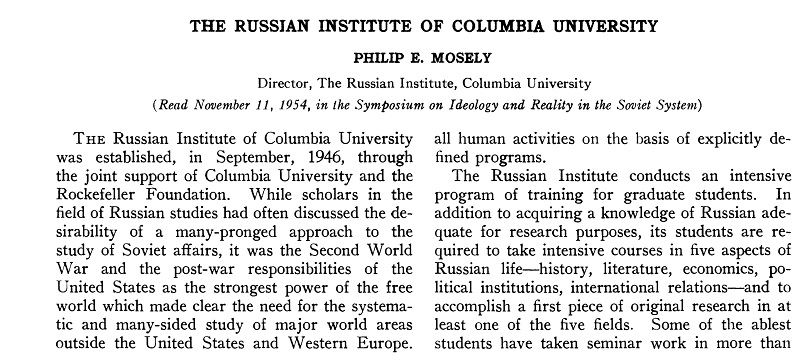
Columbia University’s Russian Institute (established in 1946, now known as Harriman Institute) served as a ready-made model. In both cases, the Rockefeller Foundation extended appropriate grants. Symbolically, the SRC was located in Japan’s northernmost island of Hokkaido, which the Kremlin had aspired either to annex or occupy at the end of World War II. In the latter scenario, the Soviets would have created a communist North Japan, as they did in the case of the communist polities of North Korea and North Vietnam. Fortunately for Japan and the free world, the Soviet designs were thwarted.
Russian or Area studies?
Each year, from all around the world, the SRC invites promising and established scholars, who specialize in history, culture and politics of the region as defined by the center’s spatial remit, namely Central and Eastern Europe, together with Northern and Central Asia. During my scholarly sojourn in Sapporo, I had the privilege to talk to the current contingent. In context of the ongoing Russian-Ukrainian war, we reflected on the Russian propaganda’s uses and abuses of Russian literature for ‘justifying’ Moscow’s neocolonial onslaught on Ukraine.
In the course of our conversations on the unreflectively dubbed ‘great Russian literature,’ we spotted this literature’s not commonly noticed weaknesses. The classical cannon of the Russian belles lettres is popularly lauded for its supposedly universal reflection on condicio humana. Yet, this canon’s scope and the literature’s selection of characters are extremely narrow, and even bigoted. Despite the fact that tsarist Russia was a highly polyethnic and multiconfessional empire, classical Russian literature zooms exclusively on the Russophone and Orthodox subset of the Russian nobility. It translated to a mere quarter of all the empire’s nobles, or just half a million people in purely numerical terms. From the statistical point of view, the social milieu of Russian literature covered 0.3 percent of the empire’s population that counted 166 million in 1914.
During the Soviet period, the situation did not improve markedly. Communist propagandists retained most of classical Russian literature in the form of a high quality benchmark for Soviet writers, while compulsory elementary school was to propagate this cannon throughout the Soviet empire. In line with the official policy of socialist realism in arts and humanities, Soviet literature’s subject was to be peasants ‘in an unbreakable class union’ with workers from across the Soviet Union. Somehow, peasants and workers in question turned out to be almost exclusively ethnic Russians (Russkie), who sang praises of the bolshevik revolution and the leading role of the country’s communist party. If an ethnic non-Russian had a colonial-like walk-on in a novel or poem, (almost exclusively) he spoke in Russian.
By 1938, imperial Russian had been supposedly exorcised of its tsarist sins of imperialism and ‘Great Russian chauvinism.’ Then socialist Russian was imposed on all the Soviet population as the universal language of interethnic communication for the entire world’s coming communist future. Subsequently, all Soviet citizens were required to speak and write in Russian. Furthermore, those of ethnically non-Russian extraction were to be firmly led toward this monolingual communism by their respective ethnic groups’ writers. These ethnically non-Russian Soviet authors had to abandon their native language in favor of the communist language of Russian for composing their literary works. Should they unwisely choose to ‘produce’ a novel or poetry in such a native language, censors would not allow it to be published before its Russian translation came off the press first.
The transitory period of a qualified permission for the use of non-Russian languages was to come to an end soon. In 1961, the 22nd Congress of the Communist Party of the Soviet Union opined that the coming together (сближение sblizhenie) of the communist country’s ethnic groups (национальности natsional’nosti ‘nationalities’) was progressing apace. These Soviet wisemen foresaw that a merger (слияние sliianie) of these multiple ethnic groups into a novel post- or non-ethnic single communist people (народ narod) would be achieved by 1980. This was also the year by when communism would have been built in the Soviet Union. One way or another, the Soviet communist people of a new and unprecedented type were to speak and write the world’s single communist language of Russian.
As a result, Soviet literature was unabashedly and essentially devoted to things Russian, posed as ‘universal’ and ‘humanistic.’ If some ethnically or linguistically non-Russian characters or topics appeared they had to be exorcised in the medium of Russian, while their un-communist-like strangeness needed to be recast in culturally familiar Russian guises. Ideology and political needs deprived Soviet writers of agency and made them into centrally-planned and state-controlled ‘engineers of souls.’ Yet, ethnically non-Russian Soviet writers were doubly deprived of agency, not only of their favored topics and approaches, but altogether of their languages and cultures.
Going native
During our conversations in Sapporo, my colleagues arrived at and largely agreed with this diagnosis of Russian literature and culture. They added that after the end of communism and the breakup of the Soviet Union hardly anything has changed. The ‘golden standard’ of Russian literature encased in imperial-like and elitist Russian of the tsarist and Soviet periods continues to this day, despite a fifth of the Russian Federation’s inhabitants being ethnically non-Russian. What is more, they inhabit the Asian and Caucasian four-fifths of the country’s territory. So, in spatial terms today’s Russia is overwhelmingly non-Russian. These non-Russian four-fifths denote present-day Russia’s colonies, while the metropolis is limited to the European one-fifth, less the Caucasus. Obviously, some imperial cities with ethnically Russian (or rather creole) pluralities or even majorities dot and effectively control these colonies.
However, the scholars who discussed this unnoticed socioculturally stunted and imperialist character of Russian – or rather, Russian-language – literature and culture did not want to go public with this discussion and its conclusions. This reluctance was striking and at first hard to grasp in the context of Russia’s barbaric war, marked – as we learned this summer – with the genocidal massacres in Bucha and Irpin or the razing to the ground of the port city of Mariupol. With a single exception, none of these scholars were Russian citizens. Actually, this one who was, turned out to be more forthcoming than the rest. He condemned the war in no uncertain terms and, to my knowledge, left Russia.
I wondered what was of such importance that might prevent these Western scholars from parsing in public the cherished myths of Russian literature and culture during the time when, with the West’s support, Ukraine was fighting this existential war for preserving its state, nation, language and culture. At the beginning of the Russian invasion, the Kremlin sketched out its neoimperial plan of subjugating Ukraine by erasing its name from the map of Europe, liquidating the Ukraine elite in death camps, incarcerating Ukrainians in forced labor concentration camps in an effort to convince them that they were ‘Russians,’ reclaiming all Ukrainian heritage deemed of value as ‘Russian,’ and by destroying Ukrainian language and culture through burning all Ukrainian-language libraries and books.
One would think that Russia’s genocidal war, coupled with this planned cultural genocide, would be more than enough to move any Western scholar of liberal and democratic persuasion to protest loudly at the top of their lungs. Nothing of this kind happened. Instead, appeals for impartiality were voiced. Some proposed that the other side of the ‘conflict’ – namely, Russia – and its arguments ought to be taken into consideration, as well. This type of lenient approach to the invader and genocidaire would have been unthinkable if applied to the cases of genocide and total war, as known from twentieth-century European history. After all, no authorities of any stripes appeal for more understanding and the necessity to try to better comprehend ‘arguments’ (however unpalatable and wrongheaded) of German and Austrian nazis that apparently left them no choice but to exterminate Jews and Roma. That nothing doing, but history and civilization alone compelled Russians to wipe out Circassians or Chechens, Ottomans to eradicate Armenians, or Belgians to wipe out half of Congo’s population.
Something hard to comprehend was at issue. What was it? With more talking, it became increasingly clearer that the myopically Russia-oriented or even pro-Russian nature of the field prevented my interlocutors from doing the decent thing beyond the already ritualized but rather toned-down and semi-private condemnation of the Kremlin and ‘its’ war in Ukraine. The mode was low-key, to criticize and condemn silently, so such statements would not be unambiguous or readily hearable to relevant Russian civil servants searching the web for ‘foreign agents’ with ‘incorrect’ views on the ‘special military operation.’ It looked like a calculated dance on eggshells.
One scholar hoped not to be prevented from accessing a Russian archive after the war (becomes less intensive). Another wanted to deflect any potential criticisms that might be levelled against the researcher’s innovative textbook of Russian or its ethnically Russian co-author. A further academic was wary that coming out on the topics broached in our discussions might hurt recruitment for Russian and Russia-related programs at the home university. Curiously, all the hopes and fears circulated around research on Russia and Russian language teaching. Without giving too much thought to the development, all the scholars became professionally or even emotionally dependent on the Russian Federation and its institutions, no matter how horrible and inhumane the Kremlin may be in its deeds and decisions.
As though doing research on Soviet and Russian (at least tsarist) history would not be possible in any other post-Soviet country or a postcommunist polity, which used to be a colony in the Russian Empire. Even more strange was this singular insistence on Russian language and culture, as if Armenian, Estonian, Kyrgyz, Ukrainian or Uzbek were not official republican languages in the Soviet Union. The scholars appeared to be short-sighted in regard of other tsarist and Soviet bloc official languages in which belles lettres and historical documents abound. For example, both in tsarist Russia and in the Soviet bloc, German and Polish belonged to this group of languages.
(Post-)Sovietology or concealed Russian studies?
The original sin of the novel postwar applied field of area studies – popularly known as Sovietology or Kremlin watching – was its circumscribed focus on Russian language and culture, alongside social relations and politics as conducted among and by ethnic (that is, Slavophone and Orthodox) Russians, or Russkiie (Русские) in the medium of Russian. This tendency was indicated in the very name of the field’s first-ever flagship research center founded in 1946, namely, the Russian Institute at Columbia University in New York.
The goal of sovietologists’ research was to assist the United States, NATO and their allies across the world (Japan and South Korea, including) in containing the Soviet Union, the Soviet bloc countries, and other communist countries allied with Moscow or communist China. But many scholars in the field got unreflectively invested in the subject of their research, increasingly fondly referred to with the historically and demographically incorrect shorthand ‘Russia.’ This shorthand tended to limit their gaze to the Soviet empire’s ethnically Russian metropolis, while their Soviet chaperons restricted their study and conference trips even more, to the communist polity’s two largest and ethnically Russian cities, namely, Moscow and Leningrad (St Petersburg).
This investment in elitist things Russian and imperial-like snub for the non-Russian languages and cultures in the Soviet Union and across the Soviet bloc engendered serious academic blindness. When in 1970 Soviet maverick scholar Andrei Amalrik proposed that the Soviet Union may not survive beyond 1984, his thesis did not evoke much discussion, as it should have. Sovietologists – like ideologues of Soviet communism – were convinced that this communist polity was rock-solid and here to stay for innumerable generations to come.
Not a single certified sovietologist authored a monograph, or at least a learned journal article, about the impending collapse of communism and the Soviet bloc or the coming breakup of the Soviet Union prior to these momentous events of the late 20th century. However, afterward most participated in the rush to ‘save’ their field in view of the disappearance of its research subject matter. One would think that they could fall back on the achievements of decolonial thought and postcolonial studies. After all, structurally and in their day-to-day practices the Soviet Union and its Soviet bloc constituted a de facto Russian empire ruled a tight fist from Moscow.
Instead, sovietologists reinvented themselves as researchers in the parallel, overlapping and usually newly-formulated fields of nationalism, postcommunist and post-Soviet studies, but symptomatically with a clear-cut spatial focus on Russia, alongside Central and Eastern Europe, with Central Asia (or even ‘Eurasia’) added as an afterthought. In this capacity, many became experts and news commentators on the Yugoslav wars, or the postcommunist nadir of ethnic cleansing and genocide in Europe. But somehow, a very similar ethnically motivated huge and unprecedentedly intensive expulsion of Turks from Bulgaria in the summer of 1989 completely escaped their attention. Well, at that time the traditional subject of their research, namely, the Soviet Union and the Soviet bloc still existed solid and intact. Hence, they did not need to steep to such a ‘minor’ event as this ‘little matter’ of Bulgarian ethnic cleansing.
The unexpected disappearance of the subject of their research caused sovietologists much methodological and organizational grief. They resigned on rethinking the former (with hardly any reference to postcolonial thought), while adopted a patchwork-style makeshift approach to the latter. As a result, many extant or freshly-founded institutes of Soviet or communist studies received new torturously long and confusing names with unpronounceable acronyms. For instance, the University of St Andrews is home to the Centre for Russian, Soviet, Central and East European Studies (CRSCEES), while at the University of Glasgow, the Centre for Russian, Central and East European Studies (CRCEES) is active, or the Aberdeen Centre for Russian and East European History (ACREEH) at Aberdeen University.
Such changes did not omit titles of leading sovietologist journals. For example, in 1991 the Journal of Communist Studies morphed into the Journal of Communist Studies and Transition, before opting for a brand new name, East European Politics, in 2012. Likewise, in 1992, Studies in Comparative Communism became Communist and Post-Communist Studies, whereas a year later, Soviet Studies were renamed as Europe-Asia Studies. Fortunately for these sovietologists who continued or moved to researching nationalism, the title of their flagship journal Nationalities Papers (founded in 1972) did not need any overhaul. However, they founded new journals on this topic to have more place for publishing their research output, namely, Nations and Nationalism in 1995 or National Identities four years later.
Another tactic was adopted by the original Area Studies institution, namely, Columbia University’s Russian Institute. In 1982 it was renamed after its benefactor W. Averell Harriman as the Harriman Institute, so the adjective ‘Russian’ could be conveniently dropped at the new height of the Cold War confrontation. Following the West’s unexpected victory in this war, a decade later, the explicatory ‘subname’ of ‘Russian, Eurasian, and East European Studies’ was added to the institute’s name.
Soon, other well-established sovietologist institutions followed the suit, reinventing their names and fields with the codename ‘Eurasia.’ For instance, in 2010, the American Association for the Advancement of Slavic Studies (AAASS) changed its name to the Association for Slavic, East European, and Eurasian Studies (ASEEES). Three years later, Birmingham University’s Centre for Russian and East European Studies became the Centre for Russian, European and Eurasian Studies, without any changes to the centre’s acronym, CREES. In 2014, Hokkaido University’s Slavic Research Center followed the same tactics, overhauling its name to the Slavic-Eurasian Research Center. The acronym remained unchanged.
Ukrainian-washing
These changes with Eurasia at their heart must have evoked much glee among ideologues of Eurasianism in post-Soviet countries. I am sure that the Russian President-cum-Dictator’s favorit Eurasianist and ideologue of Russian imperialism, Alexander Dugin, would approve. So, would be pleased independent Kazakhstan’s first president Nursultan Nazarbayev, who in 1996 founded the Eurasian National University in the country’s new capital of Astana (Akmola).
All had to change to remain the same. These variously rebranded institutes of Slavic, Central and Eastern European, Postcommunist, Nationalism, and Eurasian Studies in most cases continued to be focused on Russian language and culture as practiced in Russia’s metropolitan center in Moscow and St Petersburg. Most worryingly, with the rise of Moscow’s barely disguised neoimperial ideology of the Russian world (Русский мир Russkii mir), some Western research institutes began entering partnerships with the Kremlin’s eponymous foundation, established in 2007. For instance, in 2010, at the University of Edinburgh, a branch of the Russkii Mir Foundation was opened. But in order to exorcise the unwanted ideological and financial association with oligarchic Russian money, it was named as the Princess Dashkova Russian Centre after an 18th-century tsarist figure of culture, Princess Ekaterina Dashkova.
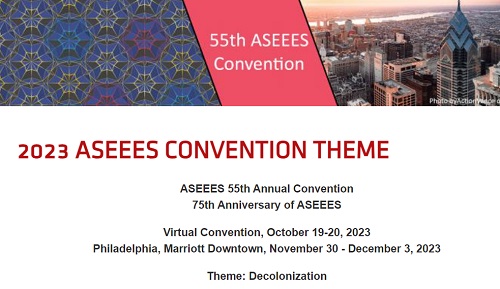
Some reflection on the untenability of this course took place recently at Edinburgh University. As a result, the Dashkova Centre published a volume with Russian translations of Ukrainian-language stories about the ongoing war. Yet, without a deeper involvement with Ukrainian and postcolonial studies across the post-Soviet space, this rather positive development looks a bit like ‘Ukrainian-washing.’ Belatedly but hopefully, the forthcoming 2023 congress of the Association for Slavic, East European, and Eurasian Studies (ASEEES) promises a clear cut with the fuzzy cozying to the Kremlin and oligarchs’ corrupt money during the past three decades after the fall of communism. This congress’s topic is decolonization. Ukraine is placed at the event’s heart, while Russia’s war against this country is aptly analyzed as neoimperial Moscow’s bloody and in essence genocidal attempt at reversing the largely peaceful 1991 big-bang decolonization of the Soviet Union or rather the Soviet empire.
Ukrainian studies, Soviet postcolonialism and Russian neoimperialism
Perhaps, soon, if a center or journal wishes to continue focusing on things Russian, its field will be announced by the non-fudging label of Russian and Soviet imperialism. Likewise, Central and Eastern Europe (including the Caucasus) will be subsumed under the clear-cut rubric of European studies. And if a country, like Ukraine, is at long last given more attention as it should, the obvious choice of a name is either Ukrainian studies or Ukrainian history and politics. Similarly, the obfuscating designation of Slavic studies should no longer serve to conceal the intended focus on Russian language and culture. A department of Slavic studies to be what its name announces, it needs to offer full-fledged study tracks in other Slavic languages than Russian.
I believe that in light of this Russian war on Ukraine, which is of existential significance for democratic Europe, Ukrainian language and culture must be given priority. European and Western help for Ukraine and close cooperation with this country will be fully achieved only when NATO soldiers, EU officials and Western scholars responsible for these ties will be able to communicate with their partners in fluent and idiomatic Ukrainian, with full awareness of Ukrainian literature, culture, and history.
Prepared for the website “Ukraina moderna”. Published for the first time. The publication uses illustrations from open sources.


