Death Foretold of Peace Dividend
After the Second World War, the 1975 Helsinki Final Act stabilized postwar Europe and the world, thus curbing the possibility of a nuclear conflict. The principle of the inviolability of frontiers in Europe constituted the main pillar of this consensus that survived largely unchallenged for the three postcommunist decades. Or did it? Under Moscow’s watch and instigation, the Nagorno-Karabakh War (1988-1994) and the Transnistrian War (1990-1992) unilaterally altered the state frontiers of Azerbaijan and Moldova, respectively, herding the involved countries into postcommunist Russia’s sphere of neoimperial influence. The West hardly took note, explaining away these developments as taking place ‘outside’ or on the periphery of Europe. The blind hope was for a democratic Russia and new markets, not for the revival of the Russian Empire. Neither did it register with the West when, in 1994, the Kremlin installed a Russian puppet in Belarus. Two years later, Russia began absorbing Belarus by ‘peaceful means,’ or through the vehicle of an unequal union state. After the suppression of the 2020 pro-democracy protests, Belarus became a pliable vassal in Moscow’s hands.
When Russia militarily seized a fifth of Georgia in 2008, the West hooked on Russian hydrocarbons commiserated with Tbilisi but stuck to the old course of appeasing Moscow. Many preferred to opine that Georgia, together with Azerbaijan and Armenia, is part of Asia, not Europe. The reluctance to admit resurgent Russia’s neoimperialism, let alone chastise Moscow on this account, became the West’s default position. It did not change in 2014, either, though Russia conquered and annexed Ukraine’s Crimea. In its area, the peninsula is equal to Albania or Armenia.
The signatories of the 1994 Budapest Memorandum—stood idle—as though it was not the security assurances of Britain, Russia and the US that, in the first place, had convinced Ukraine to part with the world’s third largest stockpile of nuclear rockets. It should not be forgotten either that China and France also joined the concert of guarantors of Ukraine’s territorial integrity. Yet, the only slap on the Kremlin’s wrist that followed grabbing Crimea was the suspension of Russia in the Council of Europe. Meanwhile, the flow of Russian hydrocarbons to Europe grew by leaps and bounds. Half a decade later, in 2019, the Russian deputies were triumphantly readmitted to the Council of Europe’s Parliamentary Assembly, much to the Ukrainian counterparts’ dismay.
It took Russia’s 2022 full-scale attack on Ukraine, in part also launched from Belarus, for the West to realize that the Kremlin was serious about its imperialist reconquista of Europe. But the initial reaction was muted, sluggish and almost conciliatory. Western Europe wanted to return swiftly to business as usual. Neither Nato nor the EU was ready to enforce the Helsinki principle of the inviolability of frontiers in Europe. The Budapest Memorandum signatories, again, looked the other way. With much delay and to the Kremlin’s anger, Washington began slowly supplying Kyiv with a trickle of materiel and intelligence. This aid ensured that, on the one hand, Ukraine did not not collapse, while on the other, that it would not be in position to attack targets within Russia or occupied Crimea. Main European states reluctantly joined the then US-led effort. The Ukrainians, with a good reason, thought the democratic world forgot about their plight and struggle for freedom and independence.
It took two years before Europe understood that after grabbing Ukraine, Moscow would not stop. This realization dawned quickest on the traditionally neutral states of Finland and Sweden. That is why, they scrambled to join Nato in 2023 and 2024, respectively. In 2025, Donald Trump commenced his second term as US president by abandoning Ukraine and its cause in favor of Russia. Washington left it to Europe to pay for and supply weaponry and economic support to Ukraine. However, should it choose so, America can withdraw intelligence and crucial support military capabilities from both Ukraine and Europe, making them vulnerable to further Russian onslaughts.
The Helsinki Final Act is dead. The postwar peace and stability in Europe are over. The Budapest memorandum is also dead. The meticulously negotiated political settlement after the fall of communism and the breakup of the Soviet Union is over, too. Neither is of any practical significance the 1945 Charter of the United Nations, which sternly admonishes that the organization’s members ‘shall refrain […] from the threat or use of force against the territorial integrity or political independence of any state.’
Spheres of Influence, aka Yalta 2
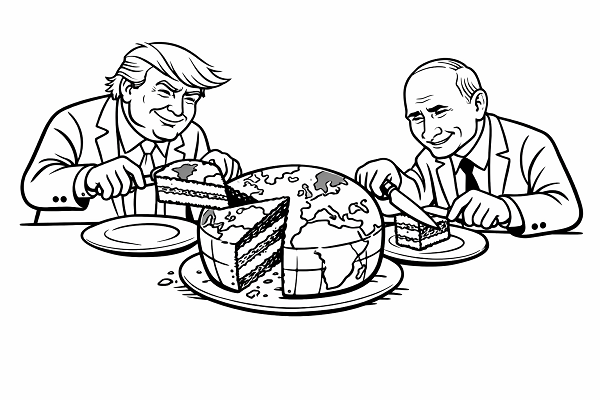
The old and tried imperialism of the past is going to be the way of the future in the 21st century. After annexing Crimea, beginning in 2015, the Russian dictator Vladimir Putin has repeatedly voiced his desire to carve up Europe and the world into imperial spheres of influence at a Yalta 2 conference (obviously, to be held in occupied Crimea). The request fell on Trump’s receptive ears, when during his first stint as US president, in 2018, he met with Putin—poignantly—in the Finnish capital of Helsinki. Both leaders spoke privately through a Russian-supplied interpreter. Hence, no one in the US or Europe knows what they discussed and whether they agreed on something.
The strong suspicion is that Yalta 2 already took place, that is, at this 2018 Helsinki private meeting. Trump’s second presidency appears to be working fast and hard to the fulfilment of this secret pact. In the quick succession, in 2025, Washington abandoned Europe and Ukraine, and in line with the early-19th century Monroe doctrine, declared the Americas to be its sole sphere of influence. Trump already voiced the possibility of using military force to annex Canada and Greenland, in emulation of Putin’s 2014 grab of Crimea. The current American administration’s goal is both territorial aggrandizement and the consolidation of its hold over the Western Hemisphere, as emphasized by Washington’s military intervention in Venezuela.
In accordance with his disparaging opinion about African countries, Trump gave up on Africa, leaving the continent to Russia and China for carving up between these two empires. Meanwhile, Washington’s sights are set on containing China in the Pacific Rim, where the possibility of confrontation over Taiwan looms large and, now, would also involve Japan. For the time being the struggle between Washington and Beijing is limited to chokepoints. America pushed China out from any control over the Panama Canal and, together with Taiwan, curbs Beijing’s access to the latest microchips indispensable for the development of AI. In retaliation, China imposed restrictions on exports of rare earths that are equally crucial for building hardware on which AI runs.
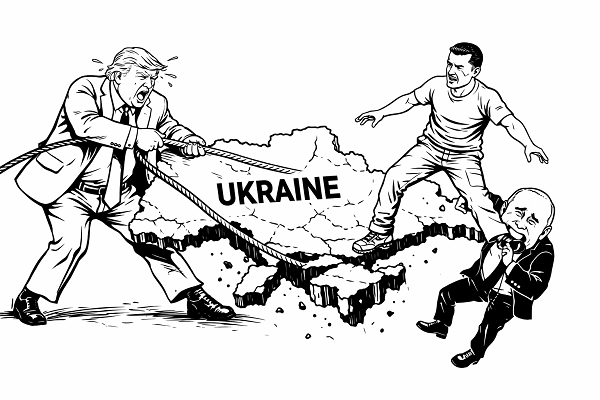
Despite Russia being the aggressor, Trump never imposed any penalties of consequence on the Kremlin. Instead, he intermittently withheld and limited US support for Ukraine and leaned hard on Kyiv to de facto capitulate to Russia. Thus, Washington already began passing Ukraine to Russia’s sphere of influence, irrespective of the Ukrainians’ own wishes. As enshrined in Article 85 of the Ukrainian Constitution, they want their country to join Nato and the EU, and do not agree to giving up any Ukrainian territories to Russia. This ‘obstructionist’ stance taken by Kyiv—seen as patriotic by Ukrainians and Europeans—displeases both Washington and the Kremlin.
Trump looks like a Russian asset, acts like a Russian asset, and speaks like a Russian asset, then he probably is a Russian asset. Maybe the Kremlin does not have any compromising material to blackmail Trump. Yet, the incumbent American president clearly shares Putin’s view that the world should be divided among several empires (aka superpowers) into their sole spheres of influence. Visibly, Trump is in awe of Putin and other dictators, be it Belarus’s Alexander Lukashenko or Turkey’s Recep Erdoğan. Trump actively dismantles American democracy, which he sees as ineffective and constraining.
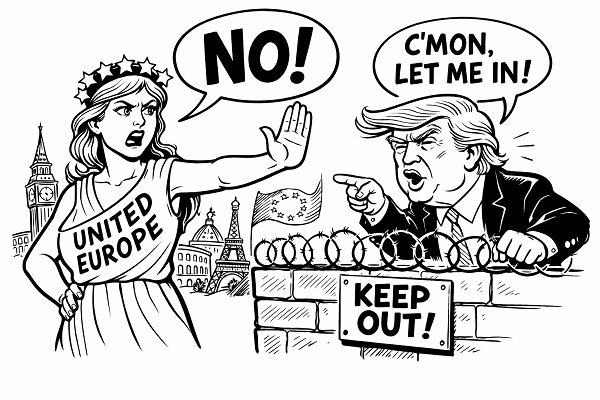
The US president styles himself after Putin. The techno-barons of Amazon, Microsoft, Google and Tesla bent the knee to Trump, like the Russian oligarchs to Putin in 2000. Mikhail Khodorkovsky who did not toe the line was stripped of his assets and thrown to a gulag-style camp for a dozen years. Elon Musk of Tesla also tried to dissent but after a month demurred to Trump’s will. The US Department of Defence was rebranded as the Department of War, unabashedly announcing Washington’s espousal of imperialism and militarism in the emulation of Russia’s own aggressive imperial policies.
Last but not least, in breach of the long-standing tradition of not legislating on this matter across the English-speaking countries, Trump designated English as the US’s sole official language. Half a decade earlier, Putin had changed the Russian constitution, among others, for declaring Russian to be the language of the country’s ‘state-forming nation,’ or the ethnic Russians. Non-English-speakers in America, like non-Russian-speakers in Russia—be them immigrants or indigenous peoples—must give up on their languages and cultures or suffer consequences. The US administration is now ‘required to amend, remove, or otherwise stop production of documents, products, or other services prepared or offered in languages other than English.’ This embracement of ethnolinguistic nationalism as part and parcel of the present-day imperial package is also practiced in China. Under Chairman Xi Jinping’s watch, the minorities and their languages are suppressed in the interest of Chinese becoming the country’s sole official language.
This language-based imperial unity and justification for conquests spawned the concept of the Russian world. The Kremlin unilaterally reserves for itself the right to intervene anywhere outside the Russian borders where a Russian-speaking community of endangered ‘compatriots’ may reside. It is one of Moscow’s ‘justifications’ of its war on Ukraine. In 2025, Washington came up with the Russian concept’s counterpart, or that of ‘Anglosphere.’ Tellingly, the new National Security Strategy warns that America ‘will oppose […] restrictions on […] the Anglosphere, […] especially among our allies’ in Europe and across the world. For the time being, the Anglosphere amounts to a platform of geostrategic cooperation. But in no time may morph into a launchpad for an invasion. Likewise, Beijing uses the argument of the shared Chinese language to justify its designs on Taiwan, that is, in search of all-Chinese political and ethnic unity.
Europe: A Systemic Enemy?
Where is the place for polyglot and multicultural Europe in this new brave world of the past, split among the present-day empires’ spheres of influences? Putin believes this continent to be part of the evil collective West, not more than a degenerated ‘Gayrope.’ Russian propagandists present a prospect of ‘Orthodox Christian’ Russia’s re-conquest of Europe as ‘saving’ the continent from its ‘spirit-defying’ attachment to materialism, diversity, equality and democracy. Washington concurs, claiming that Europe faces ‘civilizational erasure,’ compelling America to ‘encourage its political allies in Europe to promote this revival of spirit [of] European nations’ individual character and history.’
Despite Nato and the EU, the continent has not coalesced into any United States of Europe for which many appealed during the dark 20th century, including Winston Churchill. Eschewing multilateralism, Beijing, Moscow and Washington prefer to talk to European countries separately. On their own, none of these countries is a match for China, Russia, let alone, America. What is more, the Kremlin keeps spawning divisive propaganda and fake news for the sake of interfering in European elections and to foment hatred between European countries. The goal is to weaken the continent’s countries and their desire to cooperate and further integrate within the EU’s framework.
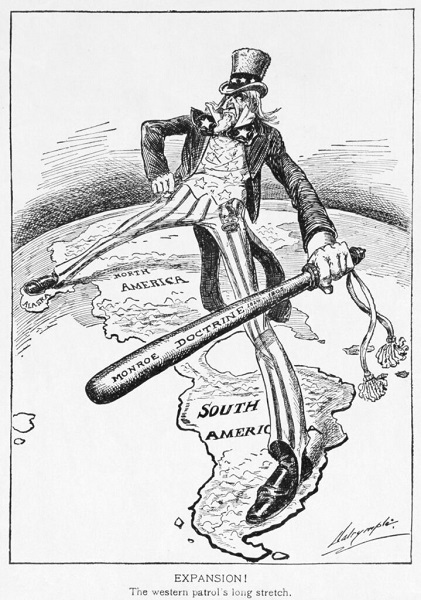
Neither Russia, nor America, nor China want a fully integrated empire-like Europe to contend with. The obtaining new US National Security Strategy mirrors Moscow’s views on Europe. This document identifies the European Union as Washington’s main political and ideological enemy, claiming that the EU ‘undermine[s] political liberty and sovereignty, [pursues] migration policies that are transforming the continent and create strife, [uses] censorship of free speech and suppression of political opposition, [thus] cratering birthrates, and loss of national identities and self-confidence.’ This strategy envisions Washington’s support for far-right extremist (‘patriotic’) parties, promising ‘to help Europe correct its current trajectory,’ for instance, by interfering in elections, like Russia already does.
What is going to happen if America and Russia are allowed free rein over Europe? The Kremlin will push its sphere of influence as far west as possible. Britain and France, as nuclear powers, are likely to withstand this pressure and accept American dominance over the western half of the continent. Washington has no interest in Central and Eastern Europe because the region does not hold any rare earths worth speaking of, nor any capital or technology of significance. The split of the continent would closely emulate the situation that obtained during the Cold War.
Trump, like Putin, respects only brute force. That is why, he talks politely to Kim the Rocketman of North Korea and did nothing when the country sent millions of missiles and 13,000 troops to support Russia in its war on Ukraine. Likewise, the current US president shows respect to India, Israel and Pakistan because all are nuclear powers. On the other hand, Trump loves being rude to and humiliating EU officials and European leaders. In the 21st century, only countries with nuclear weapons will be in position to stay outside the coalescing imperial spheres of influence or to join one at their pleasure. That is why, in 2025, Saudi Arabia, led by the ‘Bone Saw Prince’ Mohammed bin Salman, recognizing that its gigantic oil wealth is insufficient to retain full sovereignty, concluded an agreement with Islamabad that extends Pakistan’s nuclear umbrella over the kingdom.
The 1970 UN-sponsored Treaty on the Non-Proliferation of Nuclear Weapons is dead. All countries that have such capacity and can afford it will be developing or acquiring nuclear weapons. The race is on. In late 2025, Russia deployed nuclear-capable missile systems in Belarus.
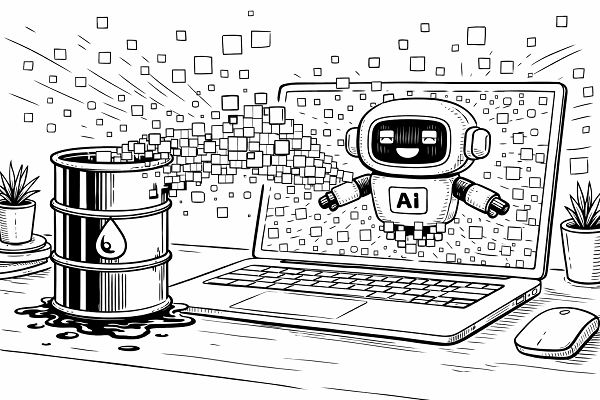
AI is New Oil
In the meantime, Riyadh and the Gulf countries humor Trump with unprecedented levels of investments in the US. With this money they bought the American president’s nod to making their region into the world’s third largest AI market after America and China. AI is new oil. And Europe does not count.
In its quest for an imperial sphere of influence, the Kremlin made the post-Soviet countries and most of Europe dependent on Russian oil and gas. In the wake of Russia’s attack on Ukraine, Europe’s decision to resign from Russian hydrocarbons weakens Moscow, which is, thus, compelled to dump its oil and gas in China and India. Europe shares with China the lack of own energy reserves, unlike America. In the AI race, Europe is also lagging.
With 5,500 data centers to its name, America is way ahead of any competitors. China boasts 450 centers of this kind, while Russia only 250. Meanwhile, Europe enjoys over 3,000 data centers. However, the statistics of the total power consumption in these centers is less optimistic for Europe, which accounts only for 10 percent in this ranking, while America and China for 45 percent and 25 percent, respectively. Yet, in the case of Russia it is a mere 0.6 percent. Electricity use corresponds to the centers’ raw calculation power. Another bottleneck is versatile polyglot LLMs (Large Language Models) on which advanced AI runs. The US enjoys several, China one, while in Europe only France developed a single one.
United Europe or Bust?
With the population of half a billion and the combined GDP of $20 trillion, the EU is a good match for America and China with their respective GDPs of $29 trillion and $19 trillion. Yet, in the case of Europe a lot of this potential dissipates, due to the persistent lack of coordination in economy, politics, R&D, and nowadays, most threateningly, in the military sphere. Somehow, despite the EU and Nato have not helped with plugging these deficiencies. Europeans are unable to translate their polyglot and multicultural potential into equally versatile LLMs, either. Likewise, they are unable to scale up weapon production and military capabilities to stand united behind Ukraine without any prop of Washington’s support.
EU and Nato member states lose resources and manpower for braving most day-to-day challenges alone and by enviously guarding their sovereignty. The pooling of sovereignties and capacities entailed by the logic of European integration has become an anathema after Brexit in 2016 and under the influence of Russian propaganda. However, Trump, Putin and Xi dramatically altered the rules of the international game. Nothing remains of the postwar certainties and guarantees that shielded Europe from adverse headwinds in foreign relations. Now the time has arrived of AI empires with huge conventional armies, the stability of their existence ensured with proliferating stockpiles of nuclear warheads.
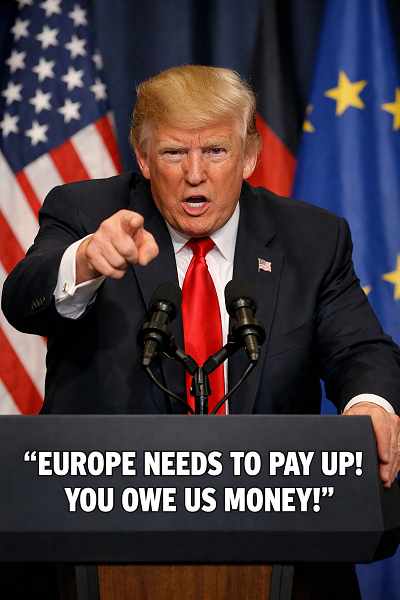
The EU’s member states must decide whether they want to collectively join this new game on Europe’s own terms or to go it separately and alone. In the latter case from an embattled but still empowered subject of international relations in the form of the EU, they will become downgraded to a motley clutch of inconsequential statelets, ripe for being grabbed by this or that empire. Even Europe’s biggest states in terms of territory and population are at best middle-ranking from the world’s perspective.
The choice could not be clearer: between a self-assured democratic and diverse United States of Europe or unfreedom in states that will remain sovereign in name, but in reality will find themselves under the sway of the American Empire or the Sino-Russian empire.
Hopefully, the former scenario will appeal more to most Europeans. But its realization requires hard work and sacrificing narrowly understood state sovereignties for the greater good of United Europe. Only United Europe that speaks with a single voice will be able to stand its ground and decide about itself in the 21st-century world of continent-wide techno-empires. There is no time for complacency or wavering. Climate crisis blights the globe, and the collapse of the international order makes it increasingly volatile.
The first indispensable step to all-European unity is to ensure that Ukraine wins in the unjustified war that Russia continues waging on the country, and—through hybrid means—on Europe. Meanwhile, United Europe should turbo-boost its posture and capacities by opening a fast-track to full EU and Nato membership for Ukraine. And importantly, a single integrated nuclear umbrella must be extended all over Europe, while the future of the continent will depend on pooling AI efforts in order to match and surpass America and China in this compartment.