Since the beginning of the year, everything has changed so rapidly and in such a transgressive way that we sometimes have difficulty understanding the new situation. In many countries, even after having known decades of war and aggression, some citizens still don’t realize the danger that Putinism poses. In others, some reassure themselves with the conviction that American institutions, its market and citizens, will protect democracy against a new tyranny. Some even think that Donald Trump still wants a fair peace in Ukraine. They fail to see that Putinism and Trumpism are so interlaced that it’s impossible to separate them, giving rise to an ideology which I call Putino-Trumpism. The similarities and differences between Putinism and Trumpism can be described as follows.
In my book, Inside the Mind of Vladimir Putin (Hurst Publisher, 2018), I attempted to describe what Putinism is. The Russian leader often quotes intellectuals and philosophers in his speeches. Not an intellectual himself, he’s eager to show Russians and other societies that listen to him that his worldview has a certain historical depth, drawing on particular aspects of Russian thought and culture. There are four distinct pillars of Putinism:
1. Putinism and Trumpism
First of all, Sovietism. Putin has never believed in Marxism, but he has always glorified Soviet patriotism and the power of a large country. He considers the corps to which he belongs —the political police—to be the backbone of the regime. We know very well how sacred he holds the “Great Patriotic War,” wanting the entire world to believe that the Soviets saved ungrateful Europe from Nazism, and ignoring the German-Soviet Pact, the annexation of the Baltic countries and the abduction of parts of Europe after the fall of Nazism.
Secondly, conservatism. In 2013, Putin rose to the defense of “traditional values,” making the fight against what he calls “homosexual culture,” “wokeism,” and the importance of religion for a moral life, the official doctrine of Russia. This enabled him to make his country a pole of attraction for conservatives, anti-globalists and anti-wokeists from around the world. It also allowed him to assert that Russia was the bulwark against the moral and political decadence of a West forgetful of its identity and its Christian origins.
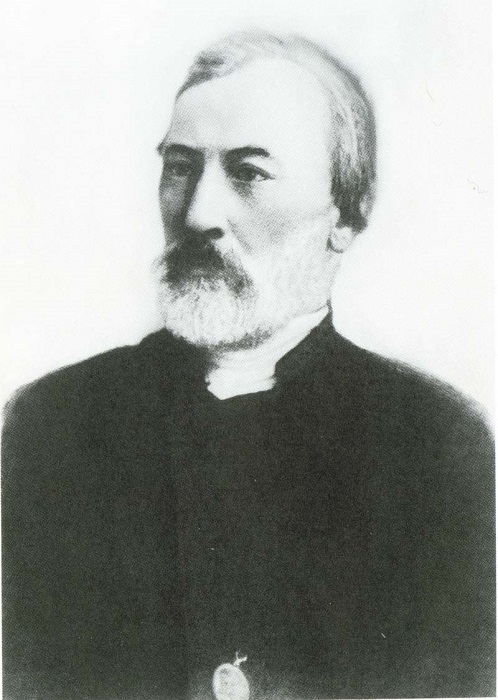
Thirdly, Putin has glorified a “Russian way” of development. Quoting 19th-century thinkers like Konstantin Leontyev and Nikolai Danilevsky, he asserts that Russians possess values different from those in the West. The “Russian world,” as he sees it, is structurally opposed to the individualist and liberal paradigm, where a taste for comfort and personal success reigns, rendering Occidentals incapable of sacrificing themselves for their homelands. In short, there is an ontological superiority of Russians who are ready to go to their deaths for a higher cause. “For the community, even death is beautiful,” Putin once said, quoting a Russian proverb. In fact, he has been sacrificing soldiers en masse in Ukraine, not to mention the lives of his enemies. This “Russian way” is affirmed by Putin’s favorite philosopher, Ivan Ilyin, who thinks that Ukraine organically belongs to the Russian body politic, and that it cannot be torn away from it without killing Russia.
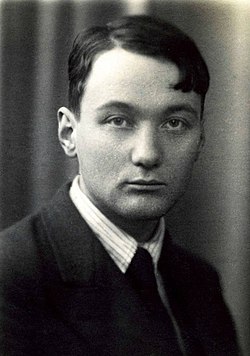
Lastly, the Russian leader cites the Eurasianist movement of the 1920s to point out that Russia, located at the heart of the Eurasian continent, must develop friendly ties with the Central Asian states and China. When he quotes Soviet Eurasianist Lev Gumilev, he wants to suggest that Russia shares with the peoples of the steppes a “passionarity” — the vital energy of a young country that old Europe has lost. In short, it’s Eurasia that will win the global match that is currently being played.
All these quotes, these references, sometimes located by Putin himself, sometimes suggested by his advisors, do not necessarily represent a completely coherent ideology. It’s even contradictory sometimes. Should Russia become the conservative protector of a Europe losing its bearings, or should it turn its back on Europe and unite with the countries of Asia? The trends cited by Putin have two points in common:
- The defense of Russia —an empire whose borders are in flux — justifies the agressions, interventions, propaganda and destabilization efforts in Ukraine, the Caucasus, the former Soviet republics, the “Russian world” and the Orthodox sphere.
- The apology for war. This is not only a means of defending itself against the hostile West. It is the ultimate reality of a Russia which, to save the world in a messianic perspective, must fight the liberal and democratic Antichrist. War, in Putinism, aims for conquest, but is at heart ontological.
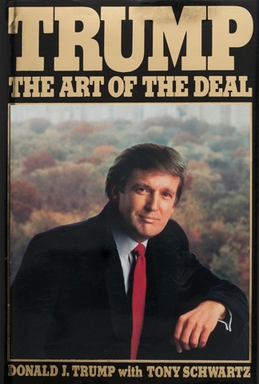
Donald Trump, for his part, does not deploy an ideology. He has three deeply held convictions. First of all, he believes in the preëminence of the “deal,” having made his business career the model for his political action. According to Trump: the Art of the Deal (Donald JJ Trump and Tony Schwartz, Random House, 1987), Trump is comfortable with “playing with people’s fantasies” in order to succeed. He affirms a principle of action which he still applies today: “I aim high.” Pressure is then exerted until the opposition caves in. “Sometimes I have to settle for less, but usually I get what I want.” He also doesn’t hesitate to “be the resident bastard.”
Secondly, he believes that the money one earns is a sign of an almost mystical superiority. His family attended a church whose pastor had created a “prosperity theology.” The pastor proclaimed that financial success was a sign of divine intervention. This is why Trump likes to surround himself with billionaires or people “who have succeeded.“ This credo is a political platform: if he’s been able to make a fortune, why not his fellow citizens?
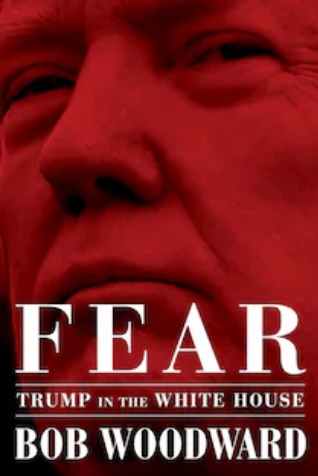
Lastly, Trump has contempt for the educated elite, politicians, intellectuals, senior civil servants and journalists, who, according to him, are indifferent to the fate of Middle America, the rural heartlands. A child of Queens in New York, he has always considered himself an outsider. To him, populism is not an ideology. Journalist Bob Woodward, who examines Trump’s first election and the early part of his term in his book, Fear:Trump in the White House (Simon & Schuster, 2018) recounts one of the first meetings between the businessman and his future campaign manager, the far-right ideologue Steve Bannon. Bannon explains to Donald Trump the premise of populism. It’s”the ideology of ordinary people, of those who believe the system is rigged.” Trump replies: “‘Excellent, that’s me! I’m a popularist too,”distorting the word. “No, no,” Bannon corrected. “We say populist.” “Yes, yes, that’s it,” Trump insisted. “A popularist.” For Trump, populism is simply the art of being popular.
And that’s not all. Donald Trump is surrounded by true ideologues: libertarians and accelerationists from Silicon Valley, far-right thinkers like Bannon and Steve Miller, and conservative religious groups like the white nationalist evangelical Protestants and Catholic populists like J.D. Vance.
• Putino-Trumpism
What, then, do the two heads of state have in common? In several respects, Donald Trump is of one mind with Putinism. Only believing in relations between great powers, he disdains weaker countries. He has a deep contempt for Europe, which, according to him and J.D. Vance, has betrayed its own values. He hates gender studies and progressivism. He can’t bear officials and alleged members of the “Deep State.” He despises “political correctness.” He transgresses and defies the rule of law. With his intention to take control of the Panama Canal, Greenland and Canada, and to rename the Gulf of Mexico and the Persian Gulf, he has clearly become imperialist, developing a discourse that is not so far removed from Putinism. He considers himself one of those “strongmen” who, like the Russian leader, can change the course of history by violating international law and attacking those who disagree with him. However, there are very strong differences between Trumpism and Putinism; for instance their histories and cultural contexts are not the same. But since January 2025, the similarities have outnumbered the differences. How did this happen?
2. Trump: Putin’s Carnival “Legend”
To fully understand, we must recognize that Trump is the leader of which Putin has dreamed for years. With his rhetoric and actions — war, imperialism, a supposed return to a respected power, the role of undisputed national leader, hatred of Europe and political liberalism — Putin has fascinated Trump. Over several years, Putin devised a framework and created a void into which the leader he deemed desirable for the US — one who would bring about the self-destruction of the world’s leading power — would eventually insert himself. This historic change would see the world’s center of gravity shift toward Eurasia. Perhaps one of his advisors had read Arnold Toynbee, who studied the fall of empires. Whatever the case, the British historian wrote that: “Some civilizations die not by murder, but by suicide.” Russia didn’t need to confront the US militarily; it was much simpler to ensure that a chaotic, pro-Putin leader take its helm.
We know that Donald Trump has always been fascinated by Russia. In 1987, he made his first visit to Moscow (still the USSR) and upon his return published an op-ed in the American press denouncing the American financing of NATO member countries. We know that Trump has had business and friendly relationships with members of the Soviet and Russian Mafia and secret services. He’s been “handled” by them for decades, through loans, financing, banks, etc. The American president is certainly, at least in part, controlled by Russia.
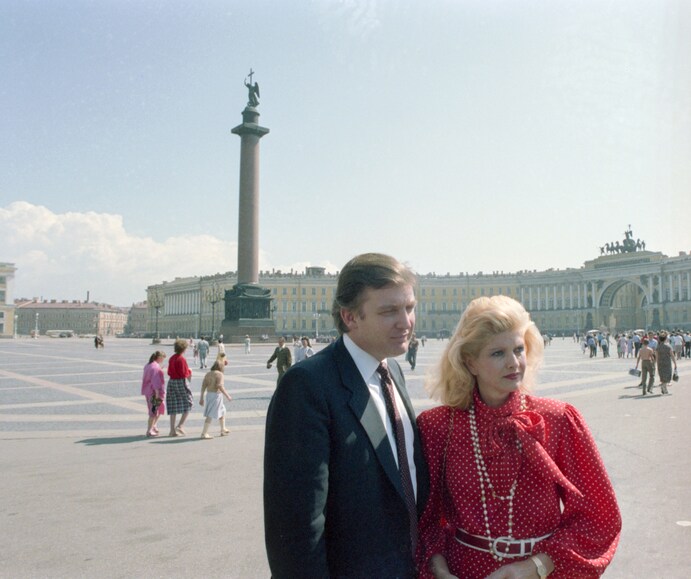
But above all, Trump is a Russian project. By flooding the world with his speeches on the need for a strong leader, on the decadence of Europe, on the dead ends of progressivism, on the primacy of power and the return of imperialism, Putin has finally let the genie out of the bottle in Washington. Going beyond interference, Putin has instilled a certain worldview into the American atmosphere, aided by the alt-right, populists and those disappointed with globalism. The theme of the “legend,” before it was used to inspire the secret services, has always been very present in Russian culture. Seeking a character to embody the revolutionary myth, Dostoevsky had one of his characters, the revolutionary Pyotr Verhovesnki, say: “What’s essential is the legend.” Putin created his own: Trump.
And he invented his creature in such a way as to maintain a certain superiority over him. In Putin’s eyes, Trump is vulgar, a clown, infantile and narcissistic, inconsistent and even irrational. Heir to Mikhail Bakhtin, the Soviet thinker and literary specialist of the carnival, the Russian leader has created his own carnivalesque double. As much as the Kremlin leader attempts to appear serious, coherent, rational, patient, devoted to his people and State, he has also contributed to creating an unpredictable and dangerous buffoon. During Trump’s first term, we reassured ourselves that there were still “adults in the room,” present in the American administration. Today, the adult on the world stage is Putin, along with his friend, Xi Jinping. Trump is their unruly and insatiable child, who, while he must be placated, is easily controlled. Isn’t this what’s happening with regard to the Russian aggression in Ukraine? Trump can get annoyed, he can get angry, but he will always end up giving in to Moscow.
3. The Putino-Trumpist trap
How to react? What can be done to save what must be saved, that is, Ukraine’s existence, the sovereignty of states and human liberty? Some Eastern European societies understand. Helping Ukrainians as much as they can, they also organize their own defense and prepare their citizens, because they know they are next on Russia’s bellicose list. But many citizens in the West still haven’t understood what’s happening. For them, Washington is far away and so is Russia. They know little or nothing at all about Poland, Ukraine and the Baltic countries. They still sometimes lull themselves with historical fantasies of friendship with Russia, when they aren’t being seduced, more or less discreetly, by Putinism. Ultimately, to them: “Crimea is Russian,” Ukraine hasn’t resolved its relationship with Nazism, and current Western leaders are perhaps worse than the pro-Putin leaders.
Also, another danger looms and it concerns us all. We live in a world where the priority of nation-states is access to increasingly scarce natural resources and trade routes. Trump is prepared to do anything to gain access to rare earth minerals. Russia is delighted that the ice is melting in the Arctic, making it possible to inaugurate a new shipping route eventually. Beijing wants to colonize the South China Sea. Europe is concerned about its backwardness in terms of industrial and strategic independence. Citizens understand this, so are willing sometimes to turn a blind eye to conquests and predatory wars.
In short, we are entering a world where countries, empires and private actors find themselves in competition to ensure their individual development. In this context, European and American democratic ideals, which enjoyed a resurgence after the fall of Communism, fade into the background. Why shouldn’t the models for tomorrow’s countries be Dubai or Singapore, or even China, powers that provide a comfortable standard of living while also offering the pride of triumphing over others? This is what Curtis Yarvin—the influential American blogger widely read by Trump’s entourage—asserts. He believes that the political challenge today is to designate a strong power capable of managing a country like a business, while abandoning democracy.
This is the main danger that menaces us too. Our leaders must ensure a sufficient standard of living for our fellow citizens. So we have to ask ourselves seriously: do we still want democracy? Or are we prepared to compromise it, even abandon it, in this new context? This is a question that more and more people in the West are asking themselves. In France, for example, sociological surveys reveal a desire for strong power. But if we give in to this temptation, we will be forgetting that it was in the name of stability and out of a fantasy for revenge that the Russians elected Putin. It was to improve their standard of living and to satisfy their dream of returning to a golden age that the Americans re-elected Donald Trump. The former killed the very possibility of democracy in Russia, the latter will surely try to do the same.
But let’s not forget one thing: if it was democracy that brought Trump back, it is democracy that can oust him. I believe that one of the questions crossing the minds of Western citizens is the utility of democracy. It’s a question that cannot be resolved very quickly or clearly. Putin and Trump have played on this doubt about democrary’s usefulness. This is why I believe we must not avoid the question, but instead explore and respond to it.
If we do still want democracy, in what form do we imagine it? Many voters, in many countries, feel that the liberal elites, in the name of their enthusiastic participation in globalization, have deformed democracy by opening borders to migration, defending minorities, the rule of law, political correctness and humanitarianism. In European countries such as Poland, Hungary, Romania, Slovakia and the Baltic states, populist and illiberal movements are alive and dynamic. They denounce the European Union’s excessive bureaucracy and its tight control over member states. They sometimes question support for Ukraine. It’s ironic: citizens who have no sympathy for Russian imperialism, because they suffered from it in the past, are taking up one of the pillars of Putinism, anti-liberal conservatism. They will thus serve the anti-European interests of the head of the Kremlin. Will Putin be able to win from within what he cannot win through military or hybrid warfare, destabilization and influence? There’s nothing impossible about that.
Putino-Trumpism is therefore not just an enemy that must be combated, it’s a poison that’s seeping into minds and hearts all over the world.To defend ourselves, we must be lucid, ask ourselves difficult questions and be able to explain why we are democrats. Our future depends on this.
This text is based on a speech made in Vilnius on May 21, 2025 at the Sakharov Conference.