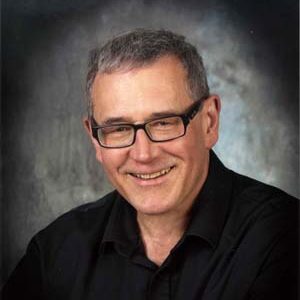
Foreword to Хроника эволюции “национальной идеи” Украины и евреи 1987-2016 годы by Aleksandr Burakovskiy
 Aleksandr Burakovskiy writes novels and some poetry and was a member of the writers’ unions of the Soviet Union and independent Ukraine. He is also a radio specialist who worked in a telecommunications research institute in the Soviet Union. He was appointed professor and received his PhD in America and for seventeen years taught courses in the electronic technology department of a college in New York CIty. During this period he earned a candidate’s degree in political science in Kyiv and has written several books and articles, notably in prestigious American journals, on Ukrainian-Jewish relations. Also, he played a significant role as a political activist and leader in the Ukrainian movement and in Ukraine’s Jewish community during the crucial transition that saw the collapse of communism and the Soviet Union as well as the formation of a democratic and independent Ukraine.
It is Aleksander Burakovskiy the writer, political activist, and political scientist who wrote this book. He began to engage in and with politics at an exciting time, the late 1980s, the era of glasnost’ and perestroika, when it seemed that on the agenda was nothing less than the creation of a new world order. It seemed as though the death knell had rung for oppressive regimes throughout the world. Communist dictatorships were falling in Poland, Czechoslovakia, Romania, and other Soviet satellites. Apartheid was being abolished in South Africa. A free press appeared throughout Eastern Europe and the Soviet Union. Everything was up for rethinking and renegotiation. For Aleksandr at that time, two issues were especially close to his heart. One was the rebirth and reconfiguration of Jewish life in Ukraine. Jewish identities and Jewish community life now had the opportunity to return after decades of assimilation, suppression, and repression. The other issue was the re-emergence of Ukraine as an independent country and of Ukrainian culture, again after decades of assimilation, persecution, and repression. Living in Kyiv, he was well placed to take a leading part in both of these processes. Democratic movements and politics were just coming to life, and in Kyiv the flagship of democracy and new thinking was Rukh (Narodnyi Rukh Ukrainy — People’s Movement of Ukraine). Rukh appeared in the late 1980s, influenced by former dissidents who had been released from prison and exile like Viacheslav Chornovil and Mykhailo Horyn, of progressive Ukrainian writers like Ivan Drach and Dmytro Pavlychko, and of many others. It was also fostered by Ukrainian intellectuals such as Myroslav Popovych and Ivan Dziuba. Being himself a member of the Ukrainian writers’ union, Aleksandr was a welcome addition to the leadership of Rukh, in which he represented not only the Ukrainian Jewish community, but also the Council of Nationalities, which represented the majority of national minorities living on the territory of Ukraine. He was a delegate to the first four Rukh congresses and one of Rukh’s vice-presidents (1990-93). There is a great deal about these exciting times in Aleksandr’s book.
Every revolutionary situation unites the forces of change against the forces of the status quo. It also deceptively oversimplifies ideological positions into revolution versus restoration. While the struggle is waged, settling differences within the two camps are put on hold. Everyone is simply for or against, and all else is to be dealt with tomorrow, after the battle is over. A story from my own personal experience can illustrate my point. In the late 1970s, I had two close friends from Iran, and we often went out for beer and talked about politics. Both of them were leftists, socialists, and as such were completely opposed to the repressive regime of the last Shah of Iran and completely supportive of the revolution that was being waged against him. Since my friends were progressive and secular, I expected the victorious revolution to be the same. Neither of them even mentioned the extreme Islamists in their conversations with me, with the result that I was totally surprised when the Ayatollah Khomeini took charge of the country after the Shah and changed it into an Islamic Republic. And of course, liberals who supported the Iranian revolution, like Prime Minister Shapour Bakhtiar, were expelled from the newly proclaimed republic. (Bakhtiar was later murdered in Paris by Iranian Islamist militants.) Everyone was united for the revolution. But once the revolution achieved victory, the ideological differences came to the fore and unity was imposed. Much the same happened in 1917-18 in Russia and Ukraine, of course. And although it was to take more time, such was to be the fate of the Ukrainian revolutionary era of 1988-91 and its continuations in 2004 and 2013-14. Eventually a single outlook became consolidated. While the Rukh of 1988-91 included liberal national democrats as well as ethnonationalists, and its program envisioned a civic Ukrainian nation, based on common citizenship, the Ukraine that evolved over the course of the next several decades became increasingly ethnonationalist in complexion. That is what this book is about.
The book is also about the dashing of dreams for Jewish community life in Ukraine; Aleksandr knows this painful process from the inside, which I do not. What he depicts is the elemental enthusiasm for the rebirth of Jewish culture and also the very rapid emergence of Jewish leaders, the first of whom arose spontaneously from the euphoria, but who soon were appointed by the new establishment or simply appointed themselves. He is unable to show us a democratic reconstitution of Jewish organizational life, nor the emergence of even a minimal community consensus. Instead, he tells a well-documented tale of opportunism in the leadership and indifference among those in whose name the leadership professes to speak.
All of these disappointments left the author of this book sick at heart, and readers cannot help but feel his pain throughout the text.
Combining the documentary and personal approach, this book is an important source for anyone studying either issues of national identity or Jewish organizational development in Ukraine over the last thirty years. It is an eyewitness account, critical and the opposite of triumphalist. It is also a unique reference work listing all the major events and statements of relevance to its themes. As I write this introduction, I am aware that Aleksandr’s current and previous works on Ukrainian and Ukrainian-Jewish politics have been not only underrated, but insufficiently read — especially in Ukraine. But I have no doubt that the day will come when this book becomes a standard reference for scholars and intellectuals concerned with modern Ukraine.
The Ukrainian National Idea before 1989
Aleksandr’s book focuses on the Ukrainian national idea at a later stage of its history, but the idea predated the formation of the contemporary Ukrainian state by more than a century and a half. I remind the reader that Ukraine’s national poet, Taras Shevchenko, published a collection of poetry that changed the course of Ukrainian history, the Kobzar, already in 1840.
Historians of Ukraine often begin its history with the Trypillian culture of four or five millennia back. But this has nothing to do with the Ukrainian national idea, except that Ukrainian national mythology likes to discern ancient Trypillian roots in the patterns of modern Ukrainian embroidery and pysanky. Ukrainian historians like to begin the narrative of the Ukrainian state with Kyivan Rus’, which appeared in the tenth century. But this was about as Ukrainian as Charlemagne’s state was French or German. Certainly it, like the Carolingian empire, had a formative influence on the nations that emerged from it later. The civilization of old Rus’ spread to territories that include parts of what are today Russia, Ukraine, Belarus, Poland, Slovakia, and even little bits of Hungary and Romania. This civilization gave its beneficiaries the Orthodox religion, the Cyrillic alphabet, and a group of dialects that linguists classify as Eastern Slavic — all of this remains as the common heritage of the modern Russian, Ukrainian, Belarusian, and Rusyn nationalities/nations. (Of course, there were some variations — the Belarusians experimented with both Uniate Catholicism and the Latin alphabet and Ukrainians in the Western regions adopted Greek Catholicism in the early modern era.)
The collapse of Kyivan Rus’ after the Mongol invasion of the mid-fourteenth century also had a large impact on the eventual formation of the modern nations. There were two main divisions of the Rus’ peoples and territories. One division was inherited by the Muscovite, later Russian, state. In this division, Orthodoxy remained the leading religion of the state and the language of statecraft and learning was an Eastern Slavic language using the Cyrillic alphabet. This division served as the cradle for the modern Russian nation. The other division consisted of those Rus’ lands and populations that ended up under the rule of a Catholic state, the Commonwealth of Poland-Lithuania. There were small exceptions: some Rus’ had been under Hungarian rule even at the time of Kyivan Rus’, and some came under the rule of the Moldavian state; Hungary, like Poland-Lithuania, was Catholic, and Moldavia was Orthodox. In all these latter territories, the Rus’ and their civilization existed in a subordinate position culturally. Except in Moldavia, the development of their Orthodox religion was stunted. While large masonry monasteries were being erected in the Russian state, replete with extensive manuscript libraries and iconography workshops, the Rus’ in Poland-Lithuania and Hungary generally were limited to wooden monasteries with nonexistent or very modest libraries and ephemeral iconography workshops. Until the late sixteenth century, there was very little Rus’ literary culture in the western regions of Rus’. Although the Cyrillic alphabet and a Rus’ language were used for a time in the administrations of both Lithuania and Moldavia, they were eventually replaced by Latin, Polish, and Romanian. These western regions were the cradle of the Belarusian nationality (in Lithuania), the Rusyn nationality (in Hungary), and the Ukrainian nationality (Poland-Lithuania, Hungary, and Moldavia).
The sixteenth and seventeenth centuries were full of fateful historic developments for the ancestors of the modern Ukrainians. In the sixteenth century, in the steppes that had previously been dominated by the Tatars and other nomadic peoples from the east, the cossacks appeared. These were hunters and trappers, warriors and plunderers, who eventually grew immensely in number and military importance. The modern Ukrainian nationality looks at this cossack past as a glorious page of its own heritage. At the same time, there was an explosion of Rus’ learning on the territory of what is now Ukraine and Belarus. Orthodox churchmen went for higher education to Jesuit schools, and for the first time a critical mass of learned Rus’ functioned in Poland, writing sermons and belles lettres, printing books, founding brotherhoods and schools, and reflecting on the state of their church and culture. Close connections between the educated churchmen and the cossack leadership made it possible to launch a revolution in the mid-seventeenth century led by Hetman Bohdan Khmelnytsky. I use the word “revolution” here instead of “uprising,” because the political consequences were as revolutionary as anything that ever occurred in East European history. The revolution turned into a bloody war of attrition with atrocities on all sides. Among the victims were many Jewish inhabitants of the eastern reaches of the Commonwealth, killed by the cossacks as agents of the hated Polish landlords and as adherents of the Judaic religion. This was the most traumatic experience in the history of East European Jewry until the pogroms of 1881-1919 and the Holocaust. The leader of the cossacks has gone down in Jewish memory as “Chmiel the Wicked.” This was the first historical event for which Jewish and Ukrainian experiences and appraisals are polarized between trauma and glory.
The violence of the mid-seventeenth century had a huge impact on subsequent history. Most consequential was that the Khmelnytsky revolt initiated a decisive turning point in East European history. Until then, the Commonwealth of Poland and Lithuania was the largest and most powerful state in Eastern Europe. After the revolt, Russia assumed that position. For Ukraine, it marked the first time that a large portion of its territory came under Russian rule, the entire Left Bank of the Dnipro as well as the city of Kyiv. And Russia acquired more Ukrainian lands at the end of the eighteenth century, in what can be considered the denouement of the Khmelnytsky revolt, namely the partition of the Polish-Lithuanian Commonwealth. At the same time it conquered the steppe and the Crimean peninsula from the Golden Horde, so that the only territories of modern Ukraine that remained outside of the Russian empire were the historical regions of Galicia (Ivano-Frankivsk, Lviv, and Ternopil oblasts), Bukovina (Chernivtsi oblast), and Subcarpathian Rus’ (Transcarpathian oblast). The latter three regions were all incorporated into different parts of the Habsburg monarchy. Even before the Khmelnytsky revolt, in the early seventeenth century, but especially after it, a division appeared in the politics of Ukraine that has never completely disappeared: a division between a pro-Western (at first pro-Polish, later pro-Austrian, still later pro-German, and most recently pro-European) party and a pro-Russian party. This division has been manifest in the opposing policies of cossack hetmans like Ivan Briukhovetsky and Ivan Vyhovsky, the first pro-Russian, the second pro-Polish; in nineteenth-century Galician politics, long split into Russophile and Ukrainophile camps, with the latter loyal to the Habsburg dynasty; and in every election and every Maidan in independent Ukraine. And the final legacy of the Khmelnytsky revolt was the creation of a stratum of cossack gentry, which, though destroyed in the Commonwealth, survived in the Russian empire into the nineteenth century.
It was from the latter social stratum that the Ukrainian national idea first emerged. Prior to the historical and literary activities of the descendents of the cossack gentry, which began roughly at the end of the Napoleonic period, it is, I believe, incorrect, or at least imprecise, to speak of a Ukrainian national idea. It is true that Khmelnytsky had used and popularized the term “Ukraine,” but his conceptions would best be described as “protonational,” a term used by scholars to denote a phenomenon that contributed later to the formation of a nation. It is true that Khmelnytsky’s thinking and activities had many characteristics that look “national”: he thought of Ukraine as a state-like entity like Transylavania, situated on a particular territory, in which the Orthodox church would be dominant and Jews excluded. But his worldview was rooted in the categories and frameworks of early modern Europe and cannot be equated with modern nationalist thinking. But the gentry-intellectuals gathered around certain periodicals in Kharkiv and Kyiv began the process of imagining a nation in the modern sense; at first they groped about in the dark, but as the decades passed and the movement spread, the national activists saw more clearly where they were headed. Some truly outstanding figures spearheaded this national “revival” (although scholars now think of it as national “construction”). The former serf, poet, painter, and political exile Shevchenko, more revered, unfortunately than actually read, evoked Ukraine’s glorious cossack past and contrasted it with the miserable life of the Ukrainians of his time. The brilliant Mykhailo Drahomanov, scion of a cossack gentry family, gave intellectual heft to the Ukrainian idea, defining the territory that constitutes Ukraine and working out a democratic political program for the movement to follow. The prolific Galician Ivan Franko was a polymath: poet, novelist, and journalist as well as ethnographer, literaturoved, and historian. The erudite and tireless historian Mykhailo Hrushevsky traced the genealogy of the Ukrainian people from earliest times in ten volumes, extremely well researched and still consulted today. The maturation of the Ukrainian idea took about a century. Key moments included the spread of the Ukrainian idea from Ukrainian territories in Russia to Austrian Galicia in the 1830s and 1840s, the abolition of serfdom in both the Habsburg monarchy (1848) and the Russian empire (1861), the formation of modern political parties around the turn of the twentieth century, and, at the same time, the formulation of the ultimate goal of the Ukrainian movement: the achievement of a Ukrainian state.
It is important to note that this same Ukrainian idea developed in two very different sets of circumstances, in Austria and Russia. In Austrian Galicia education and literacy were much more widespread than in Russia, and most of the schools in Ukrainian localities used the Ukrainian language of instruction. Austria enjoyed constitutional government after 1867, with all the usual accompanying rights (especially freedom of the press, of assembly, and of association). Elections had been held there as early as 1848 and universal male suffrage was introduced in 1907. Ukrainian organizations flourished, such as the network of reading clubs (chytal’ni) connected with Prosvita, cooperatives, gymnastic societies, credit unions, and the like. A Ukrainian press flourished; Lviv boasted two daily Ukrainian newspapers. Ukrainian territories in Russia had to wait until 1905 for even a partial fulfillment of the same program. Printing in the Ukrainian language was restricted by decrees of 1863 and 1876. The Ukrainian language was allowed in the periodical press in 1905 but never, as long as the tsarist regime lasted, into schools at any level. Ukrainian political parties in Austria were interested in elections. Ukrainian political parties in Russia were interested in revolution. Whether in Russia or Austria, however, the Ukrainian movement before World War I was dominated by a liberal and leftist perspective.
The results of these developments became evident when the Russian empire and the Habsburg monarchy were dismembered under the shock of world war in 1917-18. Then the Ukrainian movement was put to the test. After the February revolution of 1917, a Central Council (Tsentral’na Rada) was established in Kyiv under the leadership of the historian Hrushevsky. It started from federalist positions, seeking autonomy within a democratic and federalized Russia, but within a year, under the impact of a life-or-death struggle with the Bolsheviks and strong encouragement from Germany, it declared Ukraine to be an indepenent state. The most insistent proponent of independence was the former journalist Symon Petliura, who took over the leadership of the government and military in November 1918, after the defeat of Germany and its client government in Ukraine (the Hetmanate of Pavlo Skoropadsky). Ultimately, he was defeated by the Bolsheviks. The consensus of historians today is that a primary cause of the defeat of the Ukrainian revolution in the former territories of tsarist Russia was the weakness of the Ukrainian movement among the largely illiterate peasantry.
Petliura’s army was undisciplined, and an internal report of the government noted that many more soldiers showed up on payday than for battle. Moreover, all sorts of independent otamany emerged in the chaos after the German defeat, some loosely connected with Petliura, others — like the anarchist Nestor Makhno — completely independent. They were no match for the Bolsheviks. And in this chaotic situation Petliura’s forces, as well as others (otamany and Russian Whites), engaged in a deadly slaughter of Jews, as they looted, raped, and murdered in the shtetls of Ukraine. Here is another case in which Ukrainian and Jewish historical memory diverge. The figure of Petliura is heroic to many Ukrainians, but he is remembered only as a villain by Jews.
The Galician Ukrainians were looking for autonomy within their own supranational state, the Habsburg monarchy. But the latter’s destruction led to the proclamation of an independent Ukrainian state in Lviv in November 1918. The Ukrainians were immediately attacked by the Poles, who with their numerically superior forces, better equipment, and some support from the Entente, were able to drive the Ukrainian forces out of Galicia in the summer of 1919. The Galicians then joined forces with Petliura’s army. Schooled in the Austrian army and not as demoralized as their counterparts from the Russian army, they were shocked by the behavior of Petliura’s troops. But there was nothing they could do to rectify the situation: they too went down to defeat with Petliura.
When the world war, revolutions, and civil wars were over, the territory of what is today Ukraine was divided among the Soviet Ukrainian republic (with about 23 million Ukrainians), Poland (with over 4 million), Romania (with under a million), and Czechoslovakia (with about half a million). (Crimea at this time was part of Soviet Russia.)
The establishment of Soviet Ukraine was a response to the power the Ukrainian movement evinced during the revolution and civil war. Lenin felt it was necessary to form a specifically Ukrainian Soviet republic as a concession to Ukrainian aspirations. This was a momentous decision, because the Soviet republic became the basis on which the independent state was formed in 1991; the new state inherited the republic’s borders. In the 1920s the Soviet leadership pursued a policy of korenizatsiia, which in the Ukrainian republic meant Ukrainianization. Ukrainian culture flourished: the Ukrainian language was introduced into all levels of the educational system and into government; a vibrant and tumultuous cultural discussion ensued, and all the arts — but particularly belles lettres, cinema, drama, and painting — combined Ukrainian themes with fresh, revolutionary forms. Unfortunately, this cultural outburst is known in Ukrainian as the “executed renaissance” (rozstriliane vidrodzhennia), because so many of its foremost figures were murdered in the 1930s; a few escaped this fate by committing suicide instead (notably the writer Mykola Khvyliovyi and the promoter of Ukrainianization within the party, Mykola Skrypnyk). In 1933 Ukrainianization ended. In that same year, a famine, the Holodomor, raged in Ukraine and killed four million people in the republic. The famine was caused by Stalin’s mad social experiment — mass-scale collectivization (sploshnaia kollektivizatsiia), but deliberate government policy made its effects especially devastating in Ukraine.
In Poland, which had taken not only Galicia but also Volhynia (today’s Lutsk and Rivne oblasts), Ukrainians were treated as second class citizens. They found it almost impossible to find state employment. Ukrainian-language schools were closed, and higher education for Ukrainians was restricted. Since by the end of Austrian rule a Ukrainian national consciousness had permeated into every stratum of Ukrainian society in Galicia, the discrimination suffered in Poland was particularly rankling to the Ukrainian population. Veterans of the Polish-Ukrainian war of 1918-19 were perhaps the most frustrated. In the 1920s many Ukrainian activists and intellectuals looked to Soviet Ukraine as a possible Piedmont. There Ukrainian culture was flourishing, and the government seemed to be in Ukrainian hands. Sovietophilism even led many Galician intellectuals to emigrate to Soviet Ukraine. Unfortunately, almost all of them were executed there in the 1930s. In that decade, Ukrainians looked elsewhere than the Soviet Union. The new fanatical nationalism that was emanating from Italy and Germany attracted many, especially among veterans and students. An embodiment of the new spirit of the 1930s was the Organization of Ukrainian Nationalists (OUN), founded in 1929. Authoritarian and extremely ethnonationalist from the beginning, it fell more and more under fascist influence as the decade progressed. Although Mussolini was the most admired earlier on, Hitler exercized the most powerful attraction as he began to revise Europe’s borders in 1938. An enemy of both Russian Bolshevism and Poland, Hitler seemed to be someone who could create opportunities for the resurrection of the Ukrainian statehood lost in 1919. With OUN’s greater attraction to Hitler, its program became more ruthless and more antisemitic. It wanted to establish a “Ukraine for Ukrainians.” OUN was not a unique phenomenon in Central Europe at that time. It bore similarities to such movements as the Iron Guard in Romania, the Arrow Cross in Hungary, and the Ustaše in Yugoslavia.
In 1939 war broke out. Owing to his alliance with Hitler and their joint destruction of Poland, Stalin was able to expand the borders of Soviet Ukraine into Galicia and Volhynia. The first thing the Soviets did in these Western Ukrainian territories was to dismantle the Polish establishment, in the process deporting hundreds of thousands of Poles to labor camps in the East and sometimes murdering them outright. This was the first step towards what would be a major outcome of World War II: the ethnic cleansing of Ukrainian territory. The Soviets ukrainianized education and brought Ukrainians and Russians in from old Soviet territory to administer the new lands. At the same time, they destroyed all pre-existing Ukrainian institutions and organizations: they closed all periodicals, nationalized cooperatives, dissolved all political parties, and terminated all youth, women’s, cultural, and educational organizations. Many Ukrainian intellectuals and activists fled to Kraków in the German zone of occupation, including many of the Galician adherents of OUN. OUN also maintained an underground network in Soviet Western Ukraine; it was the only prewar Ukrainian organization that managed to survive there, although the Soviet authorities arrested thousands of its activists and sympathizers. The prisons in Western Ukraine were crowded when the Germans attacked the Soviet Union on 22 June 1941. Unable to organize an evacuation in time, the NKVD executed thousands of prisoners rather than leave them alive for the Germans as potential collaborators.
The German occupation of Ukraine was brutal. Millions of Soviet POWs were starved to death, and millions of people were taken from Ukraine to work as virtual slave laborers in Germany (the so-called Ostarbeiter). The ethnic cleansing of Ukraine resumed at a faster and more furious pace. The Germans were responsible for killing a million and a half of Ukraine’s Jews, almost all of those who had not been evacuated to the East (about a million as well). In this they were aided by OUN: its militia played a leading role in the massive anti-Jewish violence in the summer of 1941 that killed over ten thousand Jews in Galicia and Volhynia; after that it infiltrated the Ukrainian police in German service, one of the most important instruments of the Holocaust in Ukraine; and in the winter of 1943-44 Army North of the OUN-led Ukrainian Insurgent Army (UPA) lured surviving Jews from their bunkers and hiding places in the forests of Volhynia, registered them in labor camps, and then murdered them. OUN-UPA also undertook a massive slaughter of the Polish population in Volhynia, killing as many as sixty thousand of them. The OUN had earlier, in 1940, split into two factions, the larger of which was led by Stepan Bandera and the other by Andrii Melnyk (banderivtsi and mel’nykivtsi). The Bandera faction had taken the opportunity to proclaim the renewal of Ukrainian statehood when the Germans captured Lviv on 30 June 1941. The Germans did not allow this and arrested Bandera and other leaders of his faction just over a week later. The Banderites’ relationship with the Germans was strained thereafter, and its armed force, the UPA, actually launched an insurrection against the Germans in spring 1943 (although most of its efforts were concentrated on killing and expelling the Polish population). The Germans and OUN-UPA renewed cooperation in 1944 as the Red Army approached.
After the Soviets recaptured Western Ukraine, UPA launched a powerful insurrection against their regime, an insurrection that lasted until 1950 and that required extremely brutal methods and mass deportations to quash. And in the aftermath of the war, the finishing touches were put on the ethnic cleansing of Ukraine: many of the surviving Jews were encouraged to emigrate to Poland (and from there many went to the USA or Israel), remaining Poles were deported to Poland, and Ukrainians from Poland were sent to Ukraine or expelled from their native villages to the territories that Poland newly acquired from Germany. For the first time in centuries, the cities and towns of Galicia and Volhynia became primarily Ukrainian in ethnic composition instead of Polish and Jewish. Although the Soviet authorities put strict and narrow limits on expressions of a specifically Ukrainian culture and from time to time purged Ukraine’s intellectual establishment on charges of nationalism, Ukrainians developed into an urban, educated modern nation in postwar Soviet Ukraine. This modernization was implemented primarily in the Russian language, and most Ukrainians became either bilingual Russian- and Ukrainian-speakers or Russian-speakers with at best a passive understanding of Ukrainian. Also, the ethnic Russian population expanded in Ukraine in the postwar era, with many Russians moving to Lviv, which had had hardly any Russian inhabitants before World War II. Ukrainians who dissented from Soviet russificatory policies were arrested and placed in camps or, sometimes, psychiatric hospitals.
The population of Soviet Ukraine that was to confront the new challenges and opportunities that glasnost’ and perestroika presented in the mid-1980s was largely Ukrainian by ethnicity, although with a sizable Russian minority. The once numerous Jewish population was much reduced in size, and few Jews had deep roots in the localities in which they lived, since most of Ukraine’s Jews had been killed in the Holocaust and the former shtetls were abandoned in favor of larger cities like Odessa, Chernivtsi, Kyiv, and Lviv. The lingua franca for all urbanites was Russian, although Ukrainian was still spoken in Lviv, Ivano-Frankivsk, and Ternopil. The population was politically passive and conformist. They did not know much about the outside world. They had no experience in political contestation or in building organizations from the grass roots. A small number of Ukrainian nationalists remained in the Soviet Union, either incarcerated in camps, living on bohemian fringes in the cities, or stuck in the deep countryside.
Where Ukrainian nationalism not only survived but thrived was in the Ukrainian diaspora. Many Ukrainians emigrated to North America, Australia, Britain, and elsewhere in the late 1940s and early 1950s. Many had followed the German army out of Ukraine, fearing Soviet reprisals and hoping to continue the anti-Soviet struggle from abroad. These included former soldiers of the Waffen-SS Division Galizien, many leaders and rank-and-file activists of OUN (including Bandera), and persons who had worked in one way or another in the institutions of the German occupation (local administration, the legal press, police). These became the leaders of the diaspora community. There were also many Ostarbeiter who went west rather than return home to Soviet Ukraine. Generally less educated, they fell under the ideological sway of the nationalist leadership. The educated postwar immigrants also assumed leadership over the earlier Ukrainian immigrant communities who had come before World War I to work in coal mines in America or to homestead in Western Canada. The postwar immigrants not only renewed pre-existing Ukrainian community life in North America, but they built a strong new infrastructure of organizations for youth and women, Ukrainian-language Saturday schools for their children, umbrella organizations that could lobby the governments, and academic institutions such as the Harvard Ukrainian Research Institute and the Canadian Institute of Ukrainian Studies. The diaspora was better prepared, I believe, than the inhabitants of Ukraine itself for the opportunities that the Gorbachev reforms presented.
Notes of a Parallel Witness
Warning: At this point I am changing how and what I am writing. The foregoing text constituted a professional historian’s attempt to sketch the background of the Ukrainian idea before the thirty-year time period covered in Aleksandr’s important book. But now I am going to write from a personal perspective about the same time period covered by Aleksandr’s book, since I too was a witness, sometimes from afar, but sometimes up close, of the same developments it describes. Unlike Aleksandr, I am not Jewish but of Ukrainian background, and not from Ukraine but from North America.
Let me start in 1989. I came to Ukraine for a month or so on a research trip. It was my third research trip to Soviet Ukraine (I had a two-month trip in 1976 and a six-month trip in 1983). In 1989 I was researching a book on the history of the Greek Catholic church in the late nineteenth century. The Greek Catholic church was a sensitive topic, and I had little hope of being allowed access to anything more than old newspapers. But in fact, I was given access to the archival collections (fondy) of the Greek Catholic metropolitan consistory and of Metropolitan Andrei Sheptytsky. These documents had all been in “special collections” (spetsfondy) previously and not open to Western researchers, but now I could just read through them in their entirety. It was the freest that Ukrainian archives had ever been and in fact freer than they would ever be later. That’s what 1989 was like: a time of freedom bursting through the old Soviet bonds, a freedom as yet unrestrained by new and different ideological considerations.
I concentrated on my scholarly work above all, since the opening of the archives was an opportunity I wanted to exploit to the fullest, but I could not help but be drawn also into what was happening outside the libraries. Moreover, I had a little mission to accomplish. My friend the historian Jaroslaw Pelenski was at that time editing a new Ukrainian-language journal, Osnovy, and he asked me to track down Volodymyr Yavorsky in Lviv. Yavorsky had written a novel, Radoshchi ta muky Borysa Shtots’koho (The Joys and Sufferings of Borys Shtotsky), which had been excerpted in a Ukrainian samizdat literary journal edited by the dissident Mykhailo Osadchy after he was let out of the camps. Pelenski wanted me to contact Yavorsky and get a copy of the manuscript for publication in full in the West. (I did get a copy of the manuscript and sent it to Pelenski upon my return from Ukraine, but in the end Pelenski never published it; the novel did come out, however, in Lviv in 2013.) Anyway, this mission and simply the electricity of the moment brought me into the thick of things. At this time not just Osadchy, but many former dissidents had returned from exile and were living in Lviv. I spent time with Osadchy, whom I had long admired for his lightly fictionalized novel about the experiences of Ukrainian dissidents in the Gulag, Cataract (Bil’mo). He was a modest and principled man whom I liked very much. Through him I got to know another former dissident, Ivan Kandyba. Kandyba had wanted to meet me, since he had never met a Ukrainian from North America before and wanted to examine a genuine specimen. He seemed quite different from Osadchy. Although also quite personable, at least to fellow Ukrainians by ethnicity, he was a strident nationalist. I remember hanging out with him one day in Lviv, when a woman approached him and asked how to get to “ulitsa Nauchnaia.” Because she did not ask for “vulytsia Naukova,” Kandyba yelled at her that there was no ulitsa Nauchnaia in Lviv, although there might be a street by that name in Kostroma or wherever it was she came from. I was pretty shocked. Kandyba was the son of an OUN leader (Oleh Ol’zhych, a prominent poet and activist in the Melnyk faction); Kandyba later participated in the revival of OUN in Ukraine.
Through Yavorsky, if I remember rightly, I also met Viacheslav Chornovil. Yavorsky was part of the regular entourage that followed Chornovil around Lviv as he made speeches. I sometimes followed Chornovil around myself. He was a charismatic figure who argued that it was time for Ukrainians to make the decisions about Ukraine. In these circles I also encountered the Horyn brothers, who made very good impressions on me as serious people and unfanatical. In short, I was finding myself in an exciting, vibrant milieu. I thought only good could come out of the political ferment. Like many people around the world at that time, I was full of hope. It was not just the resurgence of Ukraine that inspired hope in those early years. It was also the new democratic Russia that rallied around Boris Yeltsin. What a wonderful time to be alive!
At this early stage people were still sorting themselves out. In 1989 I met one of the figures mentioned a number of times in Aleksandr’s book, Anatolii Shcherbatiuk. He was only later, in the early 1990s, to transform into one of Ukraine’s leading neofascist propagandists. In 1989 he was still far from easy for me to read. I had a unique opportunity to get to know him intensively, albeit for a short time. I met him at Yavorsky’s home. I had come to pick up Yavorsky’s manuscript, and Shcherbatiuk was there, visiting Lviv from Kyiv. I remember very well the lunch Yavorsky served: a big bowl of chopped lettuce and other garden vegetables doused with yogurt. It was the first time I had seen anything like vegetarian “health food” in Ukraine. Shcherbatiuk was interested in talking to me because he wanted his manuscripts as well to be published in the West. That is why he tried to tell me as much about himself and his activities as he could. He had gone through what I consider to be the rather typical spiritual and intellectual explorations of late Soviet man in Eastern religions and Freudian psychology (and also, I think, existentialism). He had not found the answers he was looking for in these worldviews and was in the process of searching for some new synthesis. The manuscripts he wanted to give me represented his old thinking, but he hoped they would still be of interest. (They were not, neither to me, nor to anyone else I asked.) What was interesting to me was that he was attempting to sue Lazar Kaganovich for killing his grandmother during the famine of 1932-33. He showed me the documentation. He did not have his manuscripts with him, however, so I agreed to meet him when I went to Kyiv and take them from him. We met at the metro station at Khreshchatyk, talked a bit, and he handed me his writings. With me at that time was a close friend I had made during my extended research trip of 1983, namely the writer Yuriy Pokalchuk. As soon as we parted from Shcherbatiuk, Yurko said to me that he deeply distrusted such “inflated” (naduti) types.
I also met another of the negative figures from Aleksandr’s book — Vasyl Yaremenko, who later became one of Ukraine’s leading antisemitic publicists. I visited him briefly in 1989 when I was in Kyiv, but I had first got to know him three years earlier in Prague, not long after the Chornobyl catastrophe and the first stirrings of the Gorbachev reforms. In the late 1970s and in the 1980s, I, as well as my wife and many of our friends, belonged to a leftist, but anti-Soviet group called Diialoh. We published a journal in Ukrainian by that name, which had as its motto “For socialism and democracy in an independent Ukraine.” We published the journal in a very small format so that we could smuggle it into Eastern Europe and Ukraine. We also smuggled in materials published by Proloh, an organization connected with the more democratically oriented wing of the OUN (the so-called “двійкарі”) and funded by the American CIA. One of our most important contacts was a Ukrainian in Prague, a former political prisoner, by the name of Pavlo Muraško. We would deliver literature to him, and he was supposed to disseminate it among the Ukrainian community in Czechoslovakia. Muraško also had contacts with Ukraine and could, he said, get some of our literature there. Muraško was an experienced smuggler, having been involved in smuggling out dissident publications from Ukraine in the 1960s, including, he said, Ivan Dziuba’s Internationalism or Russification. In 1989, however, when the archives of the Czechoslovak State Security were opened, it was discovered that Muraško was a secret-police informant. He admitted it to me personally as well later.
When my wife and I visited Muraško in 1986, Yaremenko was staying with him. Yaremenko had been coming every year to Prague, and it was through him that Muraško was passing on to Ukraine the tamizdat we brought over. Yaremenko and Muraško had in common that they were both literary scholars. Our meeting with Yaremenko was captivating. He informed us about the mood in Kyiv following the Chornobyl disaster and particularly about the outspoken speeches of Ivan Drach and others at the June 1986 congress of the Ukrainian Writers’ Union. We all got on very well — Yaremenko, Muraško, my wife, and I. But there was one disturbing conversation that pointed to his future as an antisemitic propagandist. Somehow we started talking about World War II and the German occupation, and he said that Ukrainians killed Jews at that time. I asked him why, and he said it was because the Jews organized the Holodomor. And the Jews had been motivated to starve the Ukrainians because of the pogroms of 1919, which in turn had been motivated by the Jews’ involvement with Bolshevism. Even at the time, when I knew little about what had occurred during the Holocaust in Ukraine, his way of thinking struck me as disappointingly primitive. But we remained friends, and I also visited him in Kyiv in 1989. That was simply a friendly visit with no controversial discussions. At that time, the news about Muraško’s involvement with the Czechoslovak security services had not yet come to light. I also saw him briefly in August 1990 at the first meeting of the International Association of Ukrainian Studies (Mizhnarodna asotsiatsiia ukrainistiv). I asked if he had heard about Muraško, and he said yes. We arranged to meet later, but he never showed up. We never saw each other again.
In this early period, I was too enthused by the changes in Ukraine to pay much attention to marginal expressions of xenophobia and antisemitism. I expected these vestiges of an old mentality to disappear in the course of Ukraine’s democratic development and adoption of contemporary European attitudes.
During the Orange Revolution of 2004, I was well aware that some its supporters espoused an unsavory kind of Ukrainian nationalism with a fascistic tinge, but I still considered them fringe elements. In its essentials, I considered the Orange Revolution to be another moment in Ukraine’s struggle for true independence and democratic, European-style norms.
The summer of 2006 was an important moment in my awakening to the growing power of ethnonationalism in Ukraine. I had just finished writing a book on the iconography of the Last Judgment in the Carpathian region, and I was looking for a new research project to work on. I had, since the late 1980s, been doing some research on Ukrainians and the Holocaust, but it had been very much a side project. I had considered working on it more intensively as early as 1995, but decided to work on iconography instead. The Holocaust and its place in Ukrainian historical consciousness was a topic, I thought then, with little relevance for the new Ukraine that was emerging. Today’s Ukrainians in Ukraine, I told myself, had more important things to deal with than a history that was long past. I knew that the Ukrainian diaspora was still locked in a backwards-looking nationalism, but I also imagined that the diaspora would neither continue to exist for very long nor play much of a role in developments within Ukraine. What led me to reconsider my position on the path of Ukraine’s development and the relevance or irrelevance of the dark side of the Ukrainian past was my trip to Western Ukraine in July 2006. I was completely surprised to find throughout the center of Lviv posters commemorating the sixty-fifth anniversary of the Banderites’ proclamation of Ukrainian statehood in Lviv on 30 June 1941. There were also posters marking the birth of UPA commander Roman Shukhevych, which also occurred on 30 June (but in 1907). Moreover, these posters had not been put up by some fringe nationalist group, but by the city administration. Clearly, OUN-UPA were moving from the past into the present and from the margins into the mainstream. By this time I had a much better understanding of the history of the wartime nationalists and was quite disturbed by the display of a public cult. I asked a historian from Poland, who was also in Lviv at this time, how he felt about the celebration of UPA that was underway. Naturally, he said it made him rather uncofomfortable.
The transformation of historical memory proceeded with greater intensity over the remaining years of the presidency of Viktor Yushchenko. In the following year, 2007, the centenary of Shukhevych’s birth, Yushchenko posthumously made the UPA commander a Hero of Ukraine; a postage stamp was issued in his honor which, for the first time officially, depicted the official insignia of both OUN and UPA. As Yushchenko was exiting from office in 2010, he also proclaimed OUN leader Stepan Bandera a Hero of Ukraine and called for the naming of streets, parks, and institutions after the heroes of OUN and UPA. This had repercussions in Canada as well, where the leadership of the Ukrainian Canadian Congress called upon the government to recognize former members of OUN and UPA living in Canada as part of the anti-German resistance and to award them veteran benefits. Several historians at the University of Alberta, myself included, warned against the cult of OUN-UPA, pointing out that OUN had played a major role in the anti-Jewish pogroms of the summer of 1941 and that UPA had killed tens of thousands of Polish civilians during its ethnic cleansing of Volhynia and Galicia in 1943-44. For my part in the ensuing polemics, I have been completely banned from the Ukrainian diaspora press in the the United States and Canada. Newspapers like The Ukrainian Weekly in the USA and Ukrains’ki visti in Canada print attacks on me personally and on my research into the wartime history of OUN and UPA but do not allow me to respond.
In Ukraine itself, Yushchenko was replaced as president by Viktor Yanukovych, who repealed Bandera’s status as Hero of Ukraine and did nothing more to promote the cult of OUN-UPA at the official level. Unfortunately for Ukraine, however, the cult continued to grow within the opposition to Yanukovych, and Yanukovych’s corruption and preference for Russia over the West succeeded in increasing the popularity of the opposition. The well-known result was the eruption of massive protests in Kyiv in early 2014, the overthrow of Yanukovych, the annexation of Crimea by Russia, and eventually the outbreak of war in the eastern Donbas. These events are thoroughly documented in Aleksandr’s book, but I will say a few words from my own perspective.
I was not in Ukraine during the Euromaidan. I was, in fact, in Mexico, vacationing, but my wife and I were to be glued to the television for many hours as we watched events unfold. I remember the mixture of feelings. For the most part, we were positively impressed by the size and determination of the protesters. And we agreed with the demonstrators’ goal of bringing Ukraine closer to Europe and distancing it from Putin’s Russia. But we were not pleased to see so many black-and-red flags, the banners of OUN, among the demonstrators, nor did we like the huge portrait of Bandera on the Maidan. I have to admit also to a certain conservatism: I would have preferred it if the opposition had worked through the electoral system to gain support and replace Yanukovych; I am not convinced that large demonstrations in a capital city are more representative of the will of the people than the votes that the people cast.
Now, of course, I have much more information about the Euromaidan than I had while watching the demonstrations unfold on television in Mexico. And also, of course, many more of its consequences have come to light. In addition, I have simply had more time to think. Here is how I see it now. The vast majority of the demonstrators, I believe, came to the Maidan because they loved Ukraine and wanted her to be independent of Russia and more like her neighbors to the west, a “normal” country. I find no fault with these aspirations. But this rank and file was too amorphous to create a leadership or clearly articulate goals. The ones who uncompromisingly pushed the Maidan to a complete overthrow of the incumbent government and who were willing to use violence to accomplish this were Ukraine’s right-wing nationalists, particularly Right Sector (Pravyi sektor). True, they did not initiate the violence — the responsibility for that lies with the Yanukovych government — but they turned the protest into an urban uprising and introduced firearms into the Maidan. Euromaidan was not the Orange Revolution; the latter was a truly peaceful protest and worked entirely within a legal framework, in fact insisting on the correct observance of Ukraine’s electoral procedures.
Aleksandr’s views on the Euromaidan and its consequences are similar to mine in many respects, but we have some differences in perspective. I will cite two examples.
First, In Aleksandr’s view, the Euromaidan had considerable support “from outside” (izvne) which was an important factor in its success. I agree that the United States, Canada, and the European Union morally supported the demonstrators. In this connection Aleksandr mentions the pro-Maidan efforts of powerful American government figures such as Assistant Secretary of State Victoria Nuland and Senator John McCain. And certainly the Western media emphasized the pro-European and democratic aspects of the Euromaidan, while downplaying its ethnonationalism. I do not doubt that this support contributed to the protesters’ success. If the West had been indifferent or hostile to the demonstrators, they might well have been quelled by the decisive use of force on the part of the Yanukovych government. But in its essence, the Euromaidan was internally generated. It was an expression of a genuine enthusiasm for change on the part of many within Ukrainian society. This is my conclusion based on numerous conversations with pro-Maidan Ukrainians and also on what I have seen of the historical record. Moreover, in the final days of the Euromaidan, the West repeatedly tried to work out some compromise between the protesters and the Yanukovych government. These attempts were consistently rejected by the Maidan, showing unequivocally, in my opinion, that the demonstrators cared little about what these outsiders had to say — it was their revolution, and they themselves would decide its course.
Second, I have a reservation about the following passage in Aleksandr’s book:
“…On the one hand, for sure, Ukraine, as an historically multinational country comprised of various regions joined together, has earned through suffering the right to be independent of Russia, with a single Ukrainian state language and with all the others having equal rights. But on the other hand, it cannot in reality build its independence on a fanatical hatred to those with whom for hundreds of years, for the most part, it lived side by side, interweaving family ties for dozens of generations, and having today a border many hundreds of kilometers long.”
I agree that Ukraine has a right to to be independent of Russia and also that hatred for Russians, although perhaps an inevitable consequence of the current war, should be discouraged rather than fostered. But the idea that Ukrainians and Russians have become closely intertwined over the centuries needs to be qualified. This is hardly true for the three Galician oblasts, to which Russians migrated only after the Soviets took the region in 1939. Russians (and Russophone Ukrainians from the eastern oblasts) were brought in to sovietize the population, and their presence was associated with the massive arrests, deportations, and executions of 1939-41 and 1944-53. Tensions between Russians and Ukrainians in these three oblasts continued after the period of insurgency and counter-insurgency came to an end. As memoirs and sociological studies show, each group looked down on the other as its cultural inferiors. And Russians who came to Lviv were allotted better apartments than the locals and enjoyed a number of other privileges as well. Intermarriage did occur, but it was often unwelcome by the couples’ families. It is true that the three Galician oblasts account for only 5 million of Ukraine’s total population of 45 million, but for at least as long as Ukraine has been independent, it has exercised a political influence many times larger than its proportion of the population would suggest. For much of the Ukrainian diaspora, which is a part of the ethnocultural nation and which also exercises an influence in Ukraine disproportionate to its size, the idea of a particular closeness with the Russians makes little sense. For the post-World War II immigration, in particular, which is dominated by an ethnonationalist worldview and which fled abroad to escape from Soviet power, pro-Russian attitudes are almost entirely absent. Aleksandr’s view on the issue may make sense from his Kyivan perspective, but it does not take into account the different experience of Galician Ukraine and its diaspora.
Like me, readers of Aleksandr’s book may not share every one of his judgments, but they are all worthy of serious reflection. The book will probably not be popular in today’s highly polarized situation. It is too pro-Ukrainian for the opponents of the Euromaidan and too critical of Ukrainian ethnonationalism for its proponents. Aleksandr’s approach to the past thirty years of the evolution of the Ukrainian national idea is reasoned and humane. And these are the virtues we should insist on cultivating: reason and humanity.
Цей текст написаний як передмова до російського видання книги Александра Бураковського “Хроника эволюции “национальной идеи” Украины и евреи 1987-2016 годы», яку можна переглянути повністю на сторінці Автора на academia.edu. Тут публікується в оригінальній версії з дозволу Івана-Павла Химки.
___________________________
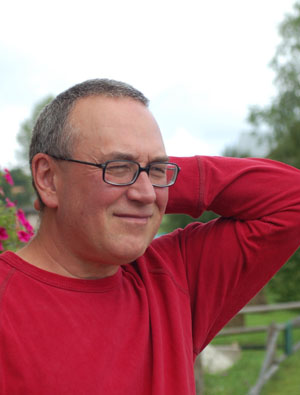 Іван-Павло Химка – професор-емерит факультету історії і класичної філософії Альбертського університету (Едмонтон, Канада). Народився в місті Детройт (Мічиґан, США), 18 травня 1949 р. Докторат (PhD) з історії захистив в Мічиґанському університеті (Анн Арбор) в 1977 р. Автор чотирьох монографій з української історії: Socialism in Galicia: The Emergence of Polish Social Democracy and Ukrainian Radicalism (1983); Galician Villagers and the Ukrainian National Movement in the Nineteenth Century (1988); Religion and Nationality in Western Ukraine: The Greek Catholic Church and the Ruthenian National Movement in Galicia, 1867-1900 (1999); Last Judgment Iconography in the Carpathians (2009). Співредактор низки збірників, між іншим: Letters from Heaven: Popular Religion in Russia and Ukraine (2006, з Андрієм Заярнюком) і Bringing the Dark Past to Light: The Reception of the Holocaust in Post-Communist Europe (2013, з Йоанною Беатою Міхліц). Тепер працює над двома проектами: монографія про участь ОУН і УПА у Голокості і фотодокументація української сакральної культури в канадських провінціях Альберта і Саскачеван. Живе і працює в Едмонтоні (Канада).